
Vahagn and Astghik Waterfalls
Vahagn and Astghik Waterfalls lie in the Garni section of Khosrov Forest State Reserve, roughly 40–50 km from Yerevan. Vahagn drops in a narrow, powerful stream from an almost vertical rock face, while Astghik flows more gently over stone steps covered with moss and greenery. The two falls are normally visited on the same hike.
This is not a roadside stop. The waterfalls are inside a protected reserve, access must be arranged in advance, and part of the journey follows a rocky trail through the Azat River valley. Even though the reserve is close to Yerevan, the trip should be planned as a full day.
Quick Facts
- Location: Khosrov Forest State Reserve, Ararat Province
- Also known as: Khosrov Waterfalls, Aghjots Waterfalls, Vahagn and Astghik Falls, Վահագնի և Աստղիկի ջրվեժներ
- From Yerevan: approximately 40–50 km to the route area
- Entrance fee: paid and subject to prior arrangement with the reserve
- Best time to visit: April–June and September–October
- GPS coordinates:
Vahagn — 40.0923, 44.8062; Astghik — 40.0891, 44.8179
What Is the Difference Between Vahagn and Astghik?
Both waterfalls belong to the Aghjots group inside Khosrov Forest State Reserve, but their shape and surroundings are noticeably different.
Vahagn Waterfall
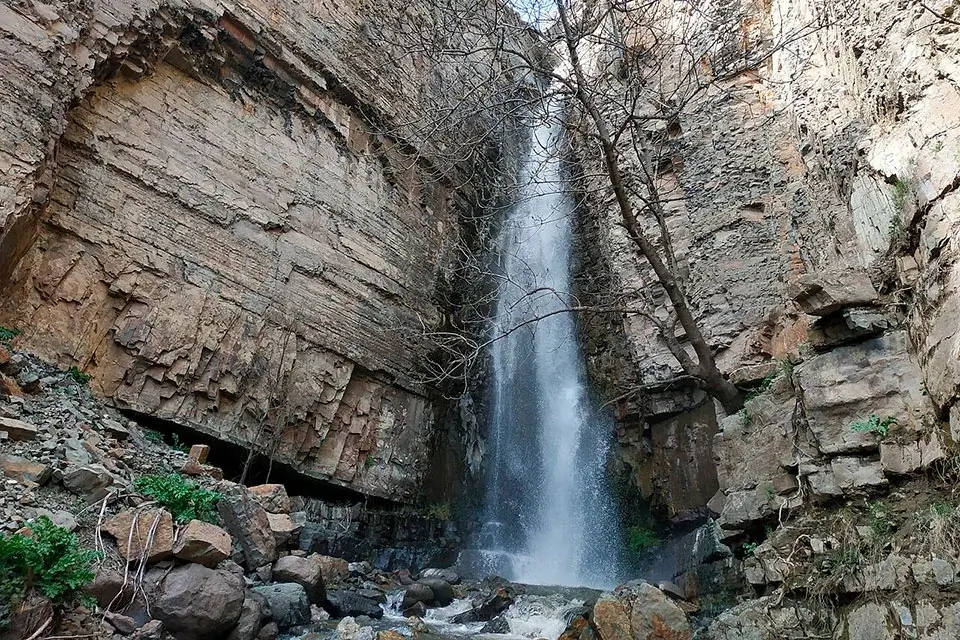
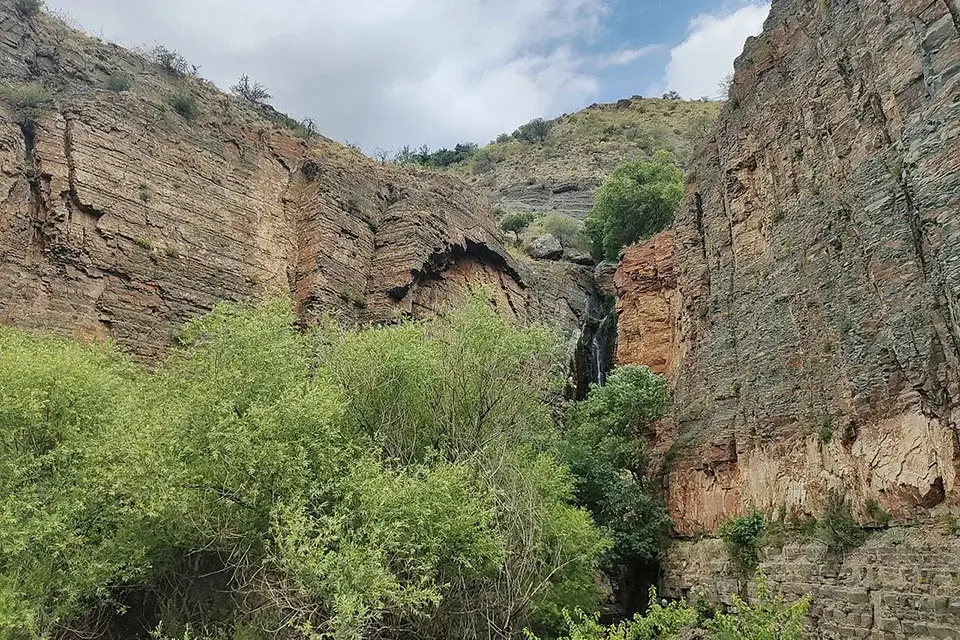
Vahagn is the more dramatic of the pair. A narrow stream drops almost vertically for about 10 metres before breaking over the rocks below. During the spring flow, spray fills the base of the cliff and the sound of the water can be heard from the approach trail.
The final approach crosses uneven and sometimes slippery ground. Loose stones may fall from the cliff, so visitors should not stand directly below the rock face or walk under the falling water. Follow the guide’s instructions when choosing a safe viewing point.
Astghik Waterfall
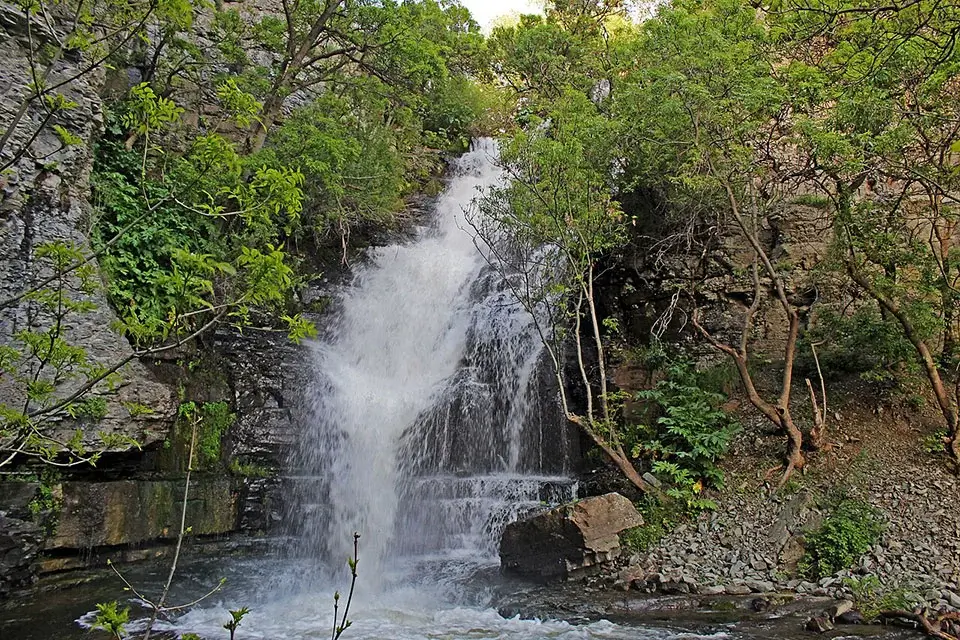
Astghik has a softer, stepped profile. Instead of falling in one vertical stream, the water runs over a series of rocky ledges and a mossy slope before reaching a natural basin. The setting is especially green in late spring and early summer.
Rocks around the basin become very slippery after rain. This is not an equipped swimming area, and access to the water depends on the current flow and the instructions of the accompanying guide.
Where Are the Waterfalls Located?
The waterfalls are in the Azat River valley within the Garni section of Khosrov Forest State Reserve. Geographically they are close to Garni, but the protected landscape and the hiking trail separate them from the usual visitor roads.
Do not confuse this route with the short walk through Garni Gorge to the Symphony of Stones. The waterfall hike goes much deeper into the reserve, requires advance planning and normally takes most of the day.
How to Visit from Yerevan
From Yerevan, drive towards Garni and continue to the meeting point agreed with the reserve administration or hiking organiser. The exact start can change according to the chosen route, road conditions and the access permitted on the day.
A regular car can take visitors to the agreed entrance or meeting point. Some itineraries then use an authorised 4×4 inside the reserve before the hike begins. A standard passenger car cannot drive directly to both waterfalls.
Public transport reaches Garni village but does not solve the two essential parts of the trip: access to the protected reserve and transport to the trailhead. A car with driver in Yerevan can cover the journey to the agreed meeting point, while the permit, guide and any internal 4×4 transfer must be arranged separately.
Route Length and Difficulty
The classic hiking route is approximately 17–18 km long, with an elevation gain of around 450–500 metres. With breaks at both waterfalls, it takes most of the day. The main trail is considered moderate, but the final approach to Vahagn is steeper and can be slippery.
An authorised off-road transfer can reduce the walking distance considerably. This is why online descriptions range from a few kilometres to nearly 20 km: they refer to different starting points, road transfers and tour formats rather than one fixed trail.
A typical visit includes:
- meeting at the approved entrance or visitor point;
- registration and payment;
- road transfer or hike along the permitted route;
- visiting Vahagn Waterfall;
- continuing to Astghik Waterfall;
- returning by the same trail or another approved route.
The order and distance may change. Do not attempt to build an independent route from coordinates alone: mobile reception is unreliable, and parts of the reserve can be closed temporarily.
Permit, Guide and Entrance Fee
Independent, unrestricted access to the waterfalls is not available. A visit must be arranged with the administration of Khosrov Forest State Reserve. Depending on the route, visitors may need registration, an entrance ticket, an authorised guide and approved transport inside the reserve.
Fees and access conditions can change, so a fixed price should not be relied on when planning the trip. Confirm the open route, guide requirement, current charges and transport arrangements before travelling.
- Telephone:
+374 234 2-13-52,+374 234 2-20-30 - Email:
[email protected] - Official information: Ministry of Environment of Armenia
Contact the reserve before departure. Weather, fire restrictions and conservation measures may affect which routes are open.
Best Time to Go
- April–June: the strongest flow, fresh greenery and wildflowers. This is the best period for a first visit, although rain can make the trail slippery.
- July–August: usually less water and much hotter conditions on exposed sections. Start early and carry extra drinking water.
- September–October: comfortable hiking temperatures and generally stable weather, with a lower flow than in spring.
- Winter: ice formations can be impressive, but the long trail becomes more difficult. A winter visit should only be attempted in suitable weather with an experienced guide and proper equipment.
Late April, May and early June usually offer the best balance of water volume, green scenery and manageable temperatures.
What to Bring
- hiking shoes with a reliable grip;
- at least 1.5–2 litres of water per person, more in summer;
- food for a full day;
- hat and sun protection;
- light waterproof or windproof layer;
- spare socks;
- basic first-aid kit and personal medication;
- charged phone and power bank;
- a bag for carrying out all rubbish.
Even in summer, mornings and shaded areas near the water can feel cool. Ordinary city shoes are not suitable, particularly after rain.
Why Are They Called Vahagn and Astghik?
The names come from ancient Armenian mythology. Vahagn was associated with fire, thunder and war and was celebrated as a dragon slayer. Astghik was the goddess of love, beauty and water. Their stories are linked in Armenian tradition, which is why the neighbouring waterfalls carry the names of both deities.
The contrast between the two falls appears to suit the pairing: Vahagn looks forceful and severe, while Astghik is gentler and more graceful. This is a poetic interpretation rather than a geological explanation of the waterfalls.
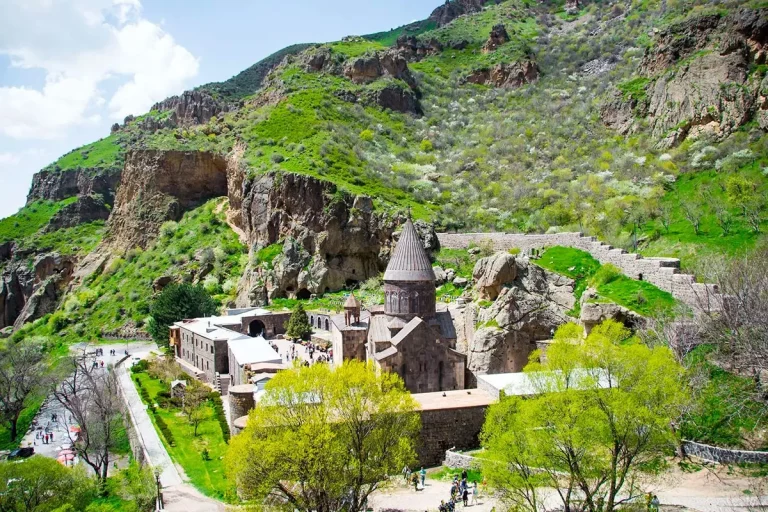
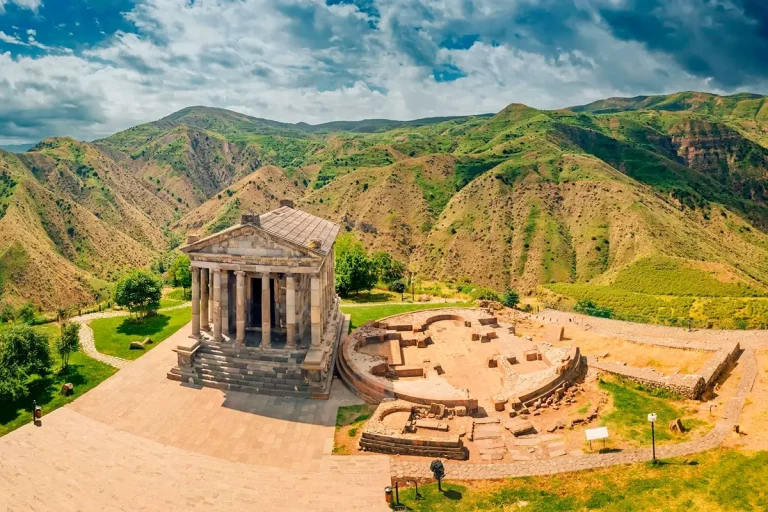
The full waterfall hike takes most of the day, so combining it with Garni and Geghard would feel rushed. It is better to plan a separate Garni and Geghard tour from Yerevan for the temples and the Symphony of Stones, unless a shorter authorised waterfall route is available.
Frequently Asked Questions
Vahagn and Astghik offer a very different experience from the easy-access cascades at Shaki or Jermuk: the protected valley and the hike are as important as the waterfalls themselves. Browse more waterfalls in Armenia to compare locations, seasons and route difficulty.