Mount Dimats
Mount Dimats is a 2,378-metre peak in the Ijevan Mountains of northern Armenia, rising above the forests of…
Armenia is a small country with an unusually rich mix of ancient monasteries, mountain landscapes, historic towns, volcanic gorges and scenic day trips from Yerevan. This guide brings together the best things to do in Armenia for first-time visitors: Garni Temple, Geghard Monastery, Lake Sevan, Tatev, Khor Virap, Noravank, Dilijan and other places worth adding to your route.
Most major attractions can be visited on day trips from Yerevan, especially with a private car and driver. Some routes are short and easy, such as Garni and Geghard, while others, like Tatev and Southern Armenia, are better planned as a long day or an overnight trip.
Below you will find our local guides to Armenia’s top attractions, natural wonders, monasteries, viewpoints and travel routes. Each page includes practical details such as location, travel time from Yerevan, nearby places and tips for planning your visit.
Mount Dimats is a 2,378-metre peak in the Ijevan Mountains of northern Armenia, rising above the forests of…
Amberd Fortress (Armenian: Ամբերդ — “fortress in the clouds”) is a medieval Armenian castle-town on the southern slopes…
Erebuni Fortress (Armenian: Էրեբունի ամրոց) is the Urartian citadel-city founded by King Argishti I in 782 BC on…
The Black Fortress (Armenian: Սև բերդ — Sev Berd; Russian: Чёрная Крепость) is a Russian Imperial fortress built…
Lori Berd (Armenian: Լոռի բերդ — “Lori Fortress”) is an 11th-century Armenian fortress-city occupying a triangular plateau between…
Smbataberd (Armenian: Սմբատաբերդ — “Fortress of Smbat”) is a medieval Armenian fortress crowning a narrow mountain ridge at…
Halidzor Fortress (Armenian: Հալիձորի բերդ) is a 17th–18th-century Armenian architectural complex on a hill overlooking the Voghji river,…
6th-century domed basilica in pink felsite on the Debed canyon plateau, 165 km from Yerevan. Rebuilt in the 8th century by Catholicos John of Odzun, with one of only two surviving stelae funerary monuments in Armenia — and a relief of Armenia’s conversion to Christianity carved into the stone.
Cave shrine of the Virgin Barbara (Kuys Varvara) carved into the southern cliffs of Mount Ara, 35 km from Yerevan. Two folk legends, a zinc-rich healing spring, and a quiet uphill walk that ends in one of the best Ararat-valley views in Aragatsotn.
Bagratid-era monastery (988–1029) on a shelf above the Akhurian river, 10 km from Gyumri. Founded by Prince Vahram Pahlavuni, sparapet of the Armenian kingdom of Ani — three churches in red tuff, an Ani-school umbrella dome, and the burial of the patron and his family.
7th–13th-century monastery on a promontory between two canyons in Shirak — a 7th-century Mastara-style church alongside the 1201 Zakarian cathedral that set the template for Gandzasar. Summer seat of the Catholicos of All Armenians since 1850.
9th–13th-century Pahlavuni fortress on a basalt mesa above the Hrazdan river, 50 km from Yerevan. The seat from which Grigor Magistros Pahlavuni ran his estates, the place where the Catholicos of All Armenians was elected in 1066 — and one of the quietest medieval ruins in Kotayk.
Ruins of one of the earliest Christian basilicas in Armenia (4th–6th c.) on a Shirak plateau above the Akhurian river. Six-step stylobate, Syrian-style architecture, a Greek inscription, and a view across the border to the medieval city of Ani — UNESCO Tentative List since 1995.
13th-century “Monastery of Psalms” on the edge of the 200-metre Kasagh canyon, 40 km from Yerevan. The Vachutian princes’ main foundation in Aragatsotn — twin of Hovhannavank, with a rare medieval book repository built in 1255 and views all the way to Mount Ararat.
Makaravank Monastery (Armenian: Մակարավանք) is a 10th–13th-century Armenian monastic complex on the forested slope of Mount Paytatap, in…
Medieval monastery on the cliff edge of the Kasagh canyon, 30 km from Yerevan. A 4th-century basilica founded by St. Gregory the Illuminator, a 13th-century cathedral with the rare “Wise and Foolish Virgins” relief, and the largest rotunda belfry in Armenia.
Armenia’s first UNESCO World Heritage Site (1996), in the Debed canyon. Surb Nshan Cathedral founded by Queen Khosrovanush in 976, the 1245 free-standing bell tower, the celebrated 1273 Amenaprkich khachkar, and a library where manuscripts were once hidden from the Mongols.
UNESCO-listed twin of Haghpat in the Debed canyon. The 10th-century cathedral of Surb Amenaprkich, the medieval academy of Grigor Magistros, the oldest four-column gavit in Armenian architecture, and the lion-bridge over the Debed — 175 km north of Yerevan
Medieval Armenian monastery (11th–13th c.) in the ski resort town of Tsaghkadzor, 60 km from Yerevan. Four stone churches, 30 khachkars, and a quiet forest setting on the Pambak Ridge — an easy day trip with Lake Sevan.
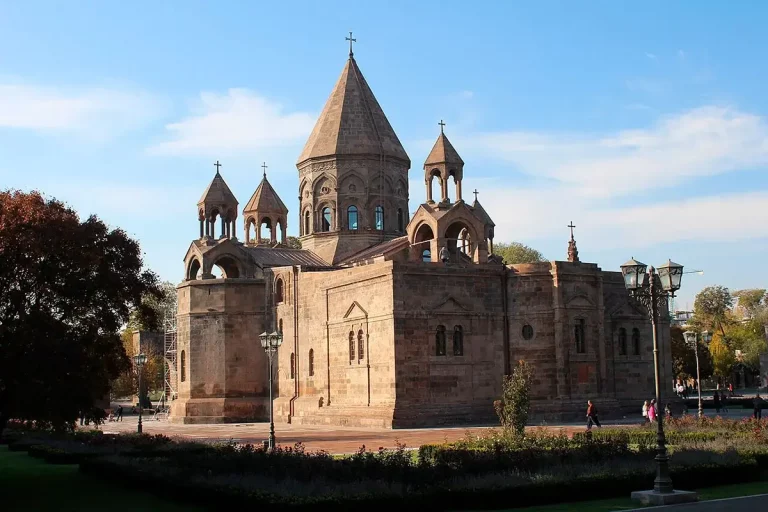
Mother See of the Armenian Apostolic Church and the world’s oldest cathedral (301–303 AD), 20 km from Yerevan. UNESCO site with the Holy Lance, a fragment of Noah’s Ark, and 18th-century Hovnatanyan frescoes.
Fortress monastery in northern Armenia with some of the finest Byzantine frescoes outside the Byzantine empire — 13th-century paintings on every interior wall, inscribed in Armenian, Greek and Georgian.
Armenia’s highest mountain — an extinct four-peaked stratovolcano with summits up to 4,090 metres ringing a three-kilometre crater, climbed from Lake Kari on the southern slope.
Sacred 3,206-metre peak in southern Armenia above Kapan — alpine meadows, pre-Christian pilgrimage springs and the longest, hardest day-hike summit in the Syunik mountains.
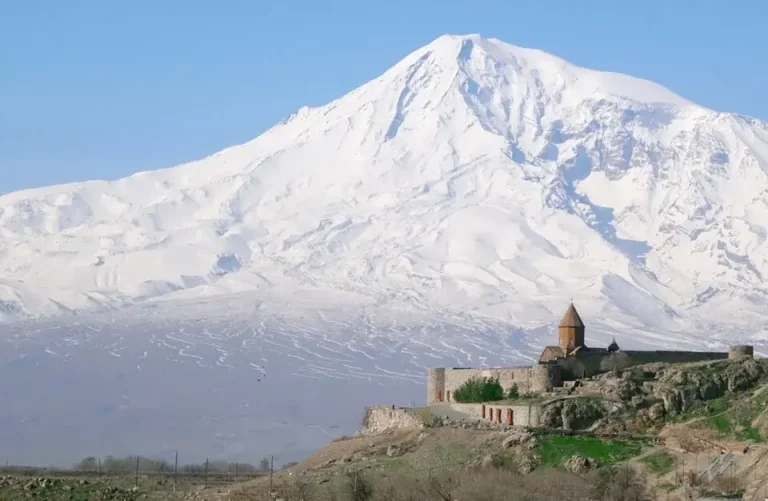
Twin volcanic peaks rising 5,137 metres above the plain — Armenia’s sacred mountain, visible from Yerevan and photographed best at sunrise from the monastery of Khor Virap.
Highest peak of the Geghama range (3,597 m) with a perfectly round crater lake at the summit, surrounded by petroglyphs and ancient dragon stones — a serious day hike from Yerevan.
Easy 6-kilometre hike up Mount Artanish, a 2,461-metre peak on the Artanish Peninsula, with one of the best panoramic views of Lake Sevan in Armenia.
Extinct volcano 36 km north of Yerevan with a ring crater and the silhouette of a sleeping giant — the mythical mountain of King Ara the Beautiful.
Cone-shaped volcano of the Geghama range less than an hour from Yerevan — multiple trails from Kaputan, Zovashen and Argel, plus the Karasunakn springs and a hilltop cave.
Easy day hike to the 2,299-metre extinct volcano of Mount Gutanasar in Kotayk, an hour from Yerevan, with sweeping views of Aragats, Ararat, Ara and Hatis from the summit.
Yerevan’s 450-metre pedestrian boulevard between Republic Square and the Opera House, lined with luxury shops, cafés and restaurants — Alexander Tamanyan’s 1924 idea finally realised in 2007.
Yerevan’s central square: Alexander Tamanyan’s neoclassical ensemble of pink-and-yellow tuff buildings, the iconic stone-carpet roundabout and the musical singing fountains in front of the History Museum.
Yerevan’s repository of ancient manuscripts: more than 17,000 medieval Armenian books and documents on the UNESCO Memory of the World list, in a tuff building above Mashtots Avenue.
Monumental 572-step staircase of white travertine in central Yerevan, with sculpture gardens, the Cafesjian art collection and panoramic views of the city and Mount Ararat.
Yerevan’s neoclassical opera house — Alexander Tamanyan’s Grand Prix-winning design on Freedom Square, home to the Spendiaryan and Khachaturian halls since 1933 and the heart of Armenian musical life.
Armenia’s principal memorial to the 1.5 million victims of the 1915 Armenian Genocide — a 44-metre stele, eternal flame, and Memorial Wall on a hill above Yerevan.
Thirty-nine giant tuff letters on Mount Aragats — Armenia’s Park of Letters honours a 1,600-year-old alphabet and the saint who created it in 405 CE.
Armenia’s wild south — Shikahogh’s relict yew grove, Arevik National Park, the Persian leopard, the Caucasus’s largest plane-tree grove, and the Zangezur Biosphere Complex that holds it all together.
Armenia’s largest national park — Lake Sevan and 22,697 ha of shoreline, the endemic ishkhan trout, the world-largest Armenian gull breeding colony, and four strict reserve zones.
Armenia’s ‘Little Switzerland’ — 33,765 hectares of beech and yew forests, two mountain lakes, four medieval monasteries, and 80 km of the Transcaucasian Trail, all 100 km north of Yerevan.
A 90-km canyon walls Armenia’s central plain with vertical 100-m cliffs, crowned by two sister monasteries — Hovhannavank and Saghmosavank — built by the same princely family eight centuries ago.
Khosrov Forest State Reserve is Armenia’s oldest protected area and one of the few places on Earth with…
The first forest park in the Transcaucasus — a 35-hectare arboretum in Lori with around 500 tree species from California sequoias to Lebanon cedars, founded in 1931 by a Polish forester.
The cave near Areni village that gave the world its oldest leather shoe (~5,500 years) and its oldest known winery (~6,100 years) — both still being excavated, with the originals now in Yerevan.
A cave village abandoned only in 1958, ~3,000 rock-cut dwellings on a 3 km gorge near Goris, reached by a swinging 160 m bridge built by villagers themselves in 2012.
A megalithic site of 223 basalt stones on a 1,770 m plateau in Syunik — sometimes called the “Armenian Stonehenge”, contested between observatory and necropolis interpretations.
Armenia’s best-preserved Silk Road inn at 2,410 m, built in 1332 by the Orbelian princes. Officially renamed Orbelian’s Caravanserai in 2014.
Armenia’s most photogenic man-made lake — turquoise water inside the same black basalt canyon as the Symphony of Stones, just 40 minutes from Yerevan on the road to Garni.
A six-petal star-shaped spillway on the road to Jermuk — the most photographed piece of Soviet hydro-engineering in Armenia, set on a 48 km tunnel longer than the route under the English Channel.
A crater lake at 3,032 m in the Geghama volcanic plateau — Armenia’s classic high-altitude trek, with Bronze Age petroglyphs and an optional ascent of Mount Azhdahak.
Armenia’s second-largest lake and a Ramsar wetland on the Ashotsk Plateau — home to the world’s largest Armenian gull colony and the country’s only breeding Dalmatian pelicans.
A quiet forest lake hidden in Dilijan National Park, a short walk from medieval Goshavank Monastery. Mirror reflections, beech woods, and no crowds.
A small “Clear Lake” in Dilijan National Park — forest setting, boats and zipline on site, and the classic easy hike through beech woods to 12th‑century Goshavank Monastery.
Armenia’s highest drive-up lake at 3,207 m on Mount Aragats — turquoise alpine basin, classic Aragats summit trailhead, and the only place you can stand above 3,200 m without hiking.
The closest waterfall to Yerevan — a basalt‑canyon cascade directly opposite the 5th‑century Hovhannavank Monastery. Easy half‑day trip combining nature, geology and medieval architecture.
The highest‑situated waterfall in Armenia — a 17 m cascade on Mount Aragats at 3,000 m elevation, with alpine meadows, an icy plunge basin and a classic approach route to Aragats’s North Peak.
Herher Waterfall (also written Herheri Waterfall, sometimes referred to alongside Qaravaz Waterfalls) is one of the most photogenic…
Trchkan Waterfall is the tallest vertical waterfall in Armenia — a 23-metre sheet of water dropping straight off…
Jermuk Waterfall is one of the most striking natural sights in Armenia — a thin, flowing curtain of…
Shaki Waterfall is an 18-metre cascade in southern Armenia, dropping over a wall of solidified basalt lava on…
Kobayr Monastery (Armenian: Քոբայր) is a partly preserved 12th–13th-century monastic complex clinging to a vertical cliff above the…
Sevanavank Monastery (Armenian: Սևանավանք — “the Black Monastery”) is one of the most recognisable images of Armenia. Set…
Hayravank Monastery (Armenian: Հայրավանք — “Father’s Monastery”) is a 9th–12th-century complex perched on a rocky cliff above the…
Zvartnots Cathedral (Armenian: Զվարթնոց — “the Celestial Angels”) is the ruined remains of a 7th-century circular cathedral on…
Goshavank Monastery (Armenian: Գոշավանք — “the Monastery of Gosh”) is a 12th–13th-century complex in the forested valley of…
Haghartsin Monastery (Armenian: Հաղարծին — “the playing eagles”) is a medieval complex built between the 10th and 13th…
A 9th-century clifftop monastery reached by the Wings of Tatev — the world’s longest reversible cable car (5.7 km) over the Vorotan Gorge.
A 13th-century monastic masterpiece in the red cliffs of Vayots Dzor — the two-story Surb Astvatsatsin Church, Momik’s carvings, and the dramatic sunset glow.
The pit where St. Gregory was imprisoned for 13 years before Armenia became the first Christian nation in 301 AD — and the best view of Mount Ararat in the country.
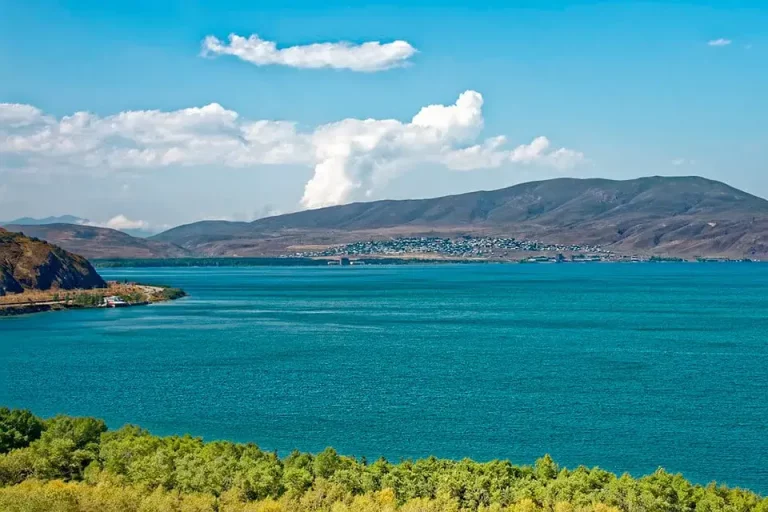
Armenia’s high-altitude inland sea, 1,900 m above sea level. Guide to Sevanavank Monastery, beaches, Sevan trout, and the Soviet-era water-level crisis.
A 1957 stone monument framing the most photographed view of Mount Ararat in Armenia — a brief but worthwhile stop on the road from Yerevan to Garni.
Hexagonal basalt columns hanging from the cliffs of Garni Gorge — Armenia’s natural cathedral. How to visit from Yerevan and tips for combining with Garni Temple.
A UNESCO World Heritage site partly carved into the cliffs of the Azat Valley. Rock-cut churches, ornate khachkars, and a centuries-long link to the Holy Lance — 40 km from Yerevan.
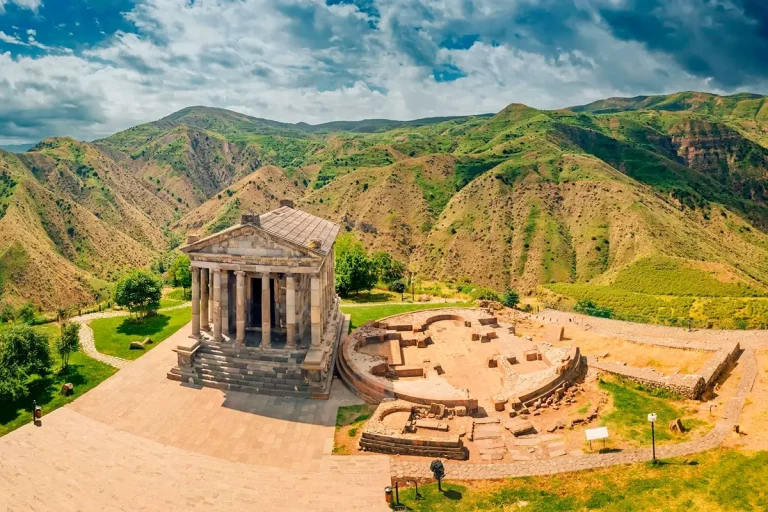
The only standing Greco-Roman temple in Armenia, perched above the Azat Gorge near Yerevan. History, entrance fee, opening hours and how to visit from Yerevan.
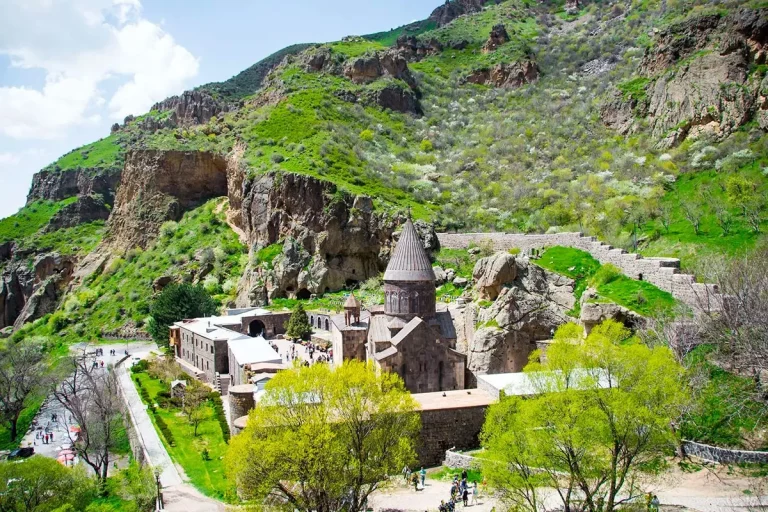
Armenia's most rewarding sights are spread across the country — ancient monasteries in the mountains, high-altitude lakes, red-cliff canyons and viewpoints often far from public transport. Seeing several in one day is realistic only when you skip the schedules and travel with your own driver.
For day trips, book a car with driver in Yerevan: the route is built around you, with stops at every viewpoint and no parking worries. For families with luggage, see the Mercedes V-Class or our minivan rental; for larger groups, the minibus rental with driver.
If you'd rather hear the story of each place from a local guide, browse our day tours from Yerevan. For one-way trips on popular routes we offer fixed-price transfers — Yerevan to Sevan, Yerevan to Dilijan, Yerevan to Tsaghkadzor — plus the Zvartnots airport transfer with meet-and-greet on arrival.