
Tatevi Mets Anapat
Tatevi Mets Anapat is a secluded 17th-century monastery complex deep in the Vorotan Gorge below Tatev. Its church, walls, monastic cells and other historic buildings survive in a dramatic mountain setting.
Armenia became the first country in the world to adopt Christianity as a state religion in 301 AD, and the landscape today still carries more than 4,000 churches and monasteries — some clinging to cliffs, some hidden in forests, some standing on the empty steppe with Mount Ararat as backdrop. The catalogue below covers the country’s most-visited sites: from the 1st-century pagan temple of Garni to the 13th-century Tatev Monastery with its cable car over the Vorotan canyon. Each entry gives a short summary, the distance from Yerevan, and the natural day-trip combination. Four monastic complexes are UNESCO World Heritage Sites: Echmiadzin Cathedral, Geghard, Haghpat, and Sanahin.

Tatevi Mets Anapat is a secluded 17th-century monastery complex deep in the Vorotan Gorge below Tatev. Its church, walls, monastic cells and other historic buildings survive in a dramatic mountain setting.

Zorats Church is an unusual medieval church in Yeghegis, built in the early 14th century. Its open layout and raised altar are traditionally associated with the blessing of warriors before battle.

Tsakhats Kar is a medieval monastery complex in the mountains of Vayots Dzor, known for its 10th–11th-century churches, khachkars, stone reliefs and panoramic views over the Yeghegis valley.

Hnevank is a medieval monastery in Lori Province, set among the mountains above the Dzoraget River. The secluded complex combines historic architecture with dramatic gorge scenery.

Sisavan is a 7th-century Armenian church in the town of Sisian. The monument is known for its distinctive domed architecture, ancient stone reliefs and well-preserved medieval appearance.

Vorotnavank is a medieval monastery near Sisian overlooking the Vorotan River valley. The complex is known for its 11th-century churches, khachkars, old cemetery and panoramic views of Syunik.

Gndevank is a 10th-century Armenian monastery hidden in the Arpa River gorge near Jermuk. The complex is known for its 936 Surb Stepanos Church, medieval khachkars and dramatic mountain setting.

Matosavank is a small medieval monastery hidden in the forests of Dilijan National Park. The ruined 13th-century complex is located close to Dilijan and Jukhtakvank.

Jukhtakvank is a small medieval monastery hidden in the forests near Dilijan. Its two churches and peaceful natural setting make it a good stop for a short walk outside the town.

Vahanavank is a 10th–11th-century monastery near Kapan in Syunik Province, known for its medieval churches, royal tombs and role as a religious centre of the Kingdom of Syunik.

6th-century domed basilica in pink felsite on the Debed canyon plateau, 165 km from Yerevan. Rebuilt in the 8th century by Catholicos John of Odzun, with one of only two surviving stelae funerary monuments in Armenia — and a relief of Armenia’s conversion to Christianity carved into the stone.

Cave shrine of the Virgin Barbara (Kuys Varvara) carved into the southern cliffs of Mount Ara, 35 km from Yerevan. Two folk legends, a zinc-rich healing spring, and a quiet uphill walk that ends in one of the best Ararat-valley views in Aragatsotn.

Bagratid-era monastery (988–1029) on a shelf above the Akhurian river, 10 km from Gyumri. Founded by Prince Vahram Pahlavuni, sparapet of the Armenian kingdom of Ani — three churches in red tuff, an Ani-school umbrella dome, and the burial of the patron and his family.

7th–13th-century monastery on a promontory between two canyons in Shirak — a 7th-century Mastara-style church alongside the 1201 Zakarian cathedral that set the template for Gandzasar. Summer seat of the Catholicos of All Armenians since 1850.

Ruins of one of the earliest Christian basilicas in Armenia (4th–6th c.) on a Shirak plateau above the Akhurian river. Six-step stylobate, Syrian-style architecture, a Greek inscription, and a view across the border to the medieval city of Ani — UNESCO Tentative List since 1995.

13th-century “Monastery of Psalms” on the edge of the 200-metre Kasagh canyon, 40 km from Yerevan. The Vachutian princes’ main foundation in Aragatsotn — twin of Hovhannavank, with a rare medieval book repository built in 1255 and views all the way to Mount Ararat.
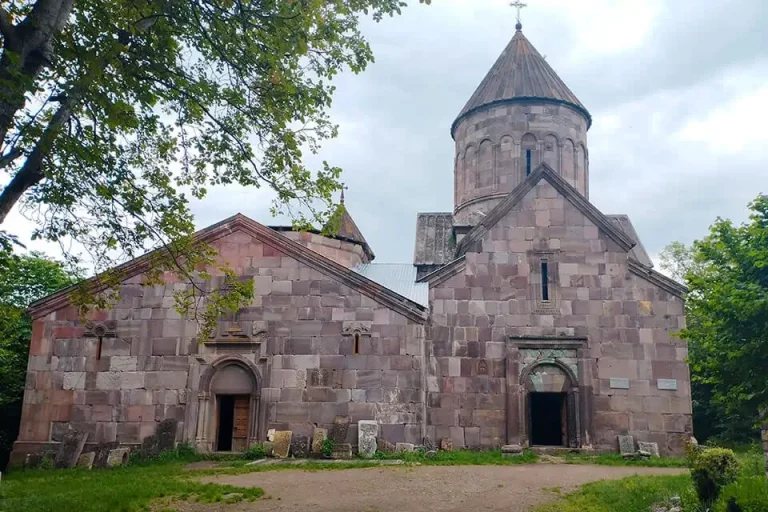
Makaravank Monastery (Armenian: Մակարավանք) is a 10th–13th-century Armenian monastic complex on the forested slope of Mount Paytatap, in…

Medieval monastery on the cliff edge of the Kasagh canyon, 30 km from Yerevan. A 4th-century basilica founded by St. Gregory the Illuminator, a 13th-century cathedral with the rare “Wise and Foolish Virgins” relief, and the largest rotunda belfry in Armenia.

Armenia’s first UNESCO World Heritage Site (1996), in the Debed canyon. Surb Nshan Cathedral founded by Queen Khosrovanush in 976, the 1245 free-standing bell tower, the celebrated 1273 Amenaprkich khachkar, and a library where manuscripts were once hidden from the Mongols.

UNESCO-listed twin of Haghpat in the Debed canyon. The 10th-century cathedral of Surb Amenaprkich, the medieval academy of Grigor Magistros, the oldest four-column gavit in Armenian architecture, and the lion-bridge over the Debed — 175 km north of Yerevan

Medieval Armenian monastery (11th–13th c.) in the ski resort town of Tsaghkadzor, 60 km from Yerevan. Four stone churches, 30 khachkars, and a quiet forest setting on the Pambak Ridge — an easy day trip with Lake Sevan.
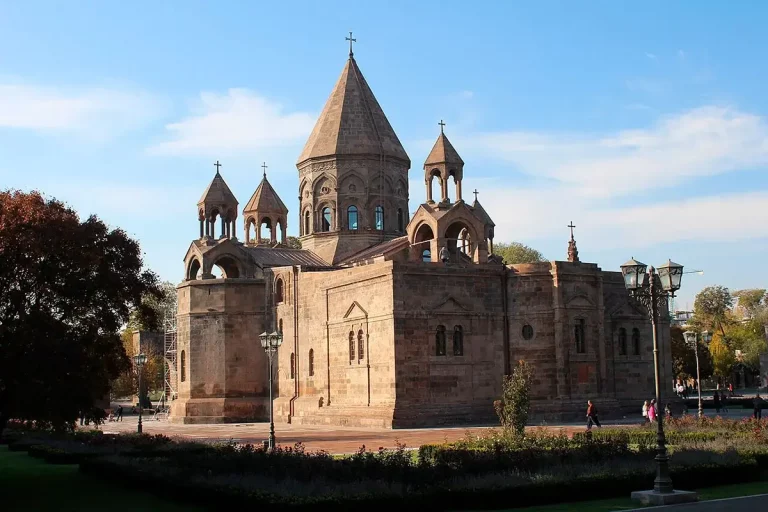
Mother See of the Armenian Apostolic Church and the world’s oldest cathedral (301–303 AD), 20 km from Yerevan. UNESCO site with the Holy Lance, a fragment of Noah’s Ark, and 18th-century Hovnatanyan frescoes.

Fortress monastery in northern Armenia with some of the finest Byzantine frescoes outside the Byzantine empire — 13th-century paintings on every interior wall, inscribed in Armenian, Greek and Georgian.

Kobayr Monastery (Armenian: Քոբայր) is a partly preserved 12th–13th-century monastic complex clinging to a vertical cliff above the…

Sevanavank Monastery (Armenian: Սևանավանք — “the Black Monastery”) is one of the most recognisable images of Armenia. Set…

Hayravank Monastery (Armenian: Հայրավանք — “Father’s Monastery”) is a 9th–12th-century complex perched on a rocky cliff above the…

Zvartnots Cathedral (Armenian: Զվարթնոց — “the Celestial Angels”) is the ruined remains of a 7th-century circular cathedral on…

Goshavank Monastery (Armenian: Գոշավանք — “the Monastery of Gosh”) is a 12th–13th-century complex in the forested valley of…

Haghartsin Monastery (Armenian: Հաղարծին — “the playing eagles”) is a medieval complex built between the 10th and 13th…

A 9th-century clifftop monastery reached by the Wings of Tatev — the world’s longest reversible cable car (5.7 km) over the Vorotan Gorge.

A 13th-century monastic masterpiece in the red cliffs of Vayots Dzor — the two-story Surb Astvatsatsin Church, Momik’s carvings, and the dramatic sunset glow.
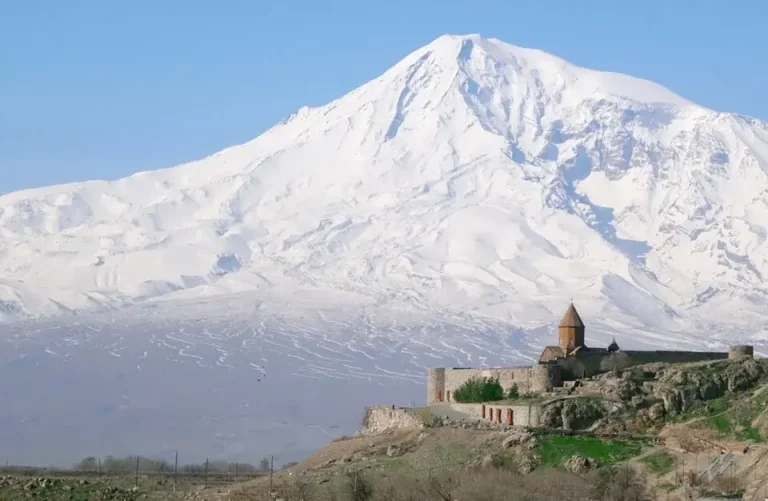
The pit where St. Gregory was imprisoned for 13 years before Armenia became the first Christian nation in 301 AD — and the best view of Mount Ararat in the country.
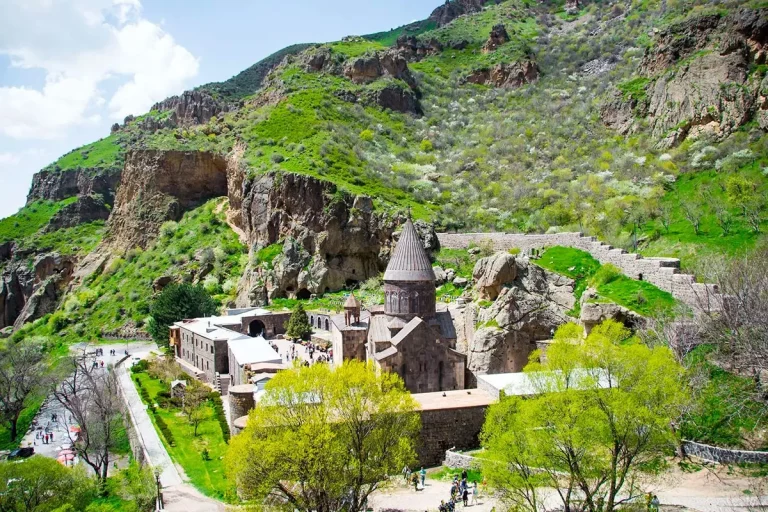
A UNESCO World Heritage site partly carved into the cliffs of the Azat Valley. Rock-cut churches, ornate khachkars, and a centuries-long link to the Holy Lance — 40 km from Yerevan.
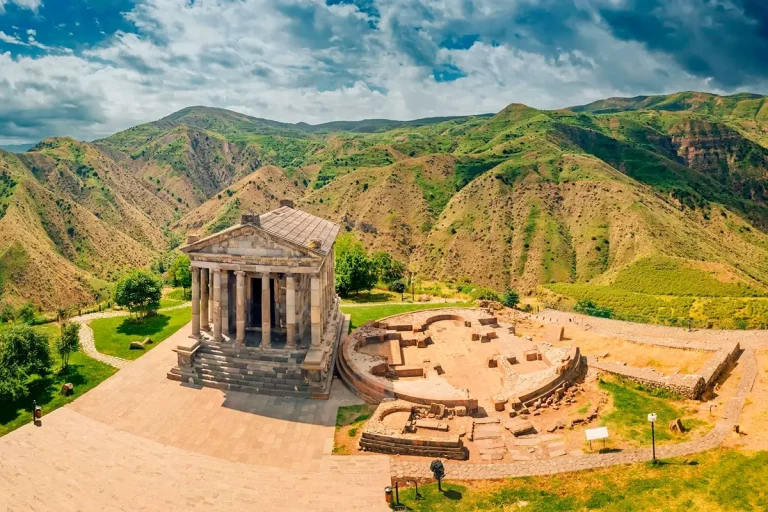
The only standing Greco-Roman temple in Armenia, perched above the Azat Gorge near Yerevan. History, entrance fee, opening hours and how to visit from Yerevan.
The monasteries are the main reason most travellers come to Armenia: the rock-cut sanctuary of Geghard, the 1st-century pagan temple of Garni, Noravank in its red-rock canyon, and Tatev on the edge of a thousand-metre gorge. Most of them sit far from the cities, and without a car they are hard to combine into a single day.
The classic Kotayk pair Garni–Geghard works as a half-day from Yerevan; the southern route via Khor Virap, Noravank and the Tatev cable car is a long full-day trip; the northern UNESCO loop through Haghpat, Sanahin and the Debed canyon is best as an overnight from Yerevan. The most flexible option is to hire a car with driver and build a route around the monasteries you want to see most.