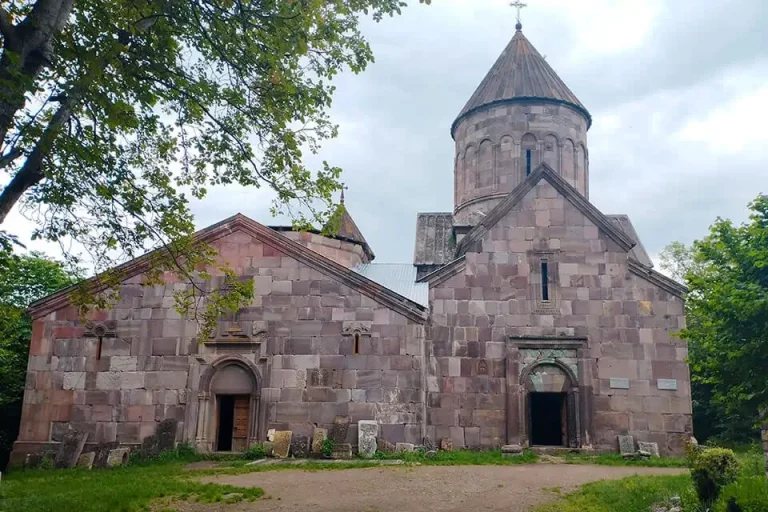
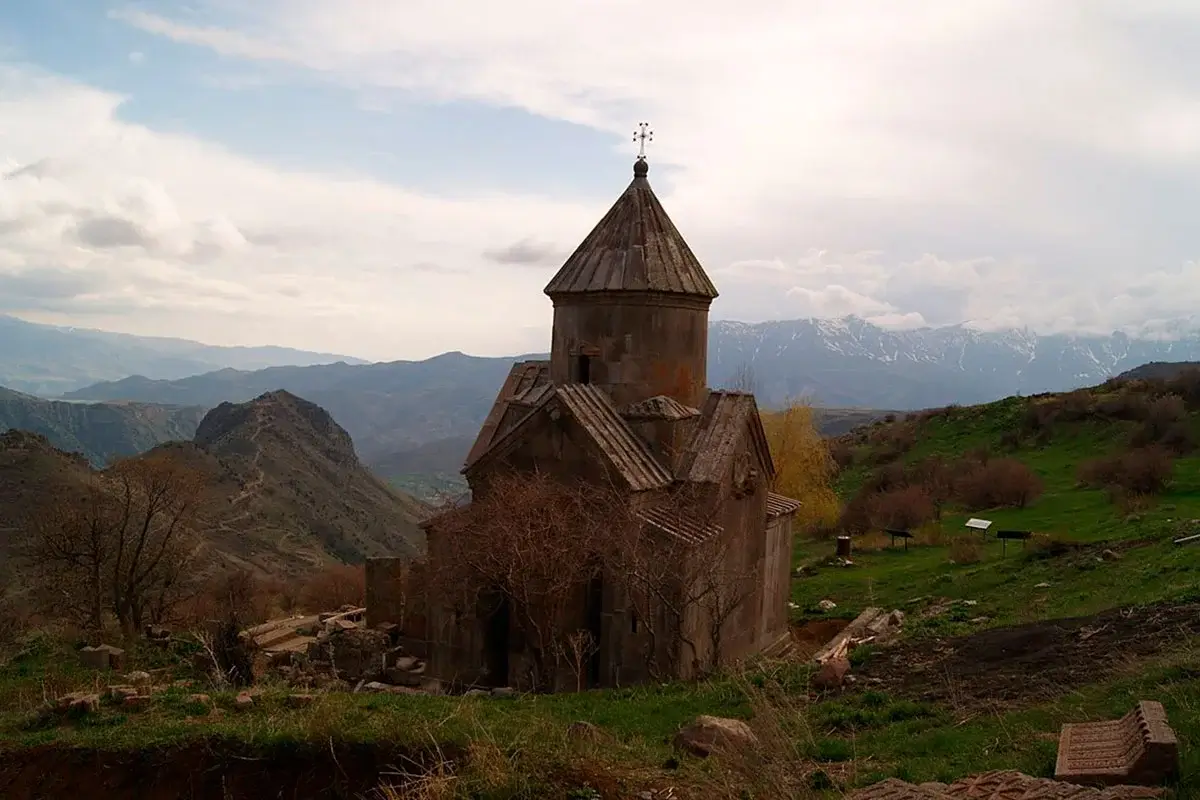
Tsakhats Kar Monastery
Tsakhats Kar is a medieval monastery complex set high in the mountains of Vayots Dzor above the Yeghegis valley. Visitors come not only for its ancient churches and khachkars, but also for the setting: open mountain slopes, deep valleys and almost no modern development around the site.
The monastery lies away from the main tourist roads, so visiting Tsakhats Kar feels very different from seeing Armenia’s more accessible monasteries. It combines especially well with Smbataberd Fortress, another medieval monument in the same mountain area.
Quick Facts
- Built / Founded: 10th–11th centuries
- Location: Yeghegis, Vayots Dzor Province
- Elevation: 2100 m
- Entrance fee: Free
- Time needed: 45–60 minutes
- Best time to visit: May–October
Where Is Tsakhats Kar Monastery?
Tsakhats Kar is located in Vayots Dzor Province, in the mountains above the Yeghegis valley. The monastery is about 6 km from Yeghegis village, although the mountain terrain and unpaved road make the journey slower than the distance might suggest.
The complex stands at an elevation of about 2,100 metres. Its open position provides wide views across the surrounding slopes and valleys of Vayots Dzor, giving the site a much more secluded atmosphere than monasteries located beside Armenia’s main roads.
History of Tsakhats Kar Monastery
The history of Tsakhats Kar goes back to the 10th century. The earliest part of the complex is associated with the period of King Abas Bagratuni, when a monastic centre already existed in this highland area.
The monastery expanded significantly in the 11th century. Medieval sources record that in 1041 Abbot Vardik built new churches, which today form the best-preserved eastern part of the complex.
Tsakhats Kar was more than a religious site. During the Middle Ages it also served as a cultural and educational centre, and its history was closely connected with the princely families of Syunik and nearby Smbataberd Fortress.
What to See at Tsakhats Kar
It is important to know that Tsakhats Kar is not one compact monastery courtyard. The complex consists of two groups of buildings located about 200 metres apart, so it is worth allowing enough time to explore both sections.
The eastern group is the better preserved of the two. Its main monument is Surb Karapet Church, built from carefully cut basalt, while nearby stands an unusual two-storey structure combining a church, burial chamber and small chapel.
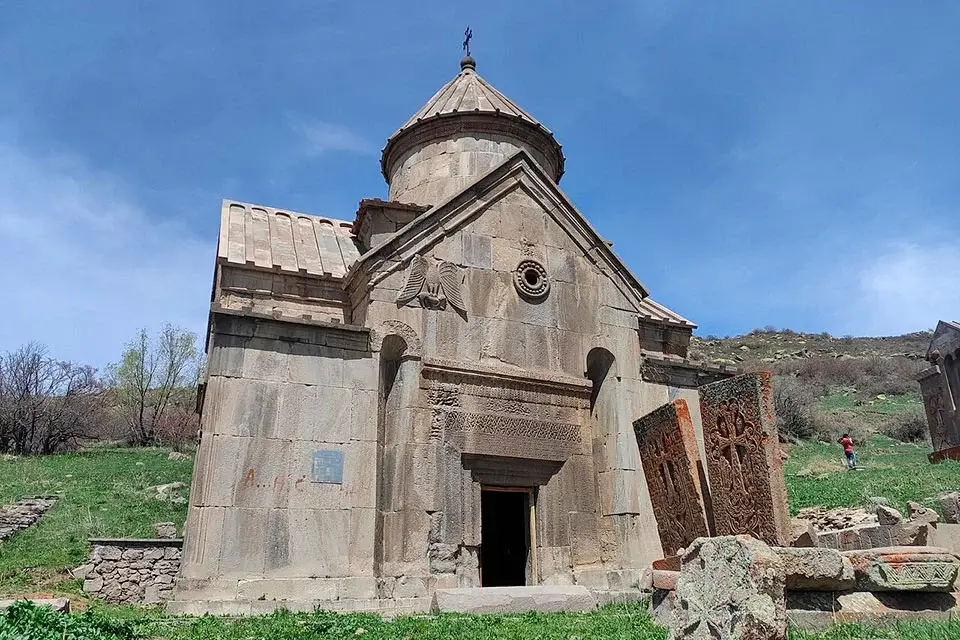
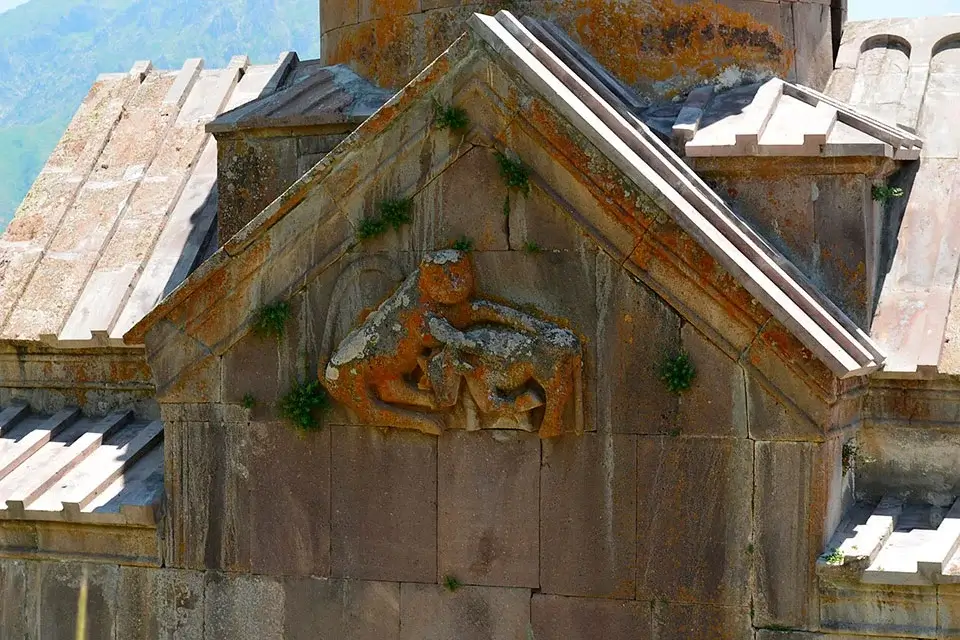
Stone reliefs and decorative carvings survive on several walls. One of the best-known details is a relief depicting a lion and a bull. Old khachkars and gravestones can also be seen around the monastery buildings.
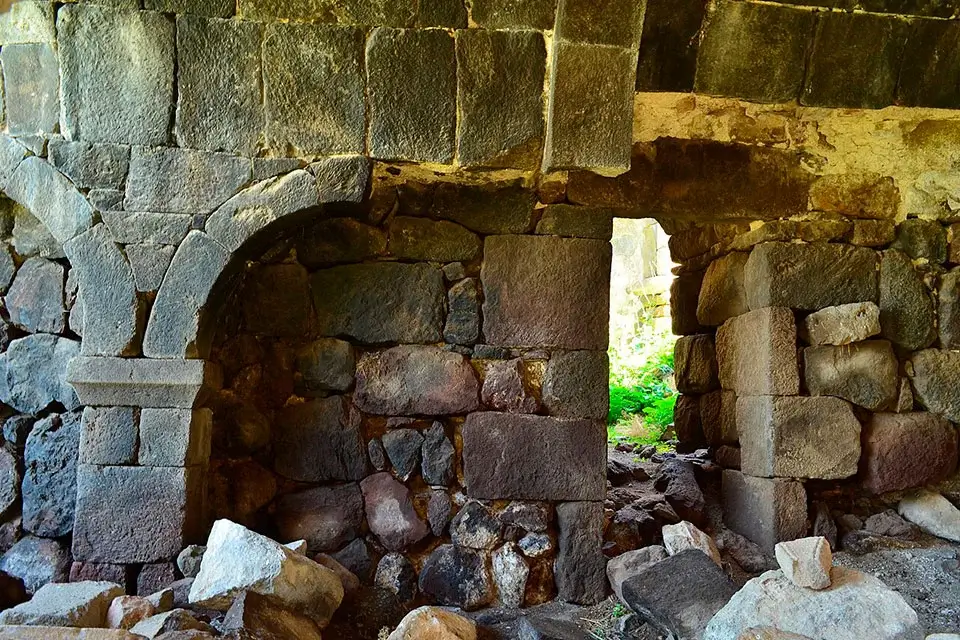
The western group is more ruined, but it helps reveal the original scale of the monastery. Here you can see remains of earlier churches, a gavit and other structures once connected with the life of the medieval complex.
Tsakhats Kar and Smbataberd Fortress
Tsakhats Kar is most naturally visited together with Smbataberd Fortress. The two monuments stand in the same mountain area and were historically connected: the monastery served as a religious and educational centre, while the fortress protected the surrounding territory.
Mountain roads and hiking trails connect the two sites, making them one of the most rewarding combinations in Vayots Dzor. Medieval architecture, open ridgelines and views over the Yeghegis valley all form part of the same route.
How to Get to Tsakhats Kar Monastery
Mountain dirt roads lead toward Tsakhats Kar from the Yeghegis and Artabuynk area. The final section is very different from a normal paved road, so road conditions and weather should always be considered before travelling independently.
A 4×4 or another vehicle with good ground clearance is the most practical option for driving close to the monastery. Reaching the site in a standard passenger car depends heavily on current road conditions, especially after rain or spring snowmelt.
Another option is to leave the vehicle lower down and continue on foot. Several tracks and hiking routes connect Artabuynk, Smbataberd, Tsakhats Kar and Yeghegis, making the monastery a good destination for a longer mountain walk.
Best Time to Visit Tsakhats Kar
For a road trip, the most convenient period is from late spring to mid-autumn, when mountain tracks are generally more predictable. The slopes are green in spring, while autumn brings cooler temperatures that are particularly comfortable for hiking.
Summer can be hot and exposed in Vayots Dzor, so morning is preferable for a longer walk. In winter and early spring, snow, ice and muddy dirt roads can make access considerably more difficult.
What to Bring
Wear comfortable closed shoes, especially if part of the route will be completed on foot. The landscape is open and rocky, and the ground between the different parts of the monastery is uneven.
Bring drinking water, sun protection and some food. There is almost no tourist infrastructure directly around Tsakhats Kar, so do not expect cafés or shops beside the monastery.
Tsakhats Kar in a Vayots Dzor Itinerary
Tsakhats Kar is best planned as the mountain section of a trip through Vayots Dzor. The most natural combination is Tsakhats Kar and Smbataberd, since the two medieval sites are close to each other and complement one another historically and visually.
If you have a full day, the route can also include Yeghegis village and other historic sites in this part of the region. On a wider Vayots Dzor itinerary, Tsakhats Kar can be combined on separate stages with the attractions around Areni and Noravank.