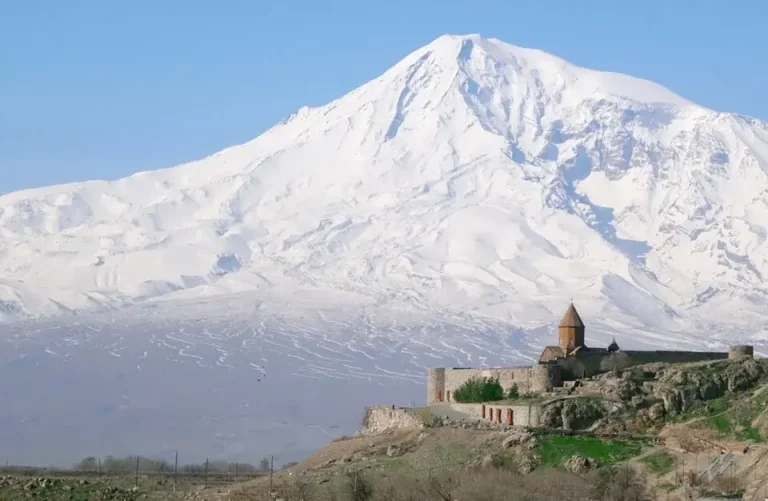

Vorotnavank Monastery
Vorotnavank Monastery is one of the most interesting medieval complexes near Sisian. Set on a high terrace above the Vorotan River valley, it combines historic architecture, old khachkars and wide views across the mountainous landscape of Syunik.
Most of the surviving complex took shape around the turn of the 11th century. Its best-known buildings are Surb Stepanos and Surb Karapet churches, both connected with the ruling family of Syunik. Vorotnavank is easy to combine with nearby Vorotnaberd Fortress in the same trip.
Quick Facts
- Built / Founded: 1000
- Location: Sisian, Syunik Province
- Time needed: 45–60 minutes
- Best time to visit: April to October
Where Is Vorotnavank Monastery?
Vorotnavank is located east of Sisian in Syunik Province, in the area between Vaghatin and Vorotan villages. The monastery stands above the Vorotan River valley, and its setting is one of the main reasons to visit.
From the monastery grounds, visitors can look across the deep gorge, surrounding slopes and mountain landscape. The site is generally quieter than Armenia’s most famous monasteries, which makes it easy to explore at a relaxed pace.
History of Vorotnavank Monastery
The religious history of this site began before the main 11th-century buildings were constructed. According to medieval tradition, an earlier Surb Grigor church was associated with Gregory the Illuminator and formed the oldest part of the sacred site.
The main period of development came at the end of the 10th and beginning of the 11th century. In 1000, Queen Shahandukht, wife of King Smbat of Syunik, built Surb Stepanos Church. In 1007, her son Prince Sevada added Surb Karapet Church.
Vorotnavank later became more than a religious centre. It also developed into an important place of learning and manuscript culture in Syunik, associated with prominent medieval scholars and clerics.
Surb Stepanos and Surb Karapet Churches
Surb Stepanos Church stands in the north-eastern part of the complex. Built in 1000, it is a relatively compact vaulted church constructed from local stone.
Nearby is the larger Surb Karapet Church, completed in 1007. It has a central dome and a cross-shaped interior arrangement, while the walls are built from carefully cut basalt blocks.
The church suffered serious damage during the 1931 earthquake, when the dome and parts of the upper structure collapsed. Later restoration work helped preserve the overall form of the monastery complex seen today.
What to See at Vorotnavank
Begin with Surb Stepanos and Surb Karapet churches, then walk through the monastery courtyard and explore the surviving galleries, gavit and other stone structures.
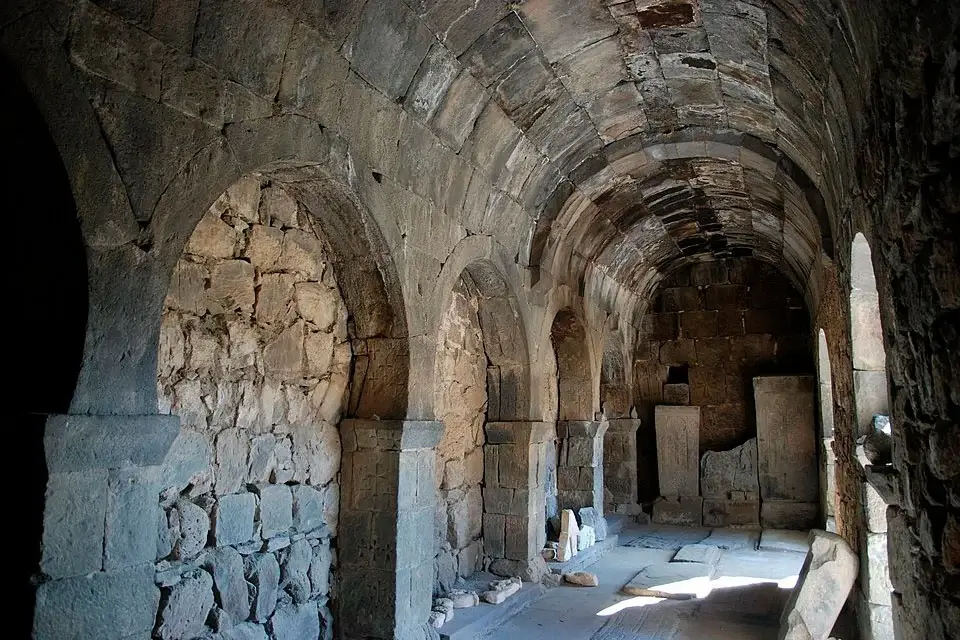
The grounds contain old khachkars and gravestones from different periods. Members of the ruling family of Syunik were also buried here, including Queen Shahandukht and her son Sevada.
Another interesting feature is the 11th-century memorial column near Surb Karapet Church. It is also worth walking toward the edge of the monastery grounds for views over the Vorotan valley and surrounding mountains.
Vorotnavank and Vorotnaberd Fortress
Vorotnaberd Fortress is located a short distance from the monastery. During the Middle Ages, Vorotnavank and Vorotnaberd formed part of the same strategic landscape protecting the Vorotan valley and an important regional centre.
The two sites are especially convenient to visit together. Vorotnavank represents the religious and cultural history of medieval Syunik, while Vorotnaberd shows its military architecture and defensive traditions.
Best Time to Visit Vorotnavank
April to October is the most convenient period for visiting Vorotnavank. Spring brings green slopes to the valley, summer usually offers easier access, and early autumn is especially pleasant for walking and photography.
Summer can be hot on the exposed monastery grounds, so morning or late afternoon is often more comfortable. Bring drinking water, a hat and comfortable closed shoes.
Winter visits are possible, but snow and ice can affect local roads. Before travelling in the colder months, it is worth checking current road conditions.
How to Get to Vorotnavank Monastery
The easiest way to reach Vorotnavank is by car from Sisian toward the Vorotan valley. The monastery is about 14 km from the town, although actual driving time depends on the route and local road conditions.
The final part of the journey follows local roads through mountain terrain. In dry weather access is usually straightforward, but after heavy rain or in winter it is best to check the road before setting out.
Around an hour is enough for the monastery itself. If you also visit Vorotnaberd Fortress and viewpoints over the Vorotan Gorge, allow several hours for the full trip.
Vorotnavank in a Sisian Itinerary
Vorotnavank fits naturally into a wider trip around Sisian. The most logical combination is with nearby Vorotnaberd Fortress, since the two sites are both geographically close and historically connected.
To continue exploring the ancient history of the region, visit Zorats Karer, the prehistoric stone complex near Sisian. It belongs to a completely different period and adds variety to the route.
For a longer trip through Syunik, set aside a separate day for the Ughtasar Petroglyphs. The high-altitude route requires a 4×4 vehicle and suitable weather, so it is better not to combine Ughtasar with Vorotnavank in one short itinerary.