Tegher Monastery
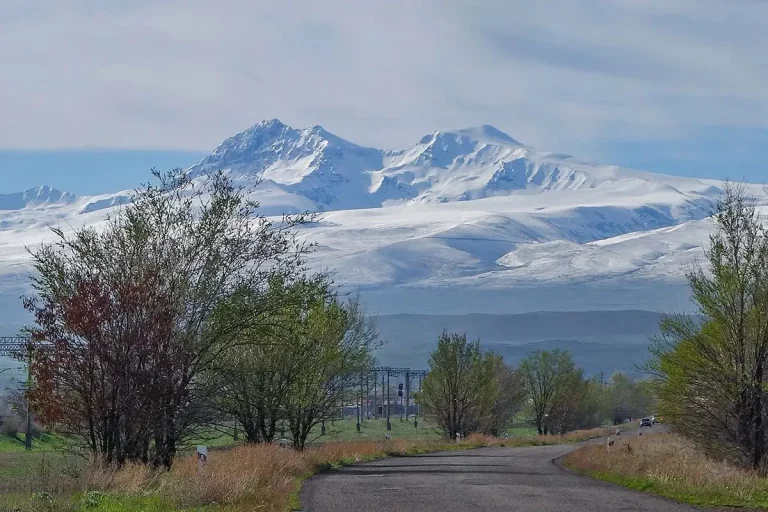
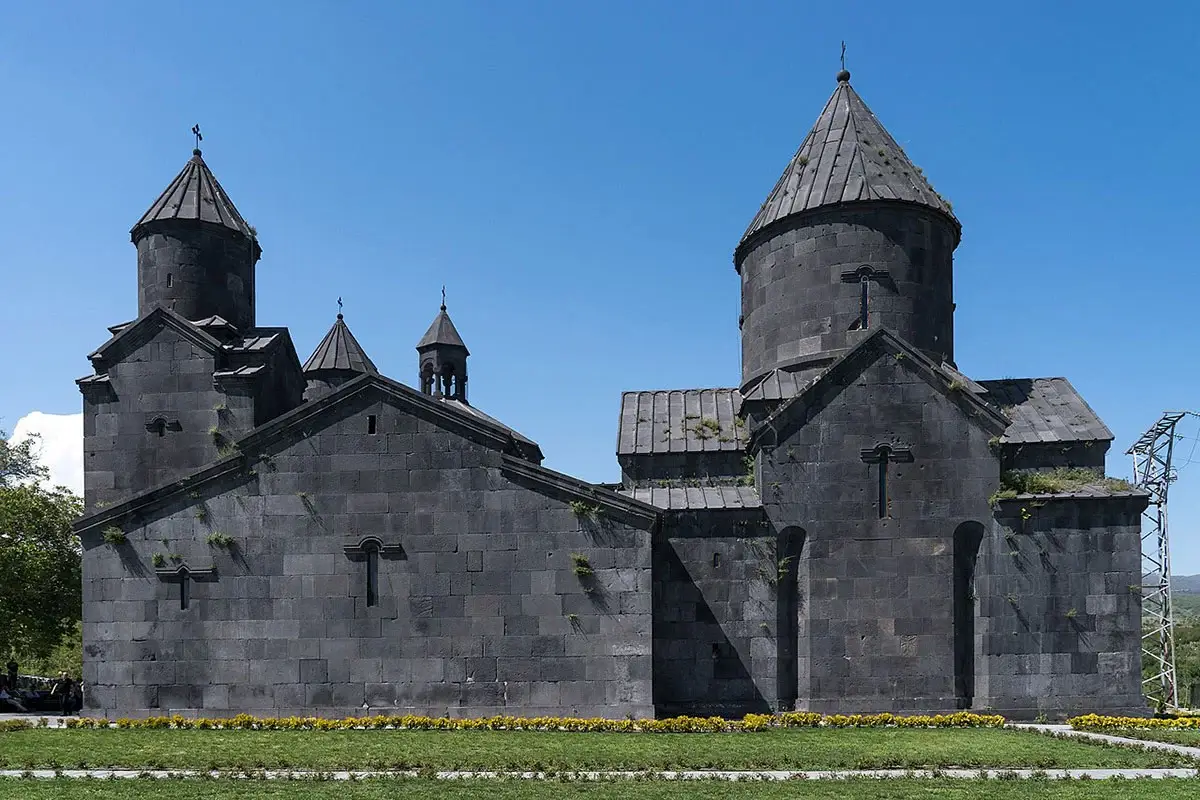
Tegher Monastery is a 13th-century complex in Armenia’s Aragatsotn Province, on the southeastern slopes of Mount Aragats. It stands in Tegher village, near Byurakan. The church and adjoining gavit are built from dark grey basalt, while two small chapels above the entrance hall give the monastery its distinctive silhouette.
Visit to explore an unusual example of medieval Armenian architecture and enjoy the open mountain landscape. The compact complex makes a manageable stop, with time to see the church, gavit and surrounding grounds. Tegher fits naturally into a trip around the southern slopes of Aragats.
Quick Facts
- Built / Founded: the first third of the 13th century
- Location: Tegher village, Aragatsotn Province
- From Yerevan: approximately 40–50 km
- Entrance fee: Free
- Time needed: allow 30–60 minutes
- Best time to visit: spring to autumn
History of Tegher Monastery
The monastery’s construction is associated with Mamakhatun, the wife of Prince Vache Vachutyan. The main church, Surb Astvatsatsin — the Holy Mother of God — dates to 1213. A gavit was added in the following years, forming a connected architectural ensemble with the church.
The architect was Aghbayrik, whose name survives in the building inscriptions. Tegher is distinguished by balanced proportions, restrained decoration and expressive stonework. Much of its interest lies in the buildings’ structure and the way they relate to the surrounding terrain.
What to See at the Monastery
Begin outside the church, looking at the dark basalt walls, the drum beneath the dome and the narrow windows. Decoration is limited, drawing attention to the building’s lines and the texture of the stone. Walk around the accessible grounds to see how its outline changes from different viewpoints.
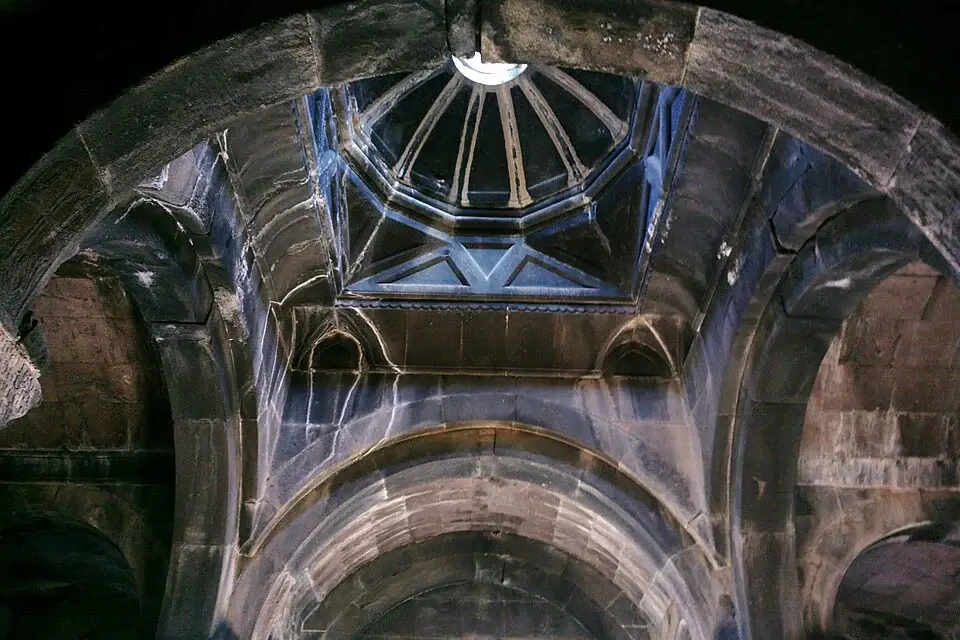
The gavit, a spacious entrance hall supported by four central columns, adjoins the church on its western side. Inside, take time to examine the stone vaulting, supporting columns and light entering through the opening above. This part of the complex deserves attention alongside the main church.
Tegher’s most unusual feature is the pair of small domed chapels above the western corners of the gavit roof. Clearly visible from outside, they make the monastery easy to recognise in photographs. Step back from the entrance to see both chapels together with the main dome and surrounding slopes.
Best Time to Visit
For a walk around the monastery, choose a clear day between spring and autumn. The surrounding slopes turn green in spring and become drier and more golden towards the end of summer. Morning or late afternoon light brings out the texture of the dark stone facades.
Winter visits depend on the weather and the condition of the approach road. Bring comfortable shoes and a jacket, particularly on windy days. Keep your voice low inside the church and, during services, explore without disturbing worshippers.
How to Get to Tegher from Yerevan
From Yerevan, drive towards Ashtarak, then continue in the direction of Byurakan and Tegher village. The journey is approximately 40–50 km, depending on the route. Allow around an hour or a little longer, taking traffic and the winding uphill sections into account.
Search for Tegher Monastery in your navigation app to find the monastery rather than just the village. If you would like to visit several attractions in the region, you can book a car with a driver from Yerevan and agree on the order of stops in advance.
Other Stops for Your Day Trip
Combine Tegher with Byurakan and a visit to Amberd Fortress. Plan a visit to Byurakan Observatory separately, checking tour arrangements in advance. Before continuing to Amberd, consider mountain road conditions and the weather at higher elevations.
During the warmer months, you can continue to Lake Kari if the high-altitude road is open. Set aside a full day for this itinerary, leaving enough time for the monastery, fortress and stops to enjoy the mountain scenery.
Our guide to Aragats and Surroundings covers other places to visit in the area. Use it to choose the main destination and additional stops according to the season and the time available.