
Ughtasar Petroglyphs
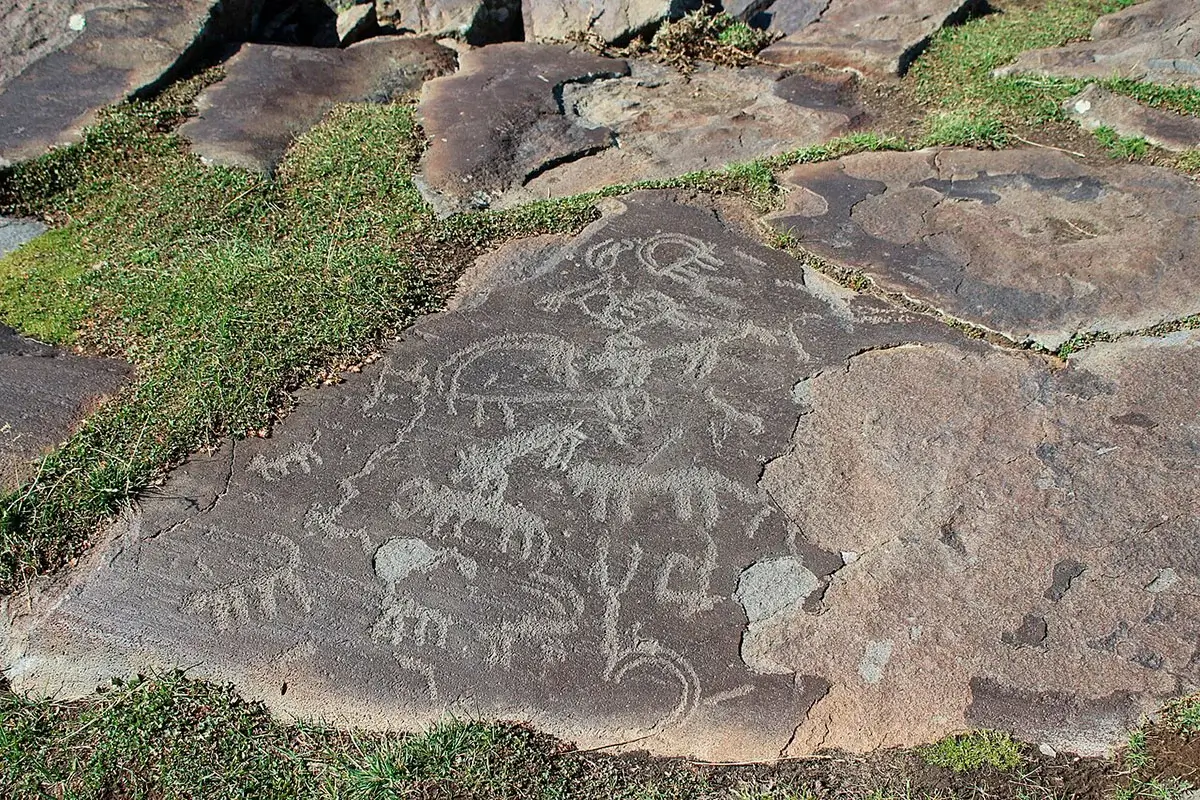
Ughtasar Petroglyphs are one of the most unusual archaeological sites in southern Armenia. Thousands of ancient images are carved into dark volcanic rocks high in the mountains near Sisian, depicting animals, people, hunting scenes and symbolic signs.
The journey is part of the experience. Ughtasar lies at around 3,300 metres above sea level beside a small mountain lake, and the final section of the route follows a rough off-road track. A visit therefore feels more like a highland adventure than a simple roadside sightseeing stop.
Quick Facts
- Location: Sisian, Syunik Province
- Height: 3300 m
- Entrance fee: Free
- Best time to visit: June to September
Where Are the Ughtasar Petroglyphs?
Ughtasar is located in the highlands of Syunik north of Sisian. The petroglyph area is roughly 25–30 km from the town, but the journey takes much longer than the distance suggests because a large part of the route follows rough mountain tracks.
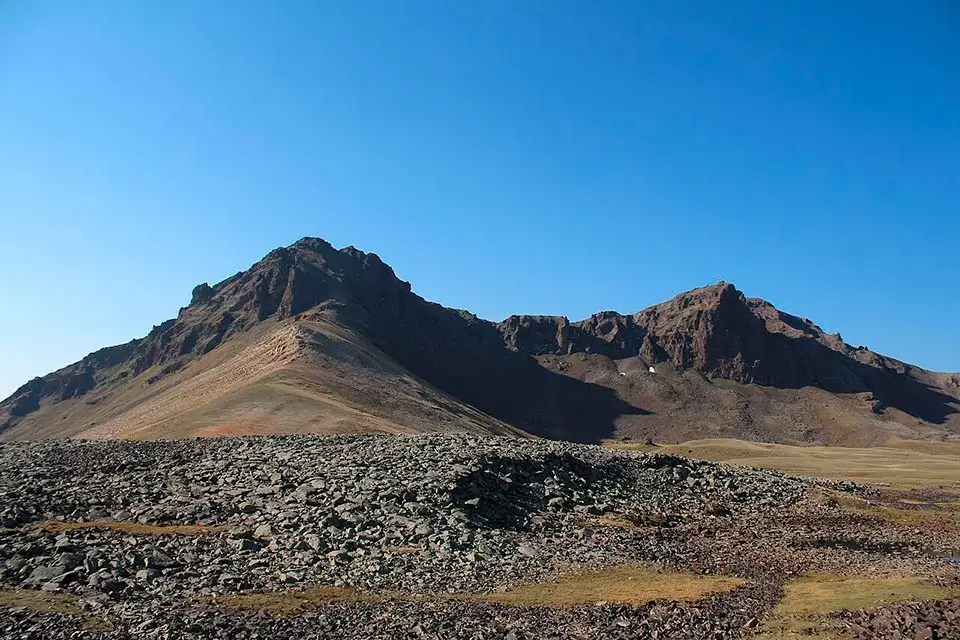
The carvings are scattered across a broad volcanic landscape around the slopes of Ughtasar and several small high-altitude lakes. Many are engraved on dark, smooth rock surfaces, where the lighter carved lines remain clearly visible.
What Do the Ughtasar Petroglyphs Show?
Animals are among the most common subjects. Visitors can identify wild goats, deer and other animals, often shown individually or as part of hunting scenes.
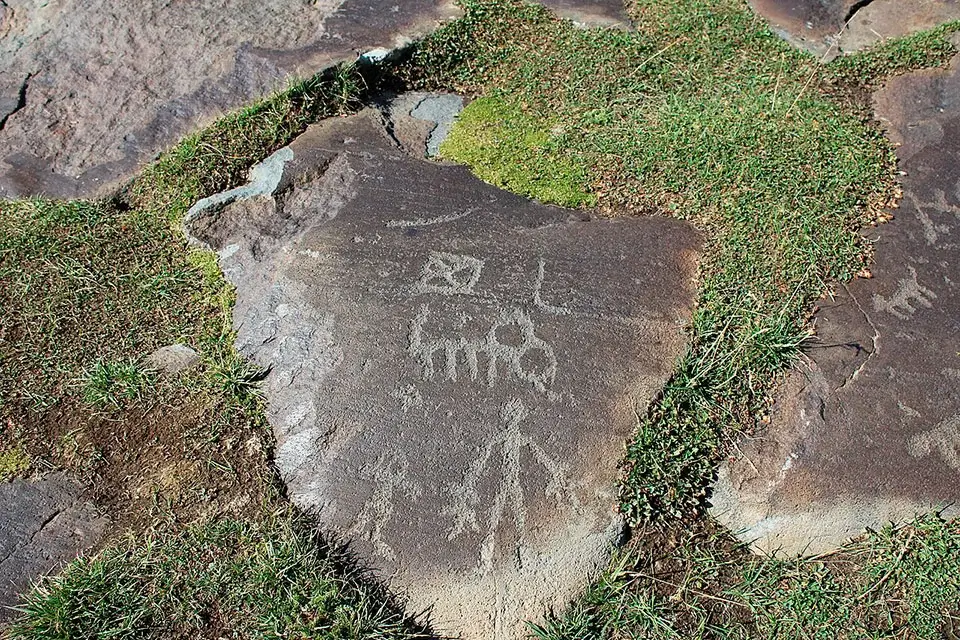
Other rocks show human figures, geometric shapes, ritual scenes and different symbolic signs. Together, the carvings provide a rare glimpse into how prehistoric communities observed animals, hunting and the world around them.
Ughtasar is not a single carved panel. The images are spread across many individual rocks, so exploring the site means walking through the landscape and looking closely at the stones around you.
How Old Are the Ughtasar Petroglyphs?
The petroglyphs were not created during one single period. Some of the earliest groups are generally dated to the 5th–4th millennia BC, while other carvings were added during later prehistoric periods.
For this reason, it is better to think of Ughtasar as a long-used rock-art landscape rather than a monument with one exact construction date. Different generations left their images on the same highland terrain over a very long period.
Mount Ughtasar and the Mountain Lake
The petroglyphs lie in the high-altitude landscape around Mount Ughtasar on the Syunik Plateau. The surrounding volcanic terrain, open grasslands and dark rock fields are an important part of the character of the site.
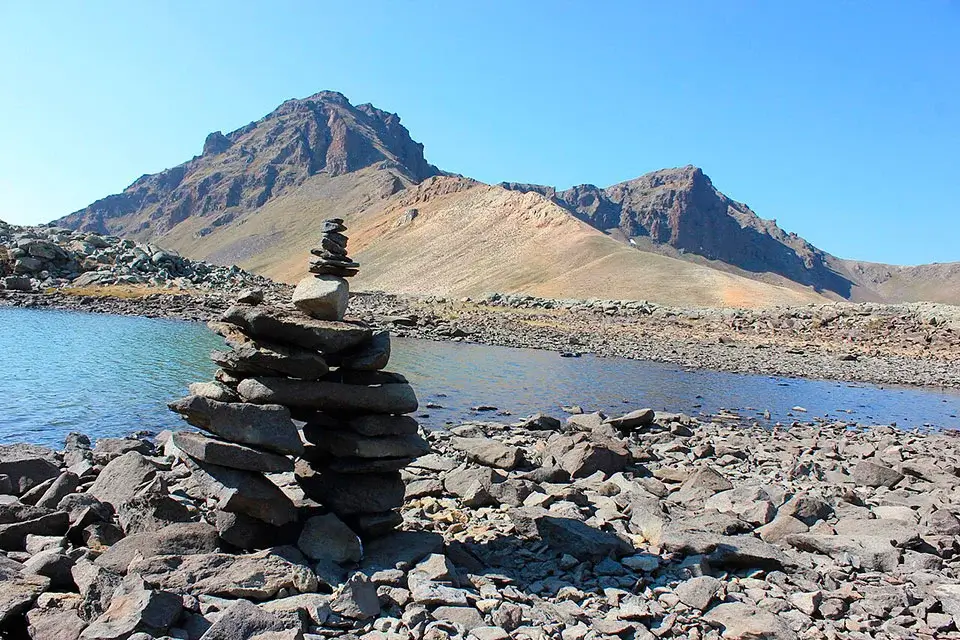
A small mountain lake lies close to some of the main petroglyph areas. On a clear day, the lake and surrounding ridges create one of the most memorable highland landscapes around Sisian.
How to Get to Ughtasar Petroglyphs
Sisian is the usual starting point for a trip to Ughtasar. From the town, the road gradually climbs into the mountains before turning into a rough and rocky off-road track.
A high-clearance 4×4 vehicle with a driver familiar with the route is strongly recommended. A normal passenger car is not suitable for the final mountain section, particularly after rain or when snow remains at higher elevations.
Although Ughtasar is not very far from Sisian in kilometres, the road is slow. It is best to allow at least half a day for the trip so there is enough time to reach the site safely, explore the petroglyphs and stop by the lake.
Before leaving Sisian, check the local weather and road conditions. At this altitude, snow, fog or heavy rain can make access difficult even when conditions in town appear good.
Best Time to Visit Ughtasar
June to September is generally the most practical period for visiting Ughtasar. During these months, the mountain road is more likely to be free of deep snow and the highland landscape is accessible by 4×4.
July and August usually offer the easiest access, while early summer brings greener alpine scenery. Even during the warmest months, however, bring a jacket because the weather at 3,300 metres can change quickly.
Outside the main season, access depends heavily on snow and road conditions. If the track is unsafe, it is better to postpone the trip rather than attempt the route in an unsuitable vehicle.
What to Bring to Ughtasar
Bring comfortable closed shoes, a warm layer or windproof jacket and sun protection. The open plateau offers little shelter, and both strong sun and cold wind are possible during the same visit.
Take enough drinking water and some food before leaving Sisian. There are no shops, cafés or normal tourist facilities at the petroglyph site.
Ughtasar in a Sisian Itinerary
Because of the difficult mountain road, Ughtasar is best treated as a separate half-day trip from Sisian. Easier archaeological and natural attractions around the town can be visited before or after the mountain journey.
One of the most important nearby sites is Zorats Karer, also known as Carahunge. Unlike remote Ughtasar, the prehistoric stone complex is located close to the main road and offers a very different archaeological experience.
Shaki Waterfall is another easy addition to a stay around Sisian. The 18-metre waterfall provides a natural contrast to the archaeological sites and can be reached with only a short walk from the road.


