
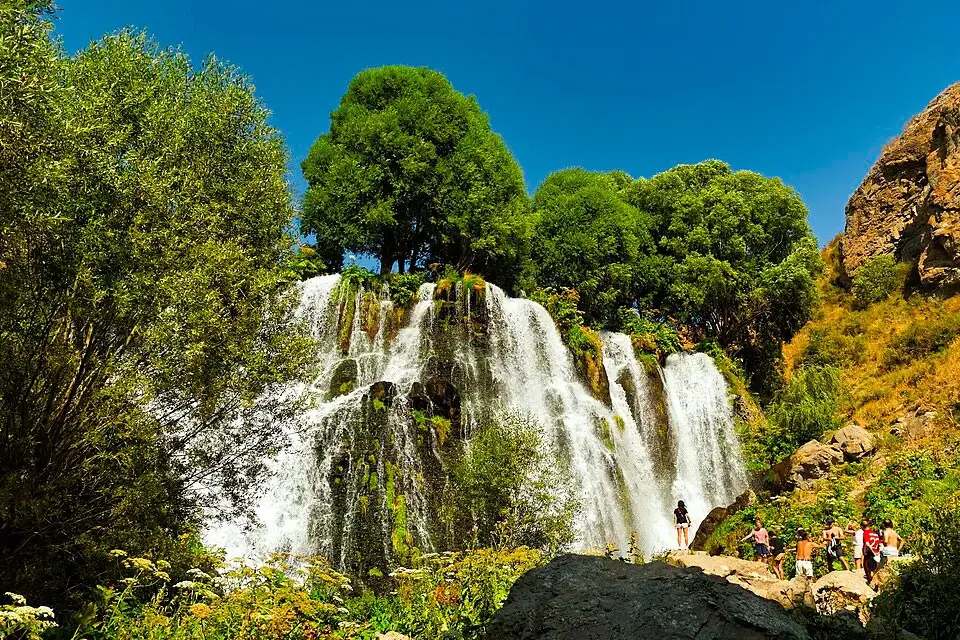
Shaki Waterfall
Shaki Waterfall is an 18-metre cascade in southern Armenia, dropping over a wall of solidified basalt lava on the Shaki River, a tributary of the Vorotan. It sits about 3 km northwest of the town of Sisian in Syunik Province, surrounded by a deep gorge where archaeologists have found traces of Stone Age human activity. Local tradition links the falls to the legend of a young woman named Shake. Today Shaki is one of the most photographed natural sites in Armenia, and an easy 5–10 minute walk from the parking area — a logical stop on any trip through southern Armenia toward Tatev Monastery, Khndzoresk, or the Zorats Karer megaliths.
Quick Facts
- Location: Shaki village, Syunik Province
- Also known as: Shaki, Shaqi Waterfall, Շաքիի ջրվեժ
- From Yerevan: About 220 km / 3.5 hours
- Height: 18 m
- Entrance fee: Free
- Time needed: 30–60 minutes (usually combined with Karahunj and Sisian as a half-day stop)
- Best time to visit: April–June (peak flow); September also good; July–August low flow
- Status: Hydrogeological natural monument
- GPS coordinates:
39.552, 45.994
A Wall of Water Over Basalt Cliffs
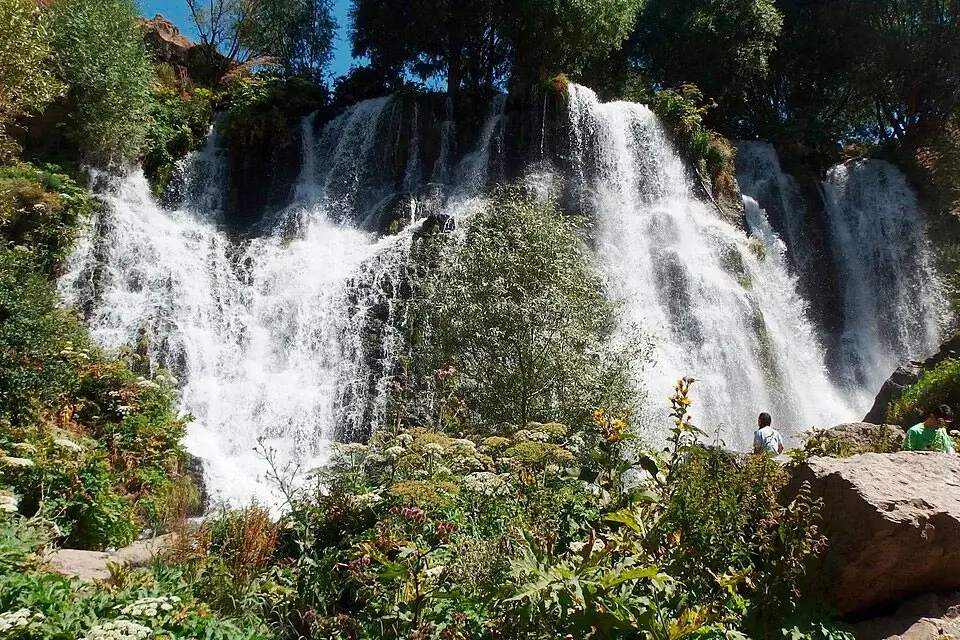
The falls form where the Shaki River meets a vertical step in the basalt bedrock — a geological feature created by ancient lava flows that solidified into hexagonal columns and sheer faces. The river drops 18 metres in a wide, foaming sheet rather than a narrow stream, throwing up a permanent cloud of mist at the base that can soak you in seconds if the wind shifts.
The gorge below the falls is filled with caves and rock shelters. Archaeological surveys here have uncovered ash layers, flint tools, and other traces of human activity dating to the Palaeolithic — people lived in these caves tens of thousands of years ago, almost certainly drawn by the same combination of water, shelter, and natural defences that makes the place feel timeless today.
There are two ways to see the waterfall:
- From the upper viewing platform — a short walk from the parking area, with the classic top-down view straight onto the cascade. This is the easier option.
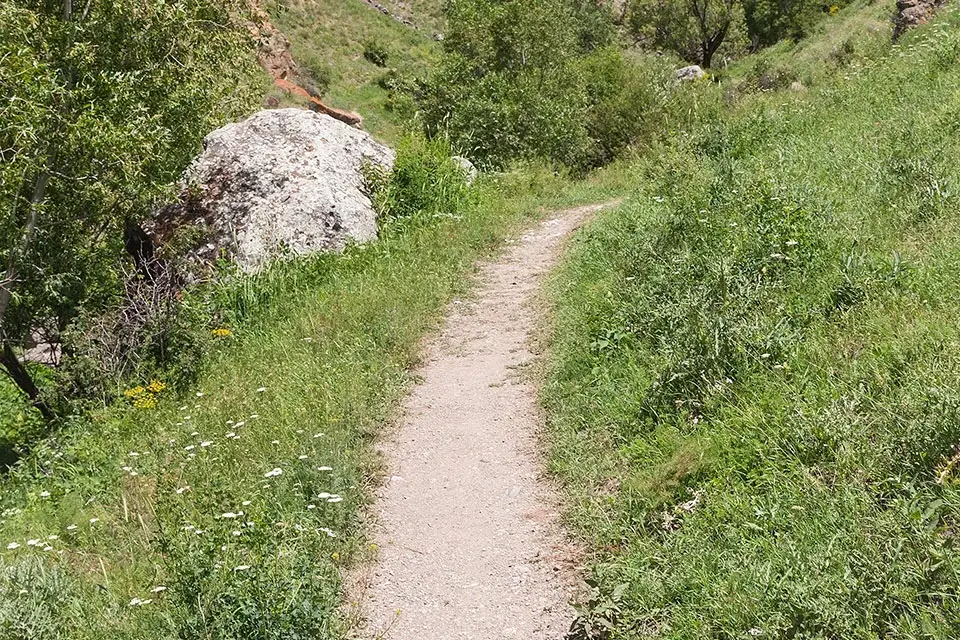
- From the base — a steeper trail descends in about 10–15 minutes. The climb back up is harder, but standing in the spray with the basalt wall rising overhead is the more immersive experience.
Most visitors stop for 30–60 minutes total.
The Legend of Shake
The waterfall is named after Shake, a young Armenian woman from a village in the Lake Sevan area. According to the most widely told version of the story, Shake was captured along with 93 other women by a raiding party of foreign invaders and forced to march south through the mountains.
When the captives reached the Vorotan Gorge near present-day Sisian, they begged their captors to let them bathe in the river before being delivered to their commander. The captors agreed.
The women threw themselves into the swirling waters of the Vorotan and disappeared beneath the foam. Only Shake came up again — and rather than be caught, she leapt from the high cliff above the river. Her long hair and flowing dress, the story says, transformed into the white sheet of water that has fallen here ever since.
Several other versions exist. One links the name to a pre-Christian Armenian goddess called Shaki. Another simply notes that the Shaki River, which gives the falls their name, has been called this for as long as anyone can remember. The legend of Shake is the version told to almost every modern visitor.
When to Visit — Why Timing Matters
Shaki is one of the few major Armenian sights where the season can completely change the experience. The river is fed mostly by snowmelt and seasonal rain rather than a constant glacial source, so the flow varies dramatically through the year.
- April to June — peak flow. Snow from the surrounding mountains is melting and spring rains are at their heaviest. The cascade is at its widest, loudest, and most dramatic. This is the best season to visit.
- September to mid-October — moderate flow. Autumn foliage in the gorge is beautiful, and the falls usually still have a good visible flow, though less powerful than spring.
- July and August — low flow. Mountain water has largely melted out, and rain is rare. The waterfall can shrink dramatically and occasionally appears as little more than a trickle. This is the weakest season, especially in dry years.
- November to March — variable. Cold temperatures can partially freeze the cascade into spectacular ice formations on clear winter days, but the road conditions become unpredictable. Worth it for photographers prepared for cold; not ideal for casual visitors.
If your trip is in midsummer and seeing the falls at full power matters to you, consider planning around the weekend — flows can be more reliable then for reasons explained in the FAQ below.
How to Get to Shaki Waterfall from Yerevan
Shaki is about 220 km south of Yerevan, roughly 3.5 hours each way by car along the M2 highway through Yeghegnadzor and Vayk. There are several practical options:
By private car with driver. The most flexible option for visiting Shaki, which is rarely worth the trip on its own — most travellers combine it with Karahunj (Zorats Karer), Sisian, and either Tatev or Khndzoresk. We provide private cars and drivers in Yerevan for southern-Armenia day trips and longer multi-day routes.
As part of a southern Armenia tour. Shaki fits naturally into a 2-day southern itinerary that also includes Khor Virap, Noravank, the Areni wine region, Sisian, Karahunj and Tatev Monastery, with an overnight in Goris.
By marshrutka and local taxi. Take a marshrutka from Yerevan’s Sasuntsi Davit area to Sisian (around 4 hours, roughly 3,500 AMD). From Sisian, a local taxi to the upper parking area at Shaki costs around 3,000–4,000 AMD; the driver will wait while you visit and return you to town.
On foot from Sisian. It is possible to walk from Sisian to Shaki Waterfall — about 3 km along a mostly uphill route, around 45–60 minutes one way. Doable in cool weather; less appealing in summer heat.
What to See Near Shaki Waterfall
Shaki is small enough that it’s almost always combined with other attractions in southern Armenia. The closest:
- Sisian (3 km) — a small mountain town with the 7th-century Sisavan Church, the Sisian History Museum, and good simple restaurants. A useful lunch stop.
- Karahunj / Zorats Karer (about 10 km from Shaki) — a prehistoric megalithic site with over 200 standing stones, sometimes called “Armenia’s Stonehenge.” Often dated to the Bronze Age or earlier.
- Vorotan Gorge — the deep canyon system into which the Shaki River drains, with several viewpoints accessible by car.
- Khndzoresk Swinging Bridge (about 50 km, near Goris) — a long suspension footbridge over a gorge filled with ancient cave dwellings.
- Tatev Monastery and the Wings of Tatev (about 80 km further south) — a 9th-century clifftop monastery reached by the world’s longest reversible cable car. Worth an overnight in Goris.
Most travellers visit Shaki + Sisian + Karahunj as a half-day en route to or from Tatev.
Practical Tips for Visiting
- Opening hours: the waterfall is outdoors and accessible all day. There is no formal gate or ticket booth.
- Entrance fee: free.
- Time needed: 30–60 minutes at the falls, plus driving.
- Parking: there are two parking areas — an upper lot above the falls and a lower lot accessed from a different turn. The upper lot has the easier view.
- Footwear: the path down to the base is steep, narrow, and often wet. Wear shoes with grip; flip-flops are a bad idea.
- Clothing: the spray reaches well beyond the immediate base. Bring a light waterproof layer if you don’t want a soaking, especially in spring.
- Mobile signal: intermittent. Download maps offline before you arrive.
- Food and bathrooms: there are no facilities at the falls themselves. Plan to eat in Sisian before or after.


