Matosavank Monastery
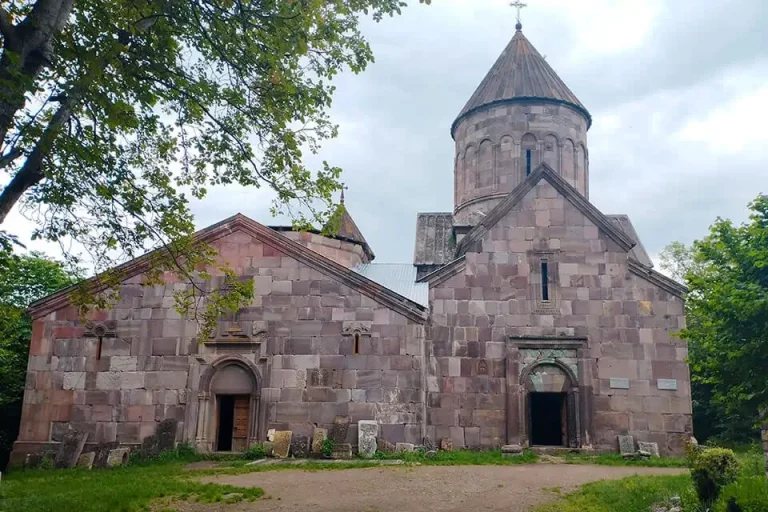
Matosavank Monastery is a small medieval complex hidden among dense forests near Dilijan. Located about 3.5 km northwest of the town within Dilijan National Park, it looks very different from Armenia’s larger and better-preserved monasteries.
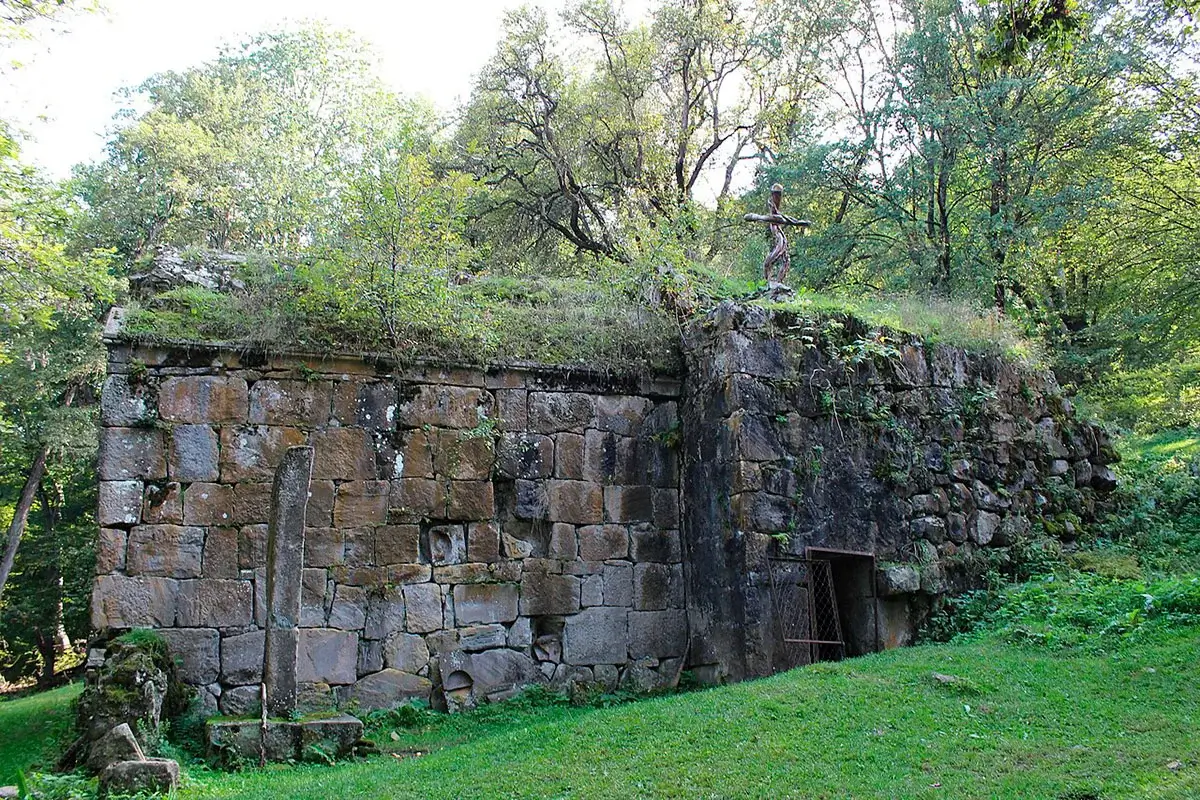
Matosavank is partly ruined and gradually blends into the surrounding forest, with old stone walls covered by moss and vegetation. Its quiet, secluded atmosphere is one of the main reasons to visit, and the monastery can easily be combined with nearby Jukhtakvank.
Quick Facts
- Built / Founded: 1247
- Location: Dilijan, Tavush Province
- Entrance fee: Free
- Best time to visit: spring, summer and autumn
History of Matosavank Monastery
The main church of Matosavank, Surb Astvatsatsin, was built in 1247. The date is known from a construction inscription preserved above the western entrance to the church.
A small monastic complex later developed around the church. In addition to the main sanctuary, parts of a gavit and book depository survive, while an old cemetery with gravestones and remains of khachkars can be found near the buildings.
What to See at Matosavank
The complex is small, so the main impression comes from its condition and natural surroundings rather than the number of buildings. The church is built from large stone blocks, and carved stone fragments and khachkars can still be seen around the entrance and nearby ruins.
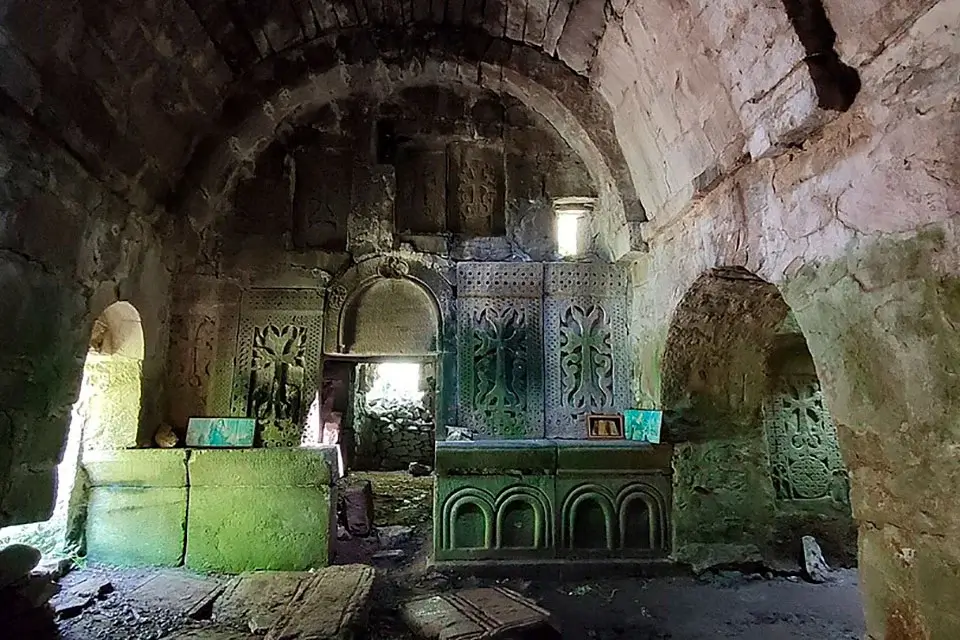
The interior is especially atmospheric. Because parts of the roof and walls have been damaged, the rooms are dim and damp, while moss and vegetation have spread across some of the stone surfaces. Decorative carvings, crosses and old architectural details can still be seen inside.
Visitors should be careful around the ruins, as parts of the complex are in poor condition. Avoid climbing on damaged walls or leaning on unstable stonework. The monastery itself does not take long to explore, but the forest walk is an important part of the visit.
Matosavank and Jukhtakvank
Jukhtakvank Monastery is located close to Matosavank on the forested slopes outside Dilijan. The two sites can be combined in one walk, making them a natural pair for travellers who want to explore the lesser-known medieval monuments around the town.
Despite their proximity, the two monasteries feel quite different. Jukhtakvank consists of two separate churches standing in a forest clearing, while Matosavank feels more hidden and abandoned, with its stone buildings gradually disappearing into the surrounding vegetation.
Walking Through the Forests of Dilijan
Matosavank lies within Dilijan National Park, so reaching the monastery is part of the experience. The final section of the route passes through forested terrain and is best suited to visitors who are comfortable with a short walk.
After rain, the ground and stones can become wet and slippery, so comfortable footwear is recommended. It is also useful to save the route on your phone before starting, as signs in the forest should not always be relied upon.
Best Time to Visit Matosavank
The easiest time to visit is from late spring through autumn. The forests around Matosavank are especially green in summer, while autumn brings colourful foliage to the slopes around Dilijan.
After prolonged rain, the trail can become muddy and the monastery interior noticeably wetter. Winter visits are also possible, but snow and road conditions can make access more difficult, so the weather should be considered in advance.
Matosavank in a Dilijan Itinerary
After visiting Matosavank and Jukhtakvank, it is easy to return to Dilijan and continue exploring the town. One of the best places for a short walk is Sharambeyan Street, the historic quarter of Old Dilijan with traditional stone houses and wooden balconies.
For a full day in the region, the route can also continue towards Lake Parz or Haghartsin Monastery. These attractions belong to the same Dilijan area but require additional driving and time for sightseeing.
How to Get to Matosavank Monastery
Matosavank is located about 3.5 km northwest of Dilijan. Reaching the monastery usually involves a walking section through the forest, so it is better treated as a short nature walk rather than a simple roadside stop.
If you are already staying in Dilijan, you can drive towards the starting area of the route and continue on foot. Walking time depends on where you begin, road conditions and whether you plan to visit Jukhtakvank on the same route.
From Yerevan, the simplest option is to travel first to Dilijan. If you only need transportation between the two cities, you can book a Yerevan to Dilijan transfer and organise the forest walk locally.
For a full-day visit to the region, you can also choose a private Dilijan tour from Yerevan. Matosavank is not included in the standard itinerary, so ask in advance if you would like to add the forest route.