
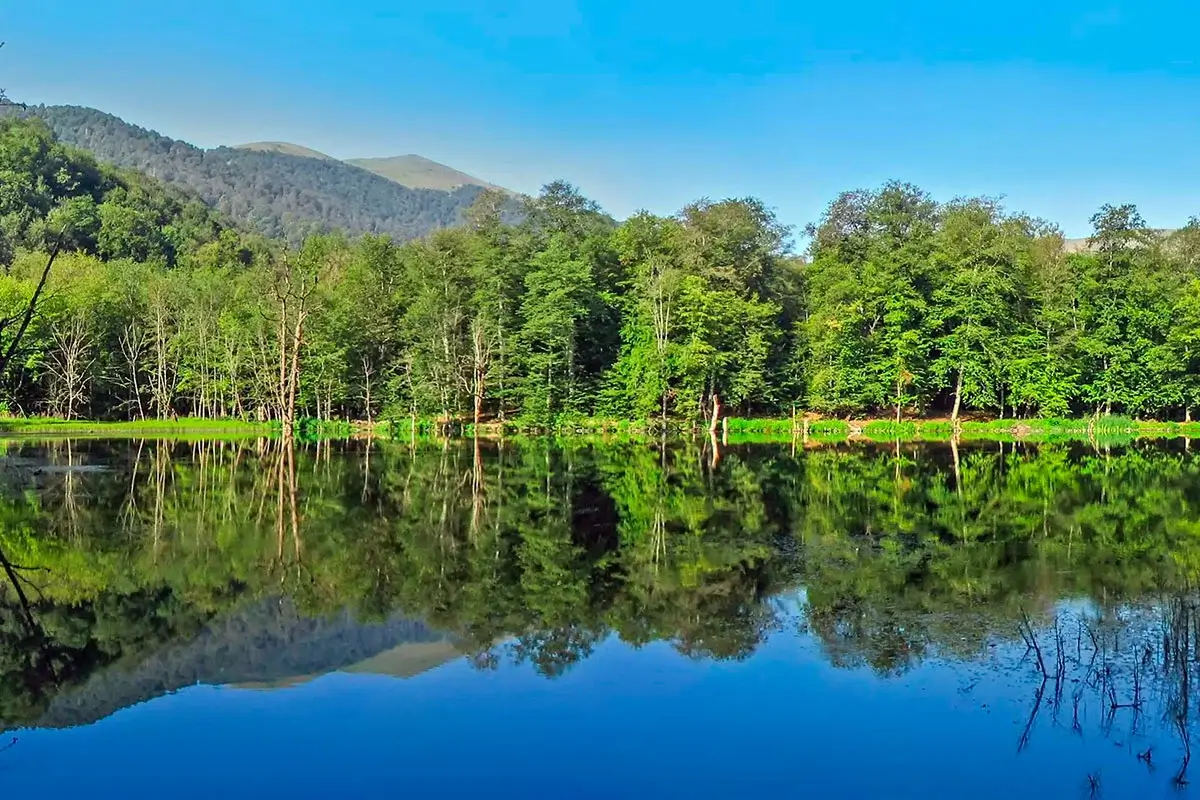
Lake Gosh
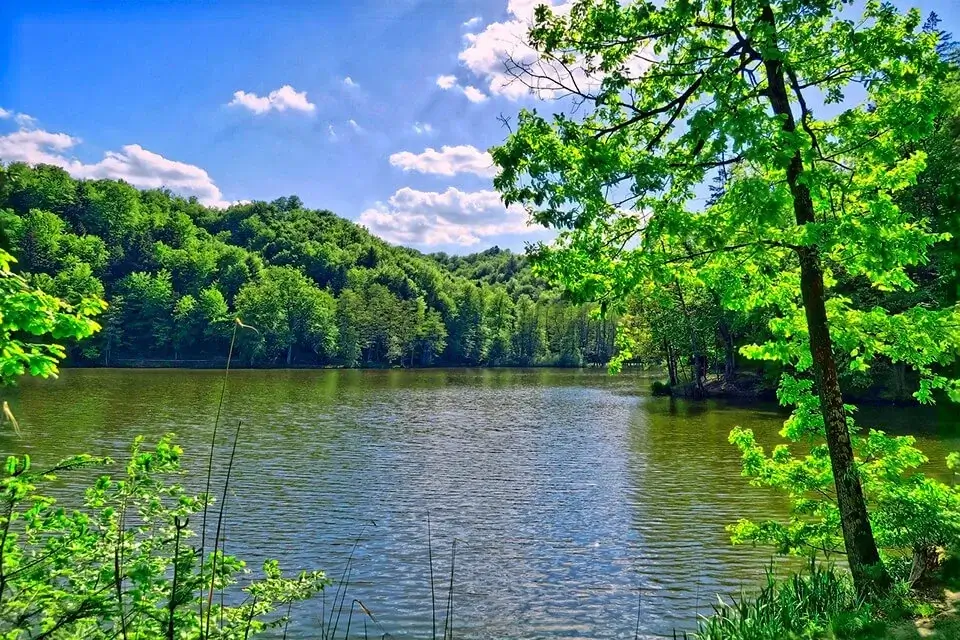
Lake Gosh is a small forest lake in Armenia’s Tavush Province, tucked inside Dilijan National Park beside the village of Gosh and the medieval monastery of Goshavank. It formed when an ancient landslide blocked a stream and created a natural basin among beech and hornbeam woods. There are no zip-lines, no boats, no cafés on the shore — just silence, a short trail, and the chance to pair the visit with one of Armenia’s most famous monasteries.
Quick Facts
- Location: Dilijan National Park, near Gosh village, Tavush Province
- Also known as: Gosh Lake, Gosh Lich, Tzrka, Geygöl, Գոշ լիճ
- From Yerevan: 130 km / about 2 hours
- Elevation: 1,500 m
- Depth: up to 8 m
- Entrance fee: Free
- Time needed: 1–2 hours on site; ~5 hours round trip from Yerevan
- Best time to visit: May–October, especially September–October
- Status: Within Dilijan National Park
- GPS coordinates:
40.7200556, 45.0160278
Where Is Lake Gosh?
The lake sits inside Dilijan National Park, on the edge of Gosh village in Tavush Province, roughly 130 km northeast of Yerevan. On maps it’s easiest to search for Gosh Lake or the Armenian name Գոշ լիճ. The clearest landmark for most travellers is Goshavank Monastery, from which a short forest path leads to the water.
Unlike the more developed Lake Parz a few kilometres away, Lake Gosh has no infrastructure on its banks — no rental boats, no zip-line, no restaurants. That is exactly why people who want a calm, low-key spot near Dilijan tend to prefer it.
How to Get to Lake Gosh
By car or transfer. From Yerevan it’s about 130 km via Dilijan and usually around two hours behind the wheel. From central Dilijan the lake is roughly 25 km, or about 30 minutes. The road is paved all the way to Gosh village, and most navigation apps handle the query “Gosh Lake” without trouble. If you’re travelling without a car, the easiest options are a Yerevan–Dilijan transfer or a private day trip — public transport stops short of the trailhead and timings are awkward.
From Goshavank Monastery — the main route
The most convenient approach is to drive to Goshavank, visit the monastery first, then walk to the lake. The trail is part of the Transcaucasian Trail (TCT) network and is marked with white-and-orange blazes.
From the monastery to the lake is about 2.2 km one way, or 40–60 minutes on foot. It’s classed as easy and works for most travellers with no special preparation, including families with school-age children. One thing to watch: roughly 500 m in there’s a fork — stick to the marked footpath rather than the dirt vehicle track. The track also reaches the lake, but it turns to mud after rain. Trail shoes with some grip beat plain city sneakers.
From the centre of Gosh village
You can also walk in from the village itself. The distance is similar, but the climb is steeper in places and the path is less obvious. Download an offline map (maps.me or OsmAnd) before setting out.
From Khachardzan along the TCT
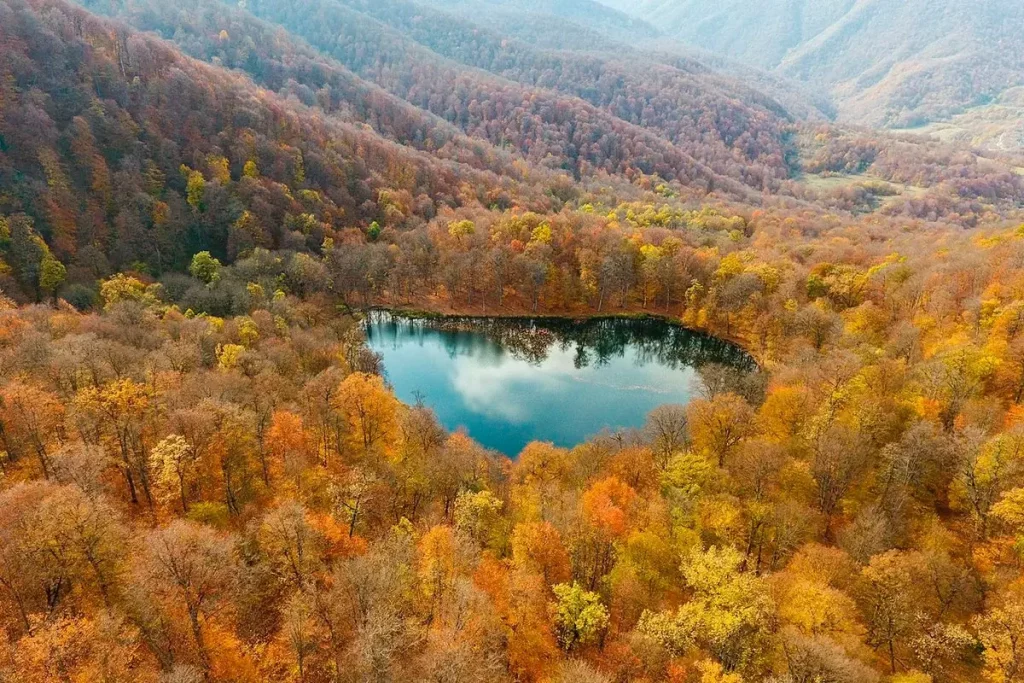
A longer and more scenic option follows a section of the Transcaucasian Trail starting near the village of Khachardzan. The route runs through dense forest along the Aghstev River and approaches the lake from the opposite side. It needs offline maps and proper footwear, but it suits anyone who wants a real half-day hike rather than a quick stop. In October, when the beech woods turn gold, it’s one of the most photogenic walks in the Dilijan area.
Why Visit Lake Gosh
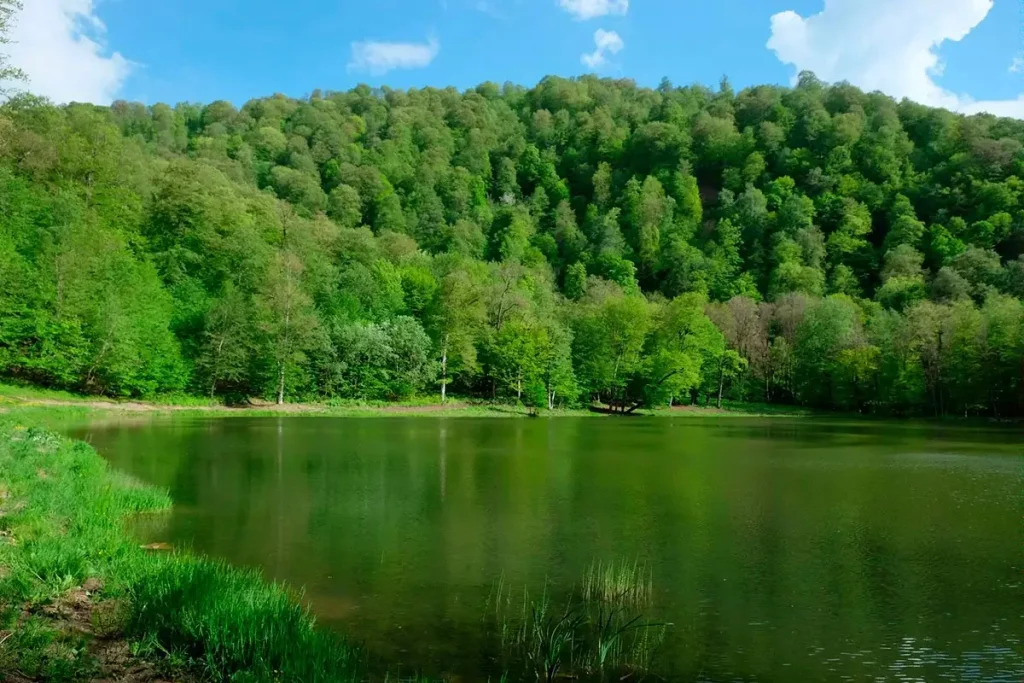
The main reason is the atmosphere. Lake Gosh doesn’t look or feel like a mass-tourism stop, and that’s the point. It’s a quiet pocket of forest where you can pause during a Dilijan trip, walk the trail, sit by the water, and just slow down for a while.
The banks are gently sloping, and on a still day the surface mirrors the surrounding woods almost perfectly. That calm “forest pond” look is what brings photographers and hikers here — especially in the soft light of early morning or late afternoon. The trail is also short enough to suit travellers who want a beautiful nature stop without committing to a full mountain hike.
When to Visit
May–June — fresh greenery and quiet trails. The path can be muddy after rain, but the woods are at their most lush.
July–August — dry and warm, though weekends bring more walkers. The water stays cool, so most visitors come for the scenery rather than a swim.
September–October — one of the best windows. The beech forest turns gold, and reflections on the water look especially striking.
Winter — the lake can be frozen and the scene is genuinely beautiful, but the trail gets icy and slippery. Go only in proper boots and pick conditions carefully.
What to Know Before You Go
There is no infrastructure on the lake itself. The nearest toilets, cafés and benches are at Goshavank or back in Dilijan. Bring water, a light snack, a windbreaker, an offline map, and comfortable shoes.
Look after the place while you’re there: no litter, no fires, don’t feed the wildlife, and stay on the marked path. Lake Gosh is small and fragile, and the sense of quiet that draws people here only survives because most visitors treat it carefully.
Mkhitar Gosh and the Monastery Next Door
The lake takes its name from the village, and the village from one of medieval Armenia’s most important figures. Mkhitar Gosh (c. 1130–1213) was a scholar, theologian, fabulist and jurist, best known for writing the Datastanagirk — Armenia’s first written code of civil and canon law, used for centuries from Cilicia to the Armenian communities of Lviv.
In 1188, with backing from the Zakarian princes, Gosh founded a monastery here that was originally called Nor Getik. He spent the last 25 years of his life at the site, and after his death in 1213 the complex was renamed Goshavank in his honour. The famous needle-carved khachkar known as Aseghnagorts, considered one of the finest cross-stones in Armenia, was cut at Goshavank in 1291 by the master Pavgos.
What to See Nearby
Goshavank Monastery is the obvious neighbour and the natural starting point of the trail. Plan around 30–40 minutes to explore the church, the gavit, the bell tower and Pavgos’s khachkar.
Lake Parz is the other well-known lake in Dilijan National Park. It’s far more developed — boats, cafés, zip-line, paddle-boats — so it offers a different style of day out. Lake Gosh is the quiet sister; Parz is the busy one.
Dilijan itself is about 25 km away — a green resort town that’s easy to fold into the day for lunch, coffee, the old artisans’ street, or a stay overnight.
If you have a full day, Lake Gosh pairs cleanly with Goshavank, Lake Parz, Haghartsin Monastery and Dilijan on a Tavush loop best handled with a car and driver from Yerevan.
Who Will Enjoy the Trip
Lake Gosh suits travellers who like quiet nature, prefer easy walks to serious hikes, and want a scenic stop close to Dilijan. It’s a good fit for couples, families, photographers and anyone curious about the lesser-known corners of Armenia rather than just the headline sights.


