

Jukhtakvank Monastery
Jukhtakvank Monastery is a small but atmospheric historic site in the forests near Dilijan. Located about 3 km northwest of the town inside Dilijan National Park, the complex consists of two medieval churches standing close to each other.
A visit here feels very different from the larger monasteries of Haghartsin or Goshavank. Jukhtakvank is interesting not for its scale, but for the combination of medieval architecture, forest scenery and a short walk in nature. It can also be combined with nearby Matosavank.
Quick Facts
- Built / Founded: 11th–13th centuries
- Location: Dilijan, Tavush Province
- Entrance fee: Free
- Status: Partially preserved
Why Is It Called Jukhtakvank?
The name reflects the most distinctive feature of the site — its two churches standing side by side. The Armenian word “jukht” means “pair”, which is why the monastery is often understood as the “paired monastery”. The complex includes the churches of Surb Grigor and Surb Astvatsatsin.
Surb Astvatsatsin Church was built in 1201. The second church, Surb Grigor, was already standing at that time, although its exact construction date is unknown and it is generally dated to the 11th or 12th century.
What to See at Jukhtakvank
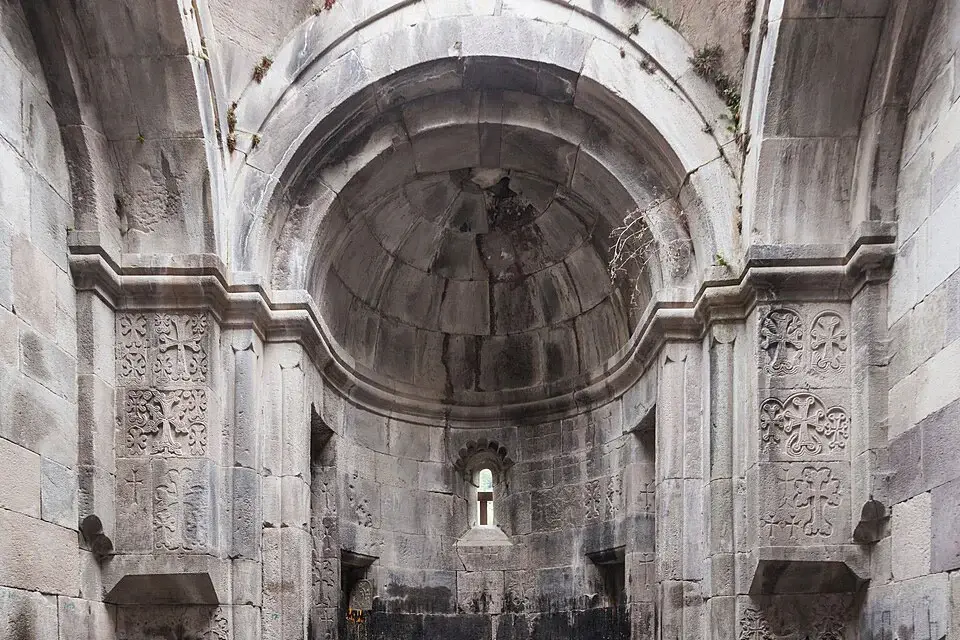
The main feature of Jukhtakvank is the pair of churches standing on a small clearing surrounded by forest. They differ in both design and condition: the dome of Surb Grigor has not fully survived, while the smaller Surb Astvatsatsin preserves the character of early 13th-century Armenian church architecture.
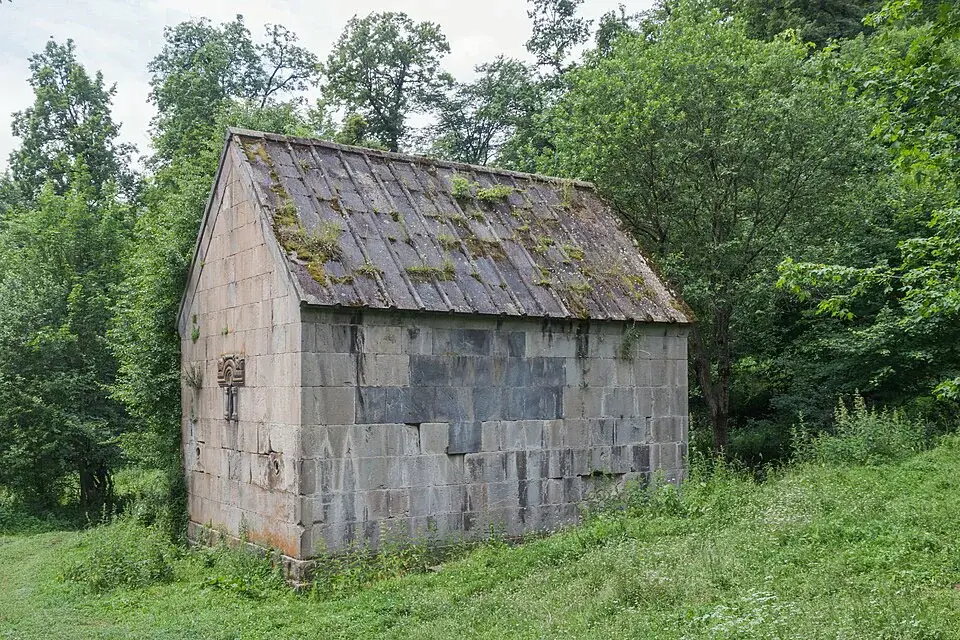
Old inscriptions and carved stone details can still be seen on the buildings, while khachkars and medieval graves survive around the churches. The complex itself is small, but its quiet forest setting makes it an attractive place for a relaxed walk and photography.
Jukhtakvank and the Forests of Dilijan
The monastery lies within Dilijan National Park, so the journey through the forest is part of the experience. Unlike attractions located directly beside a main road, Jukhtakvank offers a quieter side of Dilijan, with wooded slopes, narrow paths and very little urban development around the site.
For this reason, Jukhtakvank is a good choice for travellers who want to combine a historic site with a short nature walk. Comfortable shoes are recommended, especially after rain when parts of the forest path can become wet or muddy.
Best Time to Visit Jukhtakvank
The most convenient time to visit is from spring to late autumn. The surrounding forest is green in summer, while autumn brings some of the most colourful scenery around Dilijan. Spring is also beautiful, although paths can remain wet after rain.
Jukhtakvank can also be visited in winter, but access depends more on snow and weather conditions. If you are travelling during the colder months or after heavy rain, it is worth checking the condition of the road and forest paths in advance.
What to See Near Jukhtakvank
The closest historic site is Matosavank Monastery, also hidden in the forests near Dilijan. The two monasteries are close enough to be considered part of the same small historic and nature area, and they can be combined in one walk when weather and trail conditions allow.
For a longer visit to the region, return to Dilijan to explore the Old Town or continue towards Lake Parz. Haghartsin Monastery is another good addition and one of the main medieval attractions in the forests around Dilijan.
How to Get to Jukhtakvank Monastery
Jukhtakvank is located about 3 km northwest of Dilijan. Part of the route passes through forested terrain, so visiting the monastery is better treated as a short walk rather than a simple roadside stop. How close you can drive depends on the road conditions and the type of vehicle.
If you are already staying in Dilijan, you can drive towards the starting area of the route and continue on foot. Walking time varies depending on where you begin, the weather and the condition of the forest road.
From Yerevan, the simplest option is to travel first to Dilijan. If you only need transport between the two cities, you can book a Yerevan to Dilijan transfer and then plan the monastery walk locally.
If you prefer a full-day trip covering the main attractions of the region, you can also choose a private Dilijan tour from Yerevan. Jukhtakvank is not part of the standard itinerary, so ask in advance if you would like to adapt the route.


