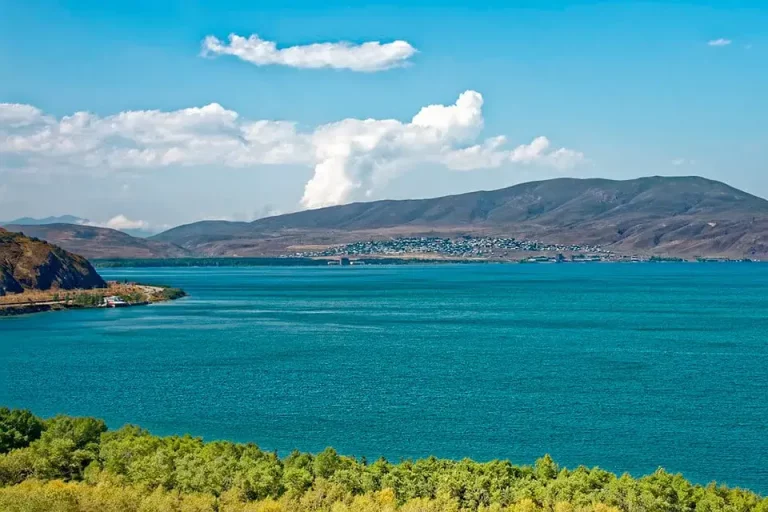

Noratus Cemetery
Noratus Cemetery is a historic cemetery in the village of Noratus, also known as Noraduz, in Armenia’s Gegharkunik Province, near Lake Sevan and the town of Gavar. It holds the country’s largest collection of khachkars — stone steles carved with crosses and decorative patterns. Hundreds of surviving monuments illustrate the development of Armenian stone carving over the centuries.
Visit to see medieval cross-stones in their historic setting, among old gravestones, small chapels and an open mountain landscape. The cemetery makes a worthwhile stop on a trip along Lake Sevan’s western shore, with time for a quiet walk and photographs.
Quick Facts
- Location: Noratus village, Gegharkunik Province
- From Yerevan: approximately 95 km
- Entrance fee: Free
- Best time to visit: 45–60 minutes
What to See at Noratus Cemetery
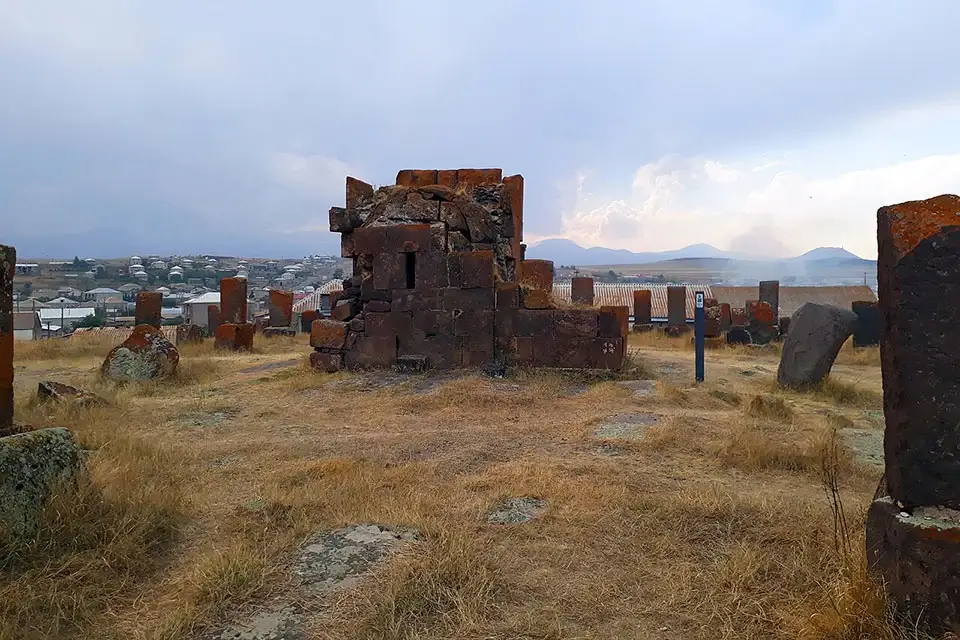
The main attraction is the variety of khachkars. Some have simple, restrained carvings, while others surround the cross with intricate plant and geometric patterns. Look closely at the rosettes beneath the crosses, carved borders and surviving Armenian inscriptions: these details reveal the different styles of the craftspeople who made them.
Many monuments date from the 13th–17th centuries and stand in groups within family burial plots. Horizontal gravestones lie among the upright steles. Take time to notice both individual carvings and the arrangement of the stones: this is a historic cemetery that developed over several centuries.
To better understand what you see, read about Armenian khachkars and their symbolism before your visit. In 2010, Armenian cross-stone art, including its symbolism and craftsmanship, was inscribed on UNESCO’s Representative List of the Intangible Cultural Heritage of Humanity.
Best Time to Visit
For a comfortable walk, choose a dry day between May and October. Light falling from the side in the morning or late afternoon brings out the carved details and works well for photography. Winter visits are also possible, although snow may cover some gravestones and make walking between them more difficult.
Bring comfortable shoes and a windproof jacket, as the visit takes place outdoors. Walk carefully between the monuments, avoid stepping on grave slabs and do not climb onto khachkars for photographs. Allow enough time to explore without rushing.
How to Get to Noratus from Yerevan
Noratus is approximately 95 km from Yerevan. By car, follow the M4 highway towards the town of Sevan, then continue along the M10 on the lake’s western shore towards Gavar. Turn off the main road into Noratus village and follow directions to the historic cemetery.
Allow around 1.5–2 hours for the drive without sightseeing stops, depending on traffic and weather. Search for Noratus Cemetery in your navigation app; the village may also appear as Noraduz. If you plan to visit other places around Lake Sevan, set aside a full day for the trip.
Other Stops for Your Day Trip
Combine Noratus with Hayravank Monastery, which stands on a rocky outcrop beside the lake. On the way from Yerevan, you can also visit Sevanavank Monastery on the peninsula. These stops form a straightforward route along the western shore: Sevanavank → Hayravank → Noratus.
After exploring the khachkars, leave time for a lakeside stop and a break by the water. Our guide to Sevan and Surroundings covers other places to visit and route ideas, helping you choose stops to suit the time available.