

Lake Sevan
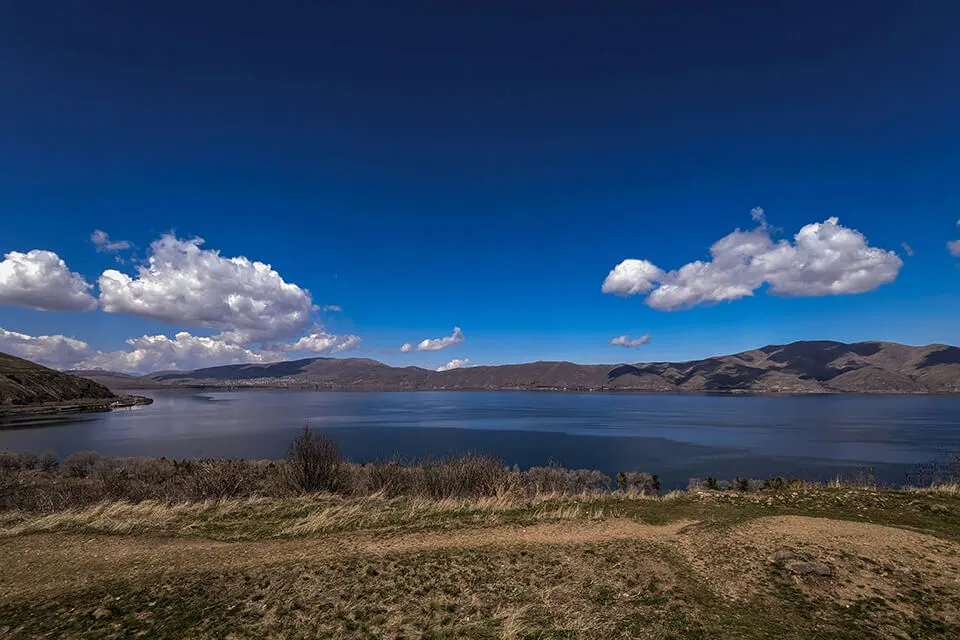
Lake Sevan is the largest body of water in Armenia and one of the largest high-altitude freshwater lakes on Earth. Sitting at almost 1,900 metres above sea level in the country’s eastern Gegharkunik Province, the lake covers around 1,240 square kilometres and stretches some 75 km from north to south. To Armenians it is the “Pearl of Armenia” — a source of drinking water, fish, hydroelectricity, and the country’s main summer destination. Most visitors come for the combination of clear blue water, mountain views, the 9th-century Sevanavank Monastery on its peninsula, and the famous local trout. From Yerevan, the lake is a comfortable day trip — about 65 km by road, roughly one hour each way.
Quick Facts
- Location: Sevan, Gegharkunik Province
- Also known as: Sevana Lich, Armenian Sea, Pearl of Armenia, Geghama Sea
- From Yerevan: About 65 km / 1 hour
- Elevation: 1900
- Entrance fee: Free (lake and beaches); Sevanavank Monastery parking ~200 AMD
- Time needed: Half-day to full day
- Best time to visit: July–August for swimming; June and September for sightseeing; autumn colours late September–October
- Status: Sevan National Park (established 1978)
- GPS coordinates:
40.565278, 44.940278
Lake Sevan in Numbers
A few figures help explain why Sevan feels less like a lake and more like an inland sea:
- Surface area: about 1,240 km² — roughly 5% of Armenia’s territory.
- Length: about 75 km from north to south; width up to 36 km.
- Maximum depth: about 80 m.
- Elevation: 1,900 m above sea level — one of the highest large freshwater lakes in the world.
- Catchment: 28 rivers and streams flow in; only one, the Hrazdan, flows out.
- Shoreline: more than 250 km, with a wide mix of sandy beaches, pebble shores, and rocky cliffs.
The water colour shifts constantly between azure, deep blue and silver depending on light and weather. Locals call Sevan the “Armenian Sea” — and on the beach, with the horizon dissolving into haze, the comparison feels accurate
Sevanavank Monastery — The Iconic View
The most photographed part of Lake Sevan is Sevanavank Monastery, a 9th-century complex perched on a hill at the northwest corner of the lake. According to the founding inscription, the monastery was built in 874 AD by Princess Mariam, daughter of the Armenian king Ashot I Bagratuni.
Two small churches survive on the hill:
- Surb Arakelots (Holy Apostles), the larger and older church.
- Surb Astvatsatsin (Holy Mother of God), with its distinctive carved tympanum.
A flight of stone steps leads from the parking lot up to the churches, and the climb is rewarded with a panoramic sweep of the lake, the Geghama mountains, and on clear days the snow line of Mount Aragats far to the west. Sunset from the top of the hill is the classic Sevan photograph.
Sevanavank was originally on an island. It became a peninsula in the mid-20th century after the lake’s water level was deliberately lowered — which is the next part of the story.
The Sevan Water-Level Crisis
During the Soviet period, beginning in the 1930s and continuing through the 1950s, the Armenian government drained Lake Sevan for irrigation in the Ararat Plain and for hydroelectric power along the Hrazdan River. Over about three decades the water level dropped by close to 20 metres, exposing kilometres of new shoreline and turning Sevanavank Island into the peninsula it is today.
The ecological consequences were severe: water temperature rose, oxygen levels dropped, and the population of native fish — especially Sevan trout (ishkhan) — collapsed. By the late 1950s, the damage was recognised as a national disaster, and Soviet engineers reversed course. Diversion tunnels from the Arpa and Vorotan rivers were built in the 1960s and 1980s to restore inflow.
The water level has been slowly recovering since the early 2000s, but the lake has not returned to its pre-drainage state. The story of Sevan is now taught in Armenian schools as a cautionary lesson in environmental engineering.
Beaches, Swimming and Sevan Trout
In summer Sevan becomes Armenia’s beach. The most developed stretch of coast is around the town of Sevan and the Sevanavank peninsula on the northwest shore — equipped beaches, restaurants, boat rentals, paddle boats, and the highest concentration of guesthouses and resorts. Water temperature in July and August reaches 20–22 °C, comfortable for swimming after a moderate initial chill.
The eastern and southern shores — towards villages like Shorzha — are quieter, with cleaner water and more space. They are popular with Armenians for weekend camping but get crowded on summer weekends.
Local cuisine is built around the lake’s fish. Ishkhan (Sevan trout, Salmo ischchan) is endemic to Lake Sevan and a delicacy, usually grilled whole or stuffed. Lakeside restaurants also serve crayfish (rakov) and the more common sig (whitefish). Note that wild ishkhan stocks remain low after the 20th-century crisis, so most ishkhan on menus today is farmed.
How to Get to Lake Sevan from Yerevan
Sevan is 65 km north of Yerevan, about 1 hour by car on the well-maintained M4 highway through Tsovagyugh.
By private car with driver. The most flexible option, especially if you want to combine the lake with Dilijan, Haghartsin, Goshavank, or any northern route. We provide private cars and drivers in Yerevan for day trips and multi-day tours.
By transfer. A direct one-way transfer is available — see our Yerevan to Sevan transfer service for fixed-price options.
By marshrutka. Shared minibuses leave from Yerevan’s Northern Bus Station several times a day to the town of Sevan. The ride costs around 700 AMD and takes about 1.5 hours. From Sevan town, a taxi up to Sevanavank costs around 1,500 AMD.
By train. A scenic seasonal train runs from Yerevan to Sevan and on to Shorzha in summer. Slower than driving, but a memorable way to approach the lake through mountain tunnels.
Best Time to Visit and Practical Tips
- For swimming: late July through August. Water reaches its warmest, and most beach infrastructure is operating.
- For sightseeing and hiking: June and September — comfortable temperatures, fewer crowds, clear light for photography.
- For autumn colours: late September to mid-October, especially the drive through Tsaghkadzor and the northern shore.
- For winter views: December to February. Sections of the shoreline freeze, and the monastery against snow is spectacular. Be ready for sub-zero temperatures and high wind.
- What to wear: layered clothing — Sevan is significantly cooler than Yerevan because of altitude. Wind is constant; a light jacket helps even in summer. Sturdy shoes for the climb to Sevanavank.
- Sunscreen: the high elevation means stronger UV than the numbers suggest.
- Time needed: allow at least half a day from Yerevan, ideally a full day if you want to swim or have a leisurely fish lunch.
FAQ
See more places in our full guide to things to do in Armenia — including Garni Temple, Geghard Monastery, Khor Virap, Dilijan and other top day trips from Yerevan.


