
Blue Mosque in Yerevan
The Blue Mosque is one of the most distinctive historic landmarks in central Yerevan. Behind its entrance on busy Mashtots Avenue is a quiet courtyard with gardens, blue-tiled buildings, a decorated dome and a tall minaret.
Built in the 18th century during the period of the Erivan Khanate, the mosque is an important surviving example of Persian architecture in the city. Today, the complex functions as both a religious and cultural centre and can also be visited by tourists who respect the customs of an active place of worship.
Quick Facts
- Built / Founded: 1765–1766
- Location: Yerevan
- Entrance fee: Free
- Time needed: 30–45 minutes
- Status: historic Persian mosque
Where Is the Blue Mosque?
The Blue Mosque is located in central Yerevan on Mesrop Mashtots Avenue. From the street, the complex looks relatively modest, and it is easy to pass by without realizing how large and peaceful the space behind its entrance is.
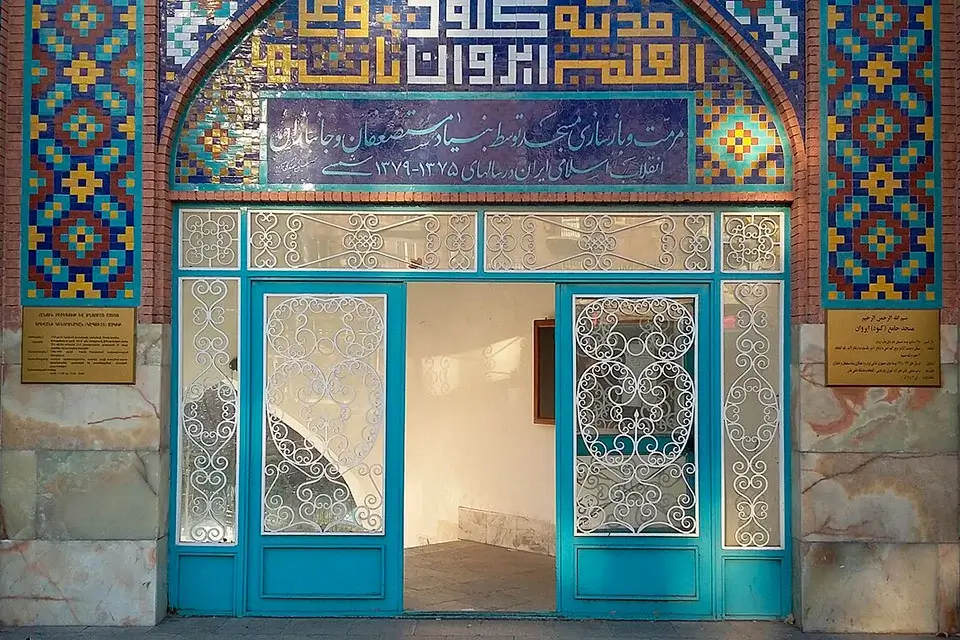
Its location makes it easy to include in a walking route through the city centre. Kond District, Republic Square and several other central attractions are all within convenient walking distance.
History of the Blue Mosque
The Blue Mosque was built in 1765–1766 under Huseyn Ali Khan, the ruler of the Erivan Khanate. At the time, it was the largest and one of the most prominent mosques in the city.
The role of the complex changed several times as Yerevan developed. During the Soviet period, its religious function ended and the buildings were used for museum and cultural purposes.
The complex was restored in the 1990s with support from Iran. After restoration, the Blue Mosque again became a religious and cultural centre and remains one of the most visible reminders of Yerevan’s Persian-period heritage.
What to See at the Blue Mosque
The first thing to explore is the inner courtyard. After the traffic and activity of Mashtots Avenue, the garden and open space inside the complex feel noticeably calm.
The most recognizable architectural feature is the blue and turquoise tilework decorating the dome, façades and minaret. This colourful decoration is the reason the complex is commonly known as the Blue Mosque.
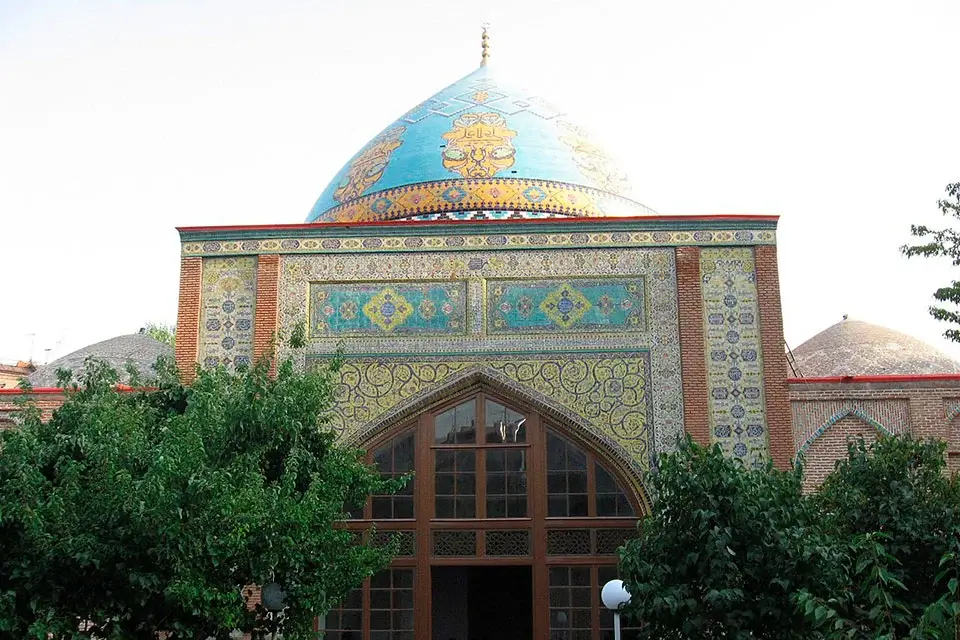
The surviving minaret rises above the south-eastern part of the complex. Around the courtyard are prayer spaces, arcades and smaller buildings that together form the historic mosque complex.
Even if you do not enter the prayer hall, the courtyard and exterior architecture are worth seeing. Around 30–45 minutes is usually enough for a relaxed visit.
Can Tourists Enter the Blue Mosque?
The Blue Mosque is an active religious complex, but tourists can usually visit the courtyard and areas that are open to visitors. Access to the prayer hall may depend on the time of day and activities taking place inside.
During prayers or religious events, some parts of the complex may be closed to visitors. If a service is taking place, it is best to avoid disturbing worshippers and enjoy the courtyard and exterior instead.
Visiting Rules
Modest clothing is recommended when visiting the mosque. Inside prayer areas, visitors should remain quiet, and shoes may need to be removed before entering.
Photography of the courtyard and architecture is usually acceptable, but avoid photographing people during prayer without permission. If you are unsure, ask a member of staff before taking photos inside.
Because the Blue Mosque remains an active place of worship, respectful behaviour is more important than following a long list of tourist formalities.
Best Time to Visit the Blue Mosque
The complex can be visited throughout the year. Spring and early autumn are especially pleasant, when the courtyard is green and the weather is comfortable for continuing a walk through central Yerevan.
For sightseeing, daylight hours outside major prayer times are the most convenient. Good natural light also brings out the blue and turquoise colours of the dome and tilework.
How to Get to the Blue Mosque
The Blue Mosque is located directly on Mesrop Mashtots Avenue and is easy to reach on foot from central Yerevan. From Republic Square, it is a straightforward walk through the city centre.
You can also arrive by taxi or public transport and get off close to the complex. A separate car is unnecessary for the visit, as the mosque fits naturally into a walking route around central Yerevan.
Blue Mosque in a Yerevan Walking Route
The Blue Mosque combines naturally with a walk through Kond District. Explore the narrow historic lanes of Kond first, then continue downhill toward Mashtots Avenue and visit the mosque.
After the Blue Mosque, continue toward Republic Square. This short route reveals three very different layers of Yerevan: the old residential fabric of Kond, Persian architectural heritage and the monumental 20th-century city centre.