Religion in Armenia
Christianity is the dominant religion in Armenia, and most believers belong to the Armenian Apostolic Church. According to the 2022 population census, around 2.79 million people — 97.5% of the country’s population — identified themselves as followers of the Armenian Apostolic Church.
Armenia is widely known as the first country in the world to officially adopt Christianity, traditionally dated to 301 AD during the reign of King Tiridates III and the mission of Gregory the Illuminator. As a result, ancient churches, monasteries, and khachkars are not only architectural landmarks but also an important part of Armenia’s national history and cultural identity.
Below, you can learn about the main religion in Armenia, the Armenian Apostolic Church, how it differs from Eastern Orthodox churches, major religious holidays, and what visitors should know before entering an active church or monastery.
Religion in Armenia: Quick Facts
| Question | Quick Answer |
|---|---|
| What is the main religion in Armenia? | Christianity, primarily the Armenian Apostolic Church |
| When did Armenia adopt Christianity? | In 301 AD |
| Where is the spiritual center? | In Etchmiadzin, present-day Vagharshapat |
| Are Armenians Orthodox? | The Armenian Apostolic Church belongs to the Oriental Orthodox Churches, but not to the same church family as the Russian Orthodox Church |
| When do Armenians celebrate Christmas? | January 6, together with the Feast of the Epiphany |
| Does Armenia have a state religion? | No. Religious organizations are separate from the state, although the Constitution recognizes the special historical mission of the Armenian Apostolic Church |
What Religion Do Armenians Follow?
Most Armenians are Christians belonging to the Armenian Apostolic Church. Its official name reflects the church tradition that Christianity was preached in Armenia by the Apostles Thaddeus and Bartholomew as early as the 1st century.
The Armenian Apostolic Church has played an important role not only in religious life, but also in preserving the Armenian language, literature, art, and national identity. For centuries, monasteries served as centers of education, with schools and scriptoria where manuscripts were copied, studied, and decorated.
At the same time, Armenia is a secular state. The Constitution guarantees the activity of religious organizations and separates them from the state. The Armenian Apostolic Church is not a state church, although its special historical role in the spiritual and cultural life of the Armenian people is officially recognized.
Armenia is also home to Catholics, Evangelical Christians, followers of the Russian Orthodox Church, Yazidis, and members of other religious communities. Yerevan has an active Blue Mosque, and the country also has a small Jewish community.
Why Is Armenia Considered the First Christian Country?
Armenia is traditionally regarded as the first country in the world to adopt Christianity as a state religion. This is generally dated to 301 AD, during the reign of King Tiridates III.
According to Armenian Christian tradition, Gregory the Illuminator played the key role in the conversion of the king and the spread of Christianity throughout the country. He later became the first Catholicos of the Armenian Church and remains one of the most important figures in Armenian religious history.
The adoption of Christianity had a profound influence on Armenia’s culture and architecture. Over the following centuries, churches and monasteries were built across the country, many of which still survive today and are among Armenia’s most important historical landmarks.
Are Armenians Orthodox?
The short answer is that the Armenian Apostolic Church is Orthodox in the broader sense of the term, but it does not belong to the same church family as the Russian, Georgian, or Greek Orthodox Churches.
The Armenian Apostolic Church belongs to the family of Oriental Orthodox Churches, together with the Coptic, Syriac, Ethiopian, and several other churches. It recognizes the decisions of the first three Ecumenical Councils — Nicaea, Constantinople, and Ephesus — but did not accept the decisions of the Council of Chalcedon in 451.
The Russian Orthodox Church belongs to the Eastern Orthodox tradition and accepted the decisions of the Council of Chalcedon. This is an important historical and theological distinction, which means that the Armenian Apostolic Church is not part of the Russian Orthodox Church. Both traditions, however, are Christian churches and use the term “Orthodox” in describing their faith.
Why Is It Called the Armenian Apostolic Church Rather Than the Gregorian Church?
The correct name is the Armenian Apostolic Church. The word “Apostolic” reflects the tradition that Christianity was first preached in Armenia by the Apostles Thaddeus and Bartholomew.
The term “Gregorian Church” is sometimes used in older Russian and European sources because of the important role of Gregory the Illuminator in the Christianization of Armenia. However, Armenians themselves do not traditionally use this name for their church.
Gregory the Illuminator was one of the most influential figures in Armenian Christianity, but he was not the founder of the church. For this reason, “Armenian Apostolic Church” is the more accurate and commonly accepted name.
Who Is the Head of the Armenian Apostolic Church?
The head of the Armenian Apostolic Church is the Catholicos of All Armenians. The current Catholicos is Karekin II, who was elected in 1999.
His official seat is the Mother See of Holy Etchmiadzin in Vagharshapat, around 20 kilometers from Yerevan. Etchmiadzin is the spiritual and administrative center of the Armenian Apostolic Church and one of the most important religious sites in Armenia.
The Catholicos leads the church and represents it in relations with other Christian churches and religious organizations around the world.
What Travelers Notice About Armenian Church Traditions
Even without any knowledge of theology, visitors can easily notice several distinctive features of Armenian Christian culture:
- church services are traditionally conducted in Classical Armenian, known as Grabar;
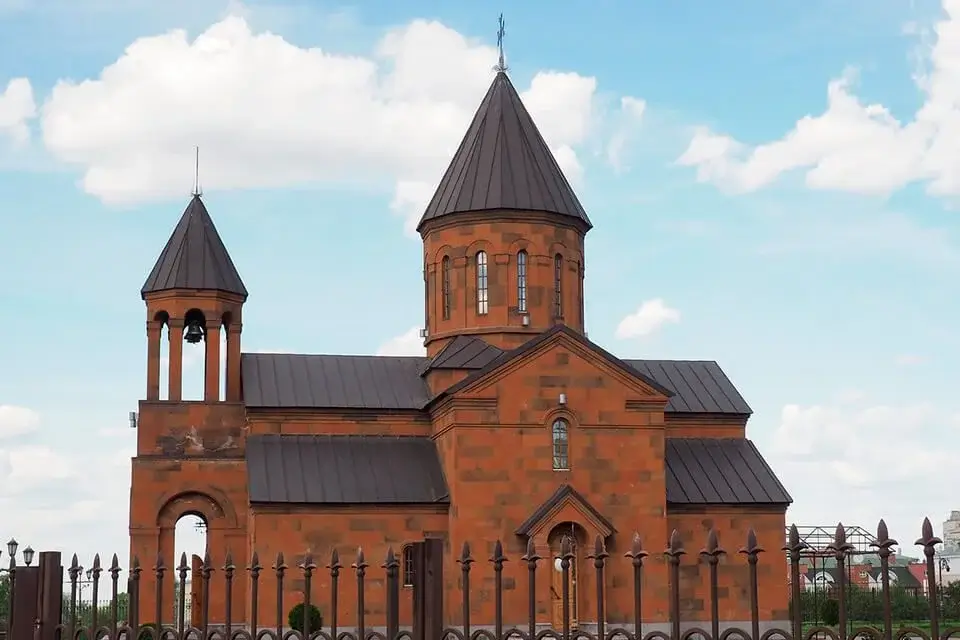
- Armenian churches are often characterized by austere stone interiors and domes set on high drums;
- many churches have a gavit — a traditional entrance hall that historically served as a place for gatherings, teaching, and burials;
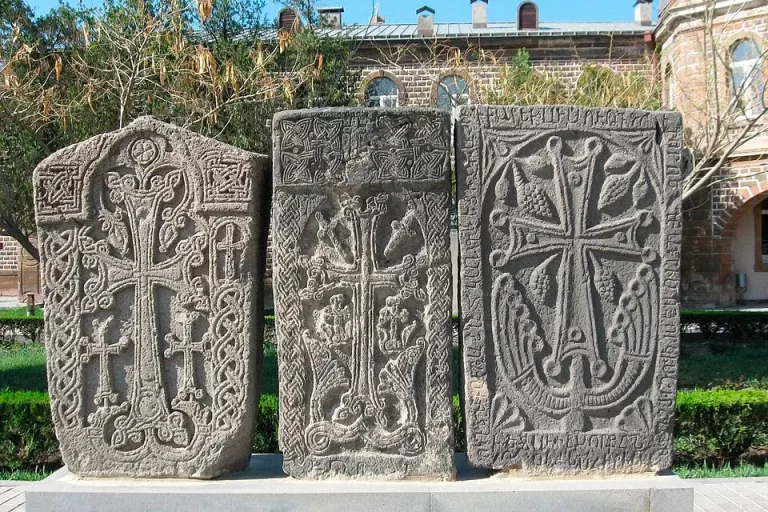
- khachkars — intricately carved stone steles featuring a cross — are commonly found beside churches and monasteries;
- many Armenian monasteries were built in mountains, deep gorges, or on high plateaus, where the architecture blends naturally with the surrounding landscape.
The khachkar is one of the most recognizable symbols of Armenia. It is not simply a gravestone, but a memorial or votive cross-stone that could be erected in memory of a person or event, as an expression of gratitude, or to commemorate the construction of a church or another important structure. You can learn more in our separate guide to Armenian khachkars.
Major Religious Holidays in Armenia
The Armenian Apostolic Church follows its own liturgical calendar, and several major Christian holidays are celebrated differently from many Western and Eastern Orthodox traditions.
One of the most distinctive examples is Christmas. In Armenia, Christmas and the Feast of the Epiphany are celebrated together on January 6. On the evening of January 5, churches hold a Christmas Eve service, and on January 6 the Divine Liturgy is celebrated.
Easter, known in Armenian as Zatik, is the most important movable feast of the church year. Its date changes each year and is determined according to the ecclesiastical calendar.
Another important holiday is Vardavar, celebrated 14 weeks after Easter. Its Christian meaning is connected with the Transfiguration of Jesus Christ, although the holiday is also famous for the popular tradition of people splashing water on one another in streets and public spaces.
Other important religious celebrations include the Feast of the Assumption of the Holy Mother of God, the Feast of the Exaltation of the Holy Cross, and commemorations dedicated to saints and significant events in Armenian Christian history.
When Is Christmas Celebrated in Armenia?
The Armenian Apostolic Church celebrates Christmas on January 6, together with the Feast of the Epiphany. This differs from the December 25 celebration common in many Western churches and the January 7 celebration observed by several Eastern Orthodox churches that follow the Julian calendar for Christmas.
The celebration begins on the evening of January 5 with a Christmas Eve service known as Chragaluyts. On January 6, churches celebrate the Divine Liturgy, followed by the Blessing of the Water ceremony, which commemorates the baptism of Jesus Christ.
For travelers visiting Armenia at this time, Etchmiadzin and many churches in Yerevan and throughout the country hold special services, making January 5–6 an interesting period to experience Armenian Christian traditions.
Important Churches and Monasteries in Armenia
Armenia has hundreds of historic churches and monasteries, many of which are among the country’s most important cultural and architectural landmarks. Some of the most significant are:
- Etchmiadzin Cathedral — the spiritual center of the Armenian Apostolic Church and one of the most important Christian sites in Armenia;
- Khor Virap Monastery — closely associated with Gregory the Illuminator and famous for its views of Mount Ararat;
- Geghard Monastery — a medieval monastery partly carved into the surrounding rock;
- Noravank Monastery — known for its dramatic location among red cliffs and its distinctive medieval architecture;
- Tatev Monastery — a major religious and educational center of medieval Armenia, situated on the edge of the Vorotan Gorge;
- Sevanavank Monastery — one of the best-known religious landmarks on Lake Sevan;
- Haghpat and Sanahin Monasteries — important medieval monastic complexes in northern Armenia.
These sites are not only places of worship. They also preserve centuries of Armenian architecture, stone carving, manuscripts, education, and cultural history, making them essential stops for travelers interested in understanding Armenia.
How to Visit Churches and Monasteries in Armenia
Most churches and monasteries in Armenia are open to visitors, including many that are still active places of worship. Tourists are welcome, but it is important to behave respectfully.
When visiting an Armenian church or monastery:
- wear modest clothing, especially when entering an active church;
- avoid loud conversations inside the church;
- do not interrupt services, prayers, baptisms, weddings, or other ceremonies;
- photography is usually allowed, but restrictions may apply in some churches or during services;
- avoid using flash when people are praying or when it may disturb a ceremony;
- do not touch icons, religious objects, manuscripts, or historic stone carvings unless permitted;
- follow any instructions given by clergy or church staff.
Women are generally not required to cover their heads in Armenian Apostolic churches, although some visitors choose to do so. Men should normally remove hats before entering.
Entrance to most churches and monasteries in Armenia is free, although donations for the maintenance of religious sites are always welcome.
Frequently Asked Questions
SLS Armenian Tour
Discover Armenia’s Christian Heritage
Visit Etchmiadzin, Geghard or Khor Virap on a private tour from Yerevan. We will help you choose the right route and vehicle, confirm the price in advance and allow enough time to explore Armenia’s sacred sites.
- Private itinerary
- Pickup from your Yerevan hotel
- Price confirmed in advance