History of Armenia
Armenia has more than 2,500 years of documented history, while the human history of the Armenian Highlands reaches much further into the past. Ancient kingdoms, the adoption of Christianity, medieval monasteries, foreign empires, the Armenian Genocide, the Soviet period and modern independence have all shaped the country travelers see today.
This concise guide covers the key periods and events in Armenian history without going too deeply into academic detail.
How Old Is Armenia?
One of the earliest reliable written references to Armenia appears as Armina in the Behistun inscription of the Persian king Darius I, dating to around 520 BC.
The Armenian Highlands, however, had been inhabited for thousands of years before that. Archaeological sites such as Areni-1, Metsamor and Shengavit show the long history of settlement, agriculture, craftsmanship and early cultures in the region.
Armenians call themselves Hay (հայ) and their country Hayastan (Հայաստան). Mount Ararat, now located in Turkey near the Armenian border, remains one of the most important symbols of Armenian culture and identity.
Key Dates in Armenian History
- 9th–6th centuries BC — Kingdom of Urartu
- 782 BC — Foundation of Erebuni, the historical predecessor of Yerevan
- 6th century BC — Armenia appears in Persian written sources
- 189 BC — Beginning of the Artaxiad dynasty
- 95–55 BC — Reign of Tigranes the Great
- 301 — Traditional date for Armenia’s adoption of Christianity
- 405 — Creation of the Armenian alphabet
- 885–1045 — Bagratid Kingdom of Armenia
- 1080–1375 — Armenian statehood in Cilicia
- 1915 — Armenian Genocide in the Ottoman Empire
- 1918–1920 — First Republic of Armenia
- 1920–1991 — Soviet Armenia
- 1991 — Independence of the modern Republic of Armenia
Ancient Armenia: Urartu and Tigranes the Great
The Kingdom of Urartu was one of the major states of the Armenian Highlands from the 9th to the 6th century BC. Its kings built fortresses, irrigation systems and cities across the region.
In 782 BC, King Argishti I founded the fortress of Erebuni on the territory of modern Yerevan. Its ruins and archaeological museum can still be visited today.
By the 6th century BC, Armenia was recorded in Persian sources. In later centuries Armenian kingdoms were ruled by several dynasties, including the Orontids and Artaxiads.
Armenia reached the height of its ancient political power under Tigranes II the Great, who ruled from 95 to 55 BC. His kingdom expanded far beyond Armenia into parts of Syria and Mesopotamia, briefly becoming one of the leading powers of Western Asia.
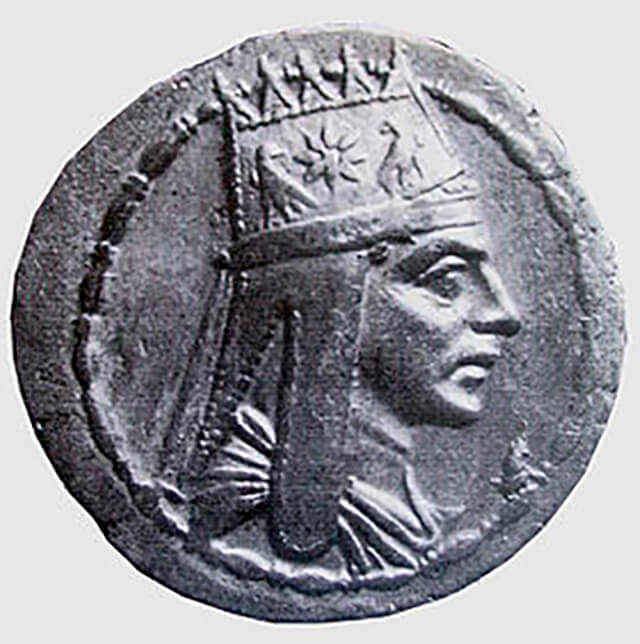
Wars with Rome later forced Tigranes to give up most of his conquests, although he retained his throne and the core territory of Greater Armenia.
Christianity and the Armenian Alphabet
According to Armenian church tradition, Armenia adopted Christianity as its state religion in 301 AD during the reign of King Tiridates III. Armenia is traditionally regarded as the first state to officially adopt Christianity.
The story is closely associated with Gregory the Illuminator and Khor Virap, where church tradition says Gregory was imprisoned for many years before becoming the first head of the Armenian Church.
Another defining event came around 405, when Mesrop Mashtots created the Armenian alphabet. The new writing system helped develop Armenian literature, education and religious culture and became one of the most important elements of Armenian identity.
Medieval Armenia: Ani, the Bagratids and Cilicia
Armenian statehood was restored in 885 under the Bagratid dynasty. In 961, Ani became the capital and grew into an important political, commercial and cultural center.
The Bagratid kingdom ended in the 11th century, but Armenian political and cultural life continued in different regions.
A new Armenian state emerged in Cilicia, on the northeastern Mediterranean coast. The Armenian Kingdom of Cilicia developed strong commercial and political links with European and Middle Eastern powers and survived until 1375.
Medieval Armenia also produced many of the country’s most famous monasteries. Geghard, Haghpat, Sanahin, Tatev, Noravank, Haghartsin and Goshavank remain among the best places to experience Armenia’s medieval heritage.
Armenia Between Empires
From the 16th to the 18th centuries, Armenian lands were divided mainly between the Ottoman Empire and Persia. Wars between the two powers repeatedly affected the region and caused political instability and population movements.
After the Russo-Persian War of 1826–1828 and the Treaty of Turkmenchay, the territories of the Erivan and Nakhichevan khanates passed from Persia to the Russian Empire.
During the 19th century, Armenian cultural, educational and public life developed in Yerevan, Etchmiadzin, Tiflis and other cities of the Russian Empire, while large Armenian communities continued to live in the Ottoman Empire.
The 20th Century
Armenian Genocide
One of the darkest periods in Armenian history began in 1915, when the Ottoman authorities carried out mass deportations and killings of the Armenian population.
April 24, 1915, when hundreds of Armenian intellectuals and community leaders were arrested in Constantinople, is commemorated today as Armenian Genocide Remembrance Day.
The genocide profoundly changed the geography of the Armenian population and contributed to the formation of large Armenian communities around the world. In Yerevan, the Tsitsernakaberd Memorial and Armenian Genocide Museum preserve the memory of the victims.
First Republic and Soviet Armenia
On May 28, 1918, the First Republic of Armenia was established after the collapse of the Russian Empire and the battles of Sardarapat, Bash-Aparan and Karakilisa.
The republic existed until late 1920, when Soviet rule was established in Armenia.
During the Soviet period, Armenia underwent industrialization and major urban development. Yerevan grew into the country’s main industrial, scientific and cultural center, while much of its modern architectural character was shaped during the 20th century.
Independent Armenia
On September 21, 1991, Armenians voted overwhelmingly for independence from the Soviet Union. The modern Republic of Armenia emerged shortly afterward.
The first decades of independence brought major political and economic changes as well as conflict around Nagorno-Karabakh. After the 2020 war and the events of 2023, Azerbaijan established full control over Nagorno-Karabakh, and more than 100,000 ethnic Armenians left the region for Armenia.
Today Armenia is an independent parliamentary republic, with Yerevan as its capital and largest city.
Where to Experience Armenian History
Many periods of Armenian history can still be explored through monuments and archaeological sites:
- Erebuni Fortress — Urartian history and the origins of Yerevan
- Garni Temple — Armenia’s pre-Christian heritage
- Etchmiadzin and Khor Virap — the adoption of Christianity
- Geghard, Tatev, Haghpat and Sanahin — medieval Armenia
- Gyumri’s Kumayri district — 19th-century urban architecture
- Tsitsernakaberd — remembrance of the Armenian Genocide
- Sardarapat Memorial — the events of 1918
Visiting these places is one of the best ways to understand how Armenia’s long history has shaped the country today.
Explore Armenia with a Private Driver
Discover Armenia’s historic sites on a private day tour from Yerevan.