
Khor Virap Monastery
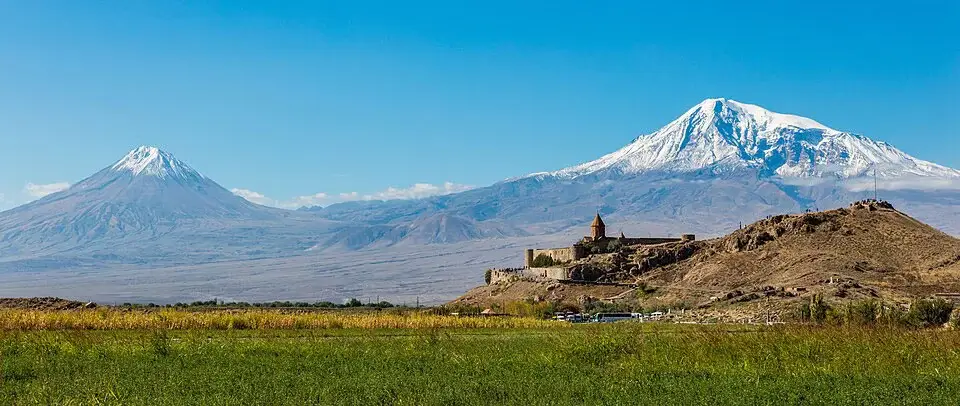
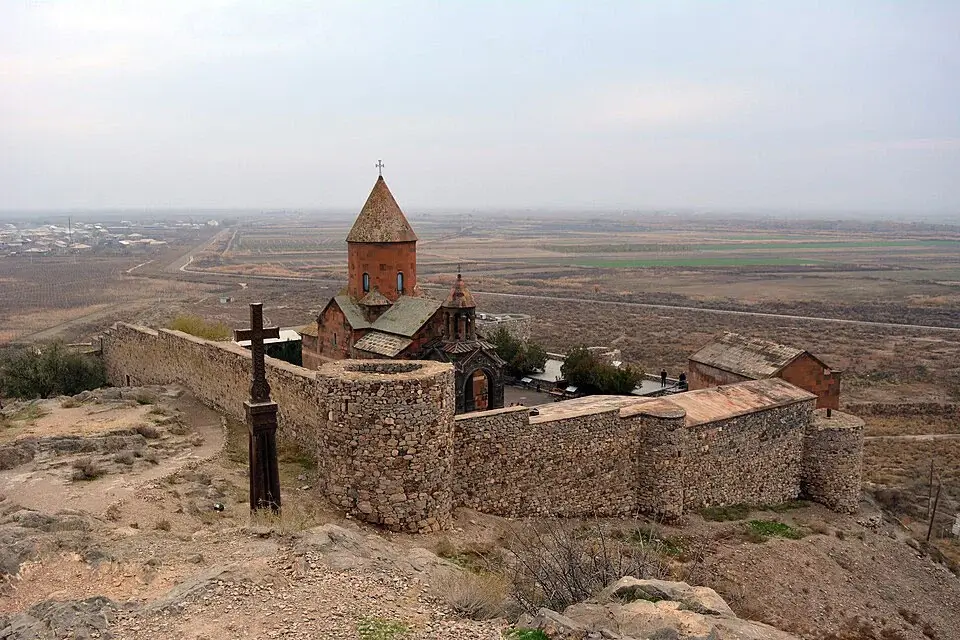
Khor Virap is a fortified hilltop monastery on the Ararat Plain, about 45 km south of Yerevan, just metres from the Armenian–Turkish border. Its name literally means “deep pit” in Armenian — a reference to the underground dungeon where, according to tradition, St. Gregory the Illuminator was imprisoned for 13 years in the late 3rd century. His release led directly to Armenia’s adoption of Christianity as a state religion in 301 AD, making the country the first officially Christian nation in the world. Today Khor Virap is one of the most important pilgrimage sites in Armenia and the single best place in the country to see Mount Ararat, which rises in spectacular silhouette directly behind the monastery walls.
Quick Facts
- Built / Founded: 642 AD (main church rebuilt 1662)
- Location: Pokr Vedi village, Ararat Province
- Also known as: Khor Virap Monastery, Deep Pit, Deep Dungeon, Խոր Վիրապ
- From Yerevan: About 45 km / 50 minutes
- Entrance fee: Free entrance
- Time needed: 1–1.5 hours
- Best time to visit: Early morning on clear days; April–June and September–October
- Status: Pilgrimage site of the Armenian Apostolic Church
- GPS coordinates:
39.878435, 44.576127
The Story of St. Gregory and Armenia’s Conversion
The legend that gives Khor Virap its name is one of the foundation stories of Armenian Christianity. Gregory the Illuminator (c. 239 – c. 330 AD) was born to a noble Parthian family but raised as a Christian in Roman Cappadocia. He returned to Armenia in the late 3rd century and entered the service of King Tiridates III, who was at the time a devoted pagan.
When Tiridates discovered Gregory’s Christian faith and his refusal to participate in pagan rituals, the king had him thrown into a deep pit on the site of the present monastery. Most accounts say Gregory survived 13 years in the dungeon, kept alive by a Christian woman who lowered bread to him in secret.
The story turns on a personal crisis: King Tiridates fell into a mysterious illness — Armenian tradition describes it as a form of madness in which the king believed himself to be a wild boar. His sister Khosrovidukht, who had become a Christian, urged him to release Gregory and ask for healing. Gregory was brought out of the pit, cured the king, and converted the royal court. In 301 AD, Tiridates declared Christianity the state religion of Armenia — three decades before the Edict of Milan in the Roman Empire.
Gregory became the first Catholicos of the Armenian Apostolic Church, and the site of his imprisonment became a sacred place of pilgrimage.
Descending into the Pit
The pit itself is still accessible today and is the centrepiece of any visit to Khor Virap. It lies beneath the small St. Gevorg Chapel, to the right of the altar. A narrow opening leads to a steep metal ladder descending about 6 metres into a circular underground cell roughly 4 metres across.
The descent is not for everyone — the ladder is vertical, the space is tight and damp, and the air at the bottom is heavy. But the pit is the reason most pilgrims and many curious travellers come. Inside, the cell is decorated simply with an icon of St. Gregory and a few candles. It is easy to imagine, even briefly, what 13 years here might have meant.
Visitors who prefer to skip the descent can stay in the chapel above. Both options are equally part of the experience.
The Monastery Today — Architecture and Atmosphere
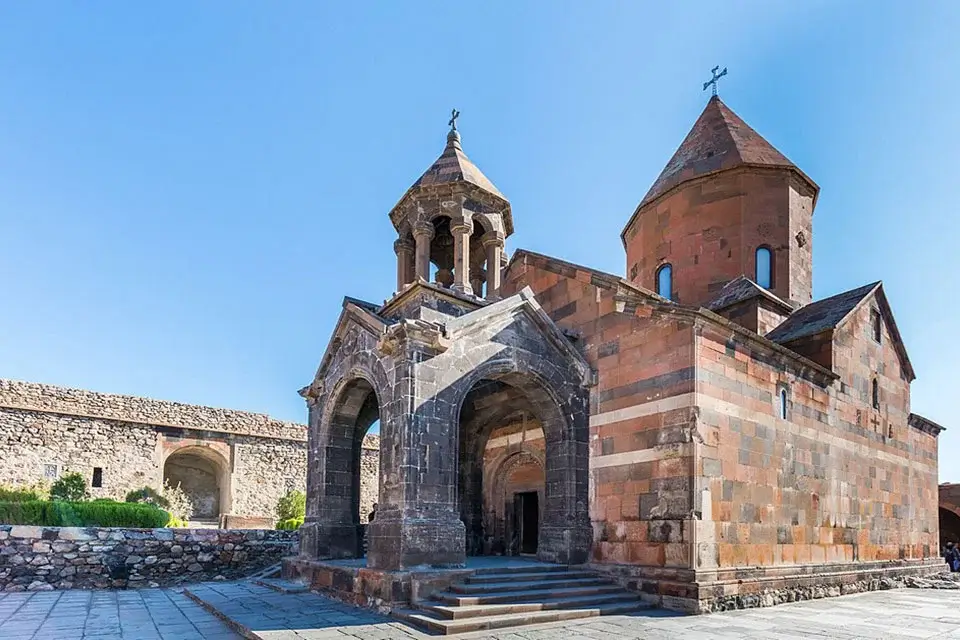
The current structures at Khor Virap mostly date from the 17th century, although the site has been continuously sacred for far longer. The first chapel above the pit was built in 642 AD. Centuries of earthquakes, invasions and rebuilds shaped the complex into its present form.
The main church, Surp Astvatsatsin (Holy Mother of God), was built in 1662 by Archimandrite David Virapetsi. It is a typical post-medieval Armenian church: a cruciform plan with a twelve-sided dome drum, simple austere interior, and finely carved khachkars set into the walls. The smaller St. Gevorg Chapel, directly above the pit, is older in foundation. The fortified walls and adjacent buildings around the complex were completed between 1666 and 1669.
The atmosphere is quieter and more solemn than at busier monuments like Geghard. Khor Virap remains an active religious site — Armenians come here for baptisms, weddings, and the traditional matagh (a ritual offering). The release of doves at the entrance, a symbolic re-enactment of St. Gregory’s freedom, is a common sight on Sundays.
The View of Mount Ararat
What seals Khor Virap as one of Armenia’s most photographed sites is the view. Mount Ararat — the biblical mountain on which Noah’s Ark is said to have come to rest — rises directly behind the monastery walls in a single uninterrupted silhouette. There are no foothills or buildings between the monastery and the mountain. The contrast of the small monastery against the 5,137-metre snow-capped peak is the postcard image of Armenia.
The mountain itself is across the border in present-day Turkey, marked by the Aras River. The border fence runs only a few hundred metres from the monastery walls. Despite this, Ararat remains the spiritual and national symbol of Armenia and appears on the country’s coat of arms.
The view is best on clear mornings, especially in late spring and autumn. Hazy summer days often obscure the summit. Winter visits offer dramatic snow cover but unreliable visibility.
How to Get to Khor Virap from Yerevan
Khor Virap is about 45 km south of Yerevan, in the village of Pokr Vedi (Ararat Province), and takes around 50 minutes by car on the M2 highway.
By private car with driver. The most flexible option, especially if you want to combine Khor Virap with Noravank or the Areni wine region in a single day. We provide private cars and drivers in Yerevan for the full southern route at your own pace.
By marshrutka. Direct shared minibuses to Pokr Vedi depart from Sasuntsi Davit metro station in Yerevan, typically once or twice a day in the morning. The fare is around 500 AMD. The marshrutka drops passengers at the foot of the hill — it’s a 15-minute walk uphill to the monastery. Return options are limited, so confirm the schedule before going.
By taxi. A round-trip taxi from Yerevan with waiting time costs roughly 12,000–15,000 AMD. For Khor Virap + Noravank + Areni in one day, expect 25,000–35,000 AMD.
By train. The southern rail line from Yerevan stops at Ararat Station, from which a short taxi covers the last few kilometres. The train is slow and infrequent but scenic.
Combining with Noravank and the Areni Wine Region
The standard full-day route from Yerevan is Khor Virap → Areni → Noravank. Khor Virap is the first stop heading south, Areni Wine Region lies about 80 km further along the same road (famous for cave wineries and the discovery of the world’s oldest known winery, dated to ~4,100 BC), and Noravank Monastery sits in a dramatic red-cliffed canyon another 10 km off the highway.
The full loop takes about 8–9 hours from Yerevan including driving, stops and a wine tasting at Areni. It is one of the most varied day trips in Armenia: religious history, archaeology, landscape and food in a single route.
Practical Tips for Visiting
- Opening hours: the monastery grounds are generally open daily from around 09:00 to 18:00. The pit and chapels are accessible during the same hours. There is no strict access control.
- Entrance fee: free. No charge to enter the complex, the chapels, or to descend into the pit.
- Parking: small fee around 200 AMD.
- Time needed: about 1 to 1.5 hours.
- Dress code: modest dress required — cover shoulders and knees. A light scarf is helpful for women entering the churches.
- The pit descent: narrow vertical ladder. Skip if you have mobility, claustrophobia or knee issues. The atmosphere at the top of the chapel is equally meaningful.
- Best time of day: early morning for the clearest Ararat view and softest light. Late afternoon is good for photography looking back from the hill.
- Best season: April–June and September–October. Winter views are dramatic but visibility is unpredictable.
- Facilities: restrooms at the entrance area; small shops selling religious items, candles and snacks. No proper café — bring water in summer.
FAQ
See more places in our full guide to things to do in Armenia — including Garni Temple, Geghard Monastery, Lake Sevan, Noravank and other top day trips from Yerevan.