

Yenokavan
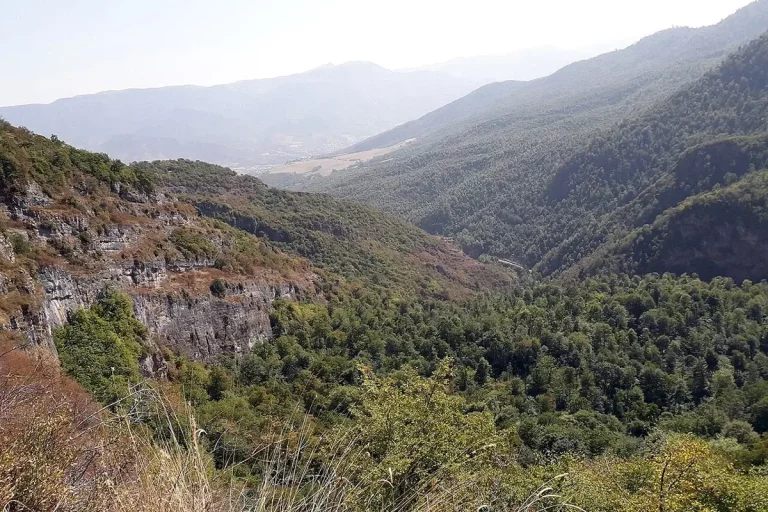
Yenokavan (Armenian: Ենոկավան) is a mountain village and eco-adventure resort in Armenia’s Tavush Province, sitting at ~1,400 m at the very edge of a deep forested canyon, roughly 140 km and a 2.5–3-hour drive from Yerevan. The setting has earned Tavush the nickname “Armenian Switzerland” — oak, beech, and hornbeam forests carpet the ridges, white limestone cliffs rim the canyon top, and the Khachaghbyur River cuts a clear course of pools and rapids through the valley floor. Half of Tavush is forest — the highest forest cover of any Armenian province — and Yenokavan is one of its most photographed corners.
Over the last decade Yenokavan has become the Caucasus’s flagship destination for adventure and eco-tourism, driven by two ventures that opened side by side: Yell Extreme Park (Armenia’s first zipline park, launched 2015, ISO 45001:2018 certified) and Apaga Resort (a working farm and eco-hotel with a 40-horse stable). Three kilometres down the canyon sit the medieval Lastiver cave shelters — hollowed out of the cliff face in the 13th century, complete with carved reliefs and now paired with a wooded campsite of tree houses. Between the zipline, the cave hike, the horses, the tree houses, and the farm-to-table dining, Yenokavan is designed for people who want their weekend outdoors and off-grid.
What to See in Yenokavan and Around
Yenokavan is surrounded by some of Tavush Province’s best-known natural and historical attractions. Explore the main places nearby below, with separate detailed guides for planning each visit.

Geography and the canyon
Yenokavan sits on a plateau at the lip of a canyon carved by the Khachaghbyur River, a tributary of the Aghstev. The canyon walls drop steeply from the village edge; the top rim is defined by lines of white limestone cliffs that catch the sun against the forest cover below. The forest itself is dense mixed hardwood — oak (Quercus), beech (Fagus), hornbeam (Carpinus) — which turns brilliant yellows and reds in September and October and shelters the cave complexes further down the canyon.
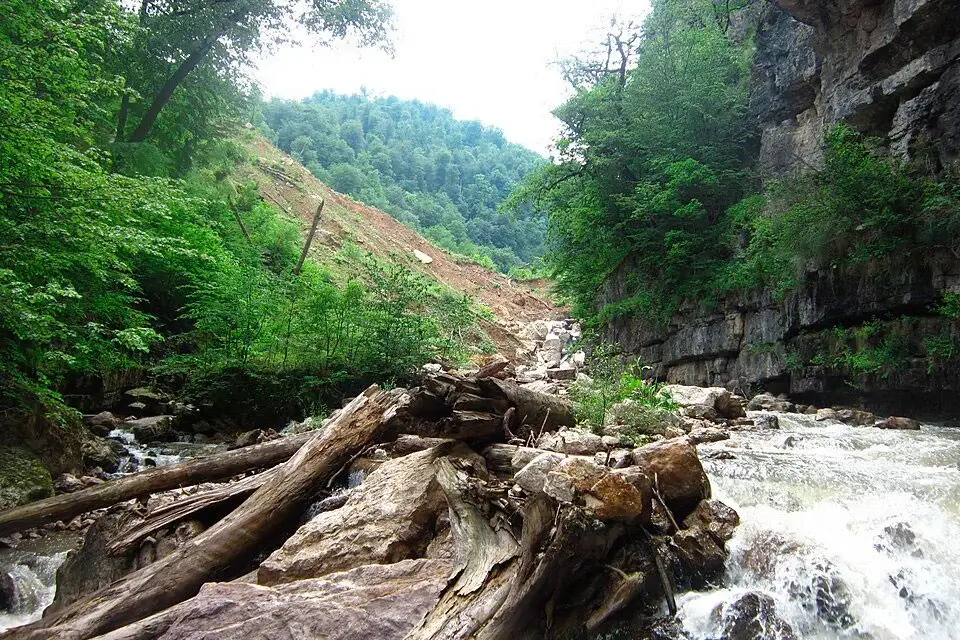
At ~1,400 m the climate is markedly softer than Yerevan’s basin: summer daytime highs average +18 to +24 °C even in July and August when the capital pushes past +38 °C. The river below the village is clean and cold, with natural pools and small rapids — swimming in the Khachaghbyur is one of the summer traditions here. Autumn is Yenokavan’s best-looking season for photography; winter turns the plateau snowbound but the plateau resorts and glamping tents stay open year-round.
The village is small — about 620 people — and remains a working agricultural community: livestock, dairy, hazelnut and fruit orchards. The rise of adventure tourism over the last decade has brought roughly 65 tourism jobs to the local economy and paved the last kilometres of the access road to the resort.
Yell Extreme Park — Armenia’s first adventure park
Yell Extreme Park launched Armenia’s first zipline in 2015 and has grown into the largest adventure park in the Caucasus. The park sits on the edge of the Yenokavan canyon, adjoining Apaga Resort, and operates under ISO 45001:2018 certification — the international occupational-safety-management standard, unusual for a Caucasian adventure venue and one of the reasons the park is preferred for corporate events and children’s programmes.
- Zipline — 5 lines up to 750 m — The signature attraction. Five zipline segments of different lengths — 135 m, 200 m, 268 m, 375 m, and 750 m — chained across the canyon and forest. Flight height above the canyon floor reaches 200–300 m. The full course takes about 90 minutes including short walks between platforms. No experience needed; safety briefings, harnesses, and helmets are provided. Children over about six years old ride tandem with a parent or an instructor.
- Via ferrata — Bolted metal rungs, cables, and short ladders let you climb the canyon’s rock face with fall protection but without technical rope skills. A safe way to try mountaineering.
- Off-road — Yell Truck — Custom off-road vehicle rides to the highest ridges above Yenokavan, with panoramic stops for views over the canyon and the mountains of Tavush.
- Horseback riding — The stable operates from the resort next door — see the Apaga Resort section below.
- Rope park — Multi-level courses over the forest floor — beginner to advanced. Kids’ section available.
- Other activities — Paragliding (tandem flights above the canyon, weather-dependent), paintball, zorbing (rolling in a giant clear ball), and mountain biking with rentals.
Opening hours: daily 10:00–18:00. Ticketing per activity or day pass for multiple. Book online in advance for weekends and July–August.
Where to stay — Apaga Resort and other options
Apaga Resort
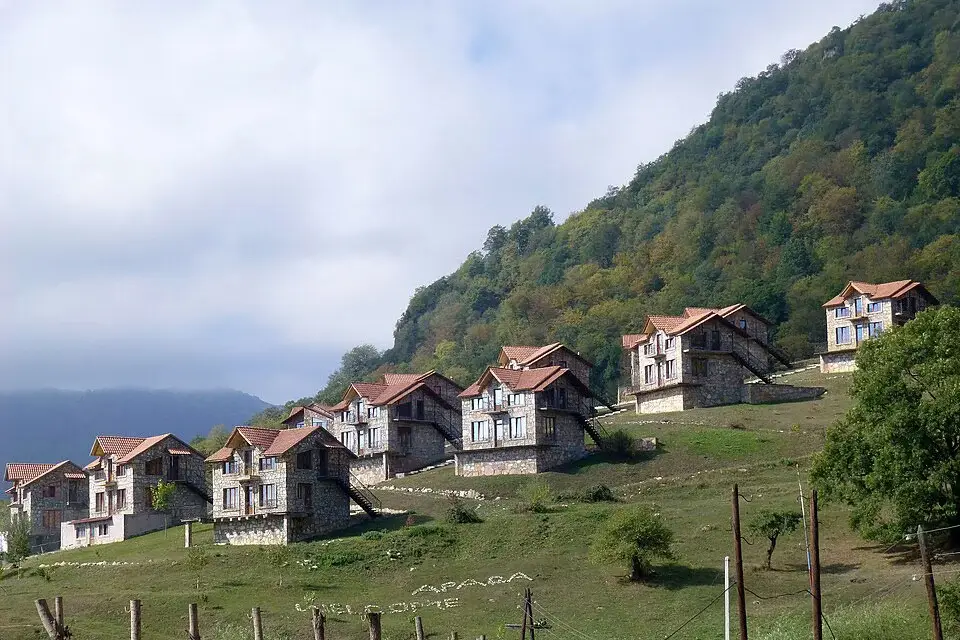
The main eco-resort at Yenokavan — ~7 hectares at 1,370 m elevation, 3 km from the village and 10 km from Ijevan. The property combines 8 cottages and 5 wooden houses in stone and timber, all with panoramic mountain windows. Central to the resort is a working farm: milk, cheese, butter, and bread from a wood-fired oven are produced on site, and the kitchen garden supplies the restaurant. The stable holds 40 horses with a fenced training area for beginners’ lessons and mountain routes for experienced riders. Outdoor swimming pool. Yell Extreme Park is on the resort grounds, so guests can zipline in the morning and be back for lunch on the terrace.
Yenokavan Glamping
A separate glamping site with canyon and mountain views, roughly 1.7 km from Apaga. Fitted platform tents, private terraces, and outdoor dining — regularly rated among the highest-scored properties in the region on Booking.com.
Lastiver tented camp
Down in the canyon itself, at the level of the caves — a mix of tree-house cabins, wooden platforms, and open campsite space beside the river. Rustic by design: no reception building, timber tables and chairs, barbecue over open coals. Overnight from around 5,000 AMD (~US$12); day entry to the camp around 1,000 AMD. Sleeping-bag rental available.
Alternatives in Ijevan (15 km)
If the resort options are booked, several guesthouses and hotels in Ijevan cover the region — Hotel Doki and the Getahovit Resort (a timber eco-hotel 3 km from Ijevan) are the standard choices.
Important booking note. Yenokavan sells out on summer weekends 2–4 weeks in advance. Weekday stays are much easier. If your travel dates are fixed, book early.
Lastiver — the canyon-floor cave hike
Lastiver — 3 km down the canyon from Yenokavan — is the natural companion to any stay at Yenokavan. Two structures anchor the visit:
The Anapat cave. A two-storey cave shelter carved into the cliff wall — used as a 13th–14th-century refuge during Mongol raids, with wall reliefs on the interior (a wedding scene, human figures, crosses, animals). The name “Anapat” means “hermitage” in Armenian.
The waterfalls of the Khachaghbyur. A cascade of small waterfalls on the river inside the canyon, with pools between drops. Refreshing to sit near in summer.
How to get there. A ~3-km forest trail from Yenokavan down to the caves (~40–90 minutes on foot, moderate difficulty — descent to the caves, climb back out). Round trip 6–7 km takes 3–5 hours with time at the caves and waterfalls. The trail is not signposted; a local guide or offline GPS track is recommended. From the Lastiver camp, the caves are a few minutes’ walk.
Lastiver is one of Armenia’s most distinctive off-the-beaten-path destinations — the combination of forest trails, medieval caves, waterfalls, and tree houses makes it unlike almost anywhere else in the country.
Best time to visit Yenokavan
- May to September is the full season. All Yell Extreme Park activities are open, swimming in the Khachaghbyur is comfortable, and the Lastiver trail is dry.
- June to August are peak. Weekends fill up; book ahead. Weekdays are much quieter and worth planning around if you have the flexibility.
- September to mid-October — the best window for photography. Golden foliage across the canyon, fewer visitors, mild days.
- Late October through April — off-season. Yell Extreme Park runs a reduced menu of activities (ziplines can run in dry cold weather; via ferrata and paragliding are weather-limited). Apaga Resort stays open year-round. The Lastiver trail is difficult after rain or snow.
How to get from Yerevan to Yenokavan
Yenokavan is a 2.5–3-hour drive from central Yerevan — north on the M-4 through the Sevan tunnel, into Dilijan, then east through Ijevan and up to the resort.
By private transfer: for a direct trip without changes, you can book a Yerevan to Yenokavan transfer with pickup from your hotel, apartment or another address in Yerevan. The driver will take you directly to Apaga Resort, Lastiver Resort, Yell Extreme Park or another agreed destination in Yenokavan.
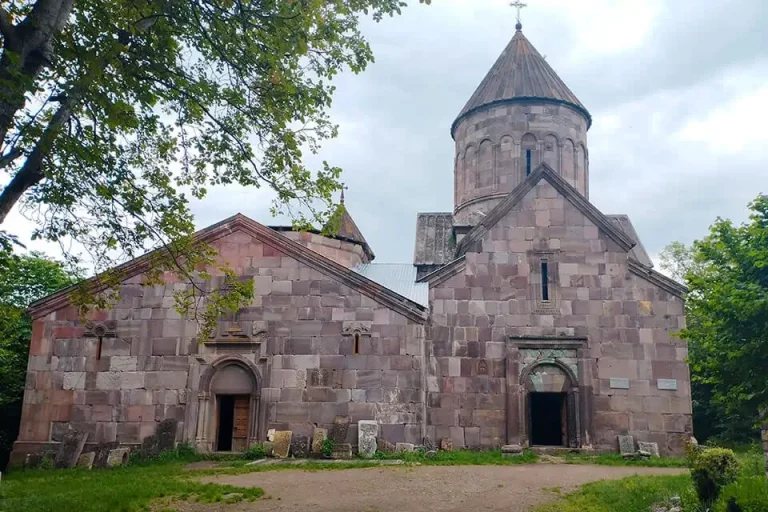
By car with driver: a more flexible option if you want to combine Yenokavan with stops at Lake Sevan, Dilijan, Makaravank Monastery or other places along the route.
By minibus rental: for groups of 6–19, this is the most cost-effective option for a family or friend group.
By public transport: buses/marshrutkas run from Yerevan’s Northern Bus Station to Ijevan (~US$4). From Ijevan, take a taxi to Yenokavan (~2,000 AMD one way, or ~4,000 AMD round trip if you ask the driver to wait). GG Taxi app works. Realistic for solo budget travellers; time-consuming with luggage.
Frequently Asked Questions
Yenokavan is one entry in Armenia’s broader network of spa, ski, and mountain retreats. Browse the full list at resorts in Armenia, which also covers Aghveran, Arzni, Myler Mountain Resort, Jermuk, Tsaghkadzor, Dilijan, and Hankavan. To combine Yenokavan with sightseeing across the country, see day tours from Yerevan or the full list of things to do in Armenia.