

Kasakh Waterfall
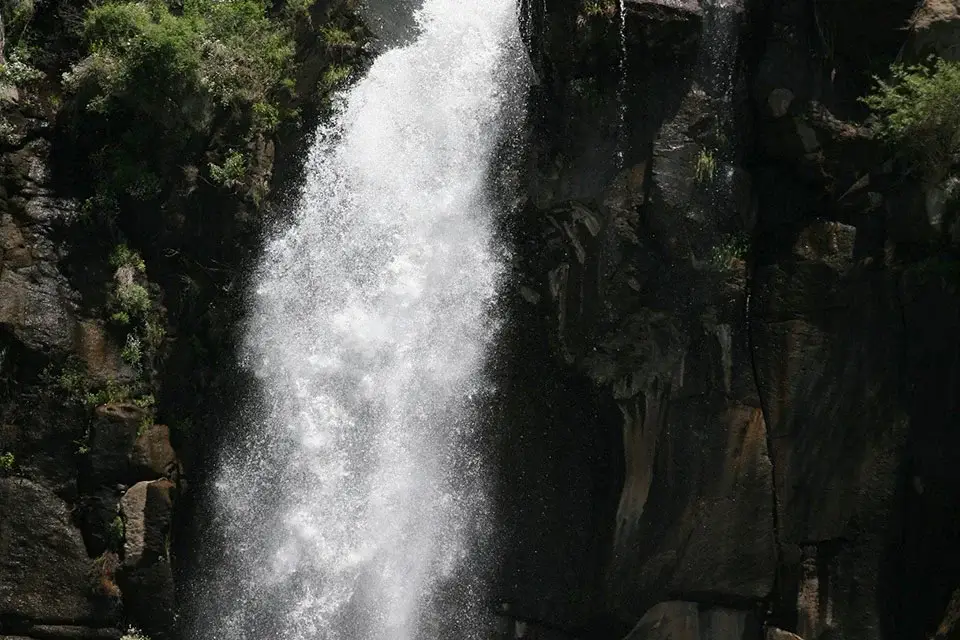
Kasakh Waterfall is a scenic cascade in a deep basalt canyon of the Kasakh River, directly across from the medieval Hovhannavank Monastery in the village of Ohanavan. The river starts on the slopes of Mount Aragats and tumbles into one of the most photogenic gorges in Armenia. It’s the closest major waterfall to Yerevan — only 45 minutes by car — which makes it the easiest half‑day combination of nature and medieval architecture in the country. Best for a family trip, a photo outing, or a stop on the way to Aragats.
Quick Facts
- Location: Ohanavan village, Aragatsotn Province
- Also known as: Kasakh Waterfall, Kasagh Waterfall, Կասաղի ջրվեժ
- From Yerevan: 30–40 km from Yerevan
- Height: 20 m
- Elevation: 1400 m
- Entrance fee: Free
- Time needed: Half day
- Best time to visit: April – June
- Status: Natural monument
- GPS coordinates:
40.3385, 44.3015
How Tall Is Kasakh Waterfall? (and the “70 metres” myth)
If you’ve already searched for Kasakh Waterfall online, you’ve probably seen it called “the highest waterfall in Armenia, 70 metres”. That figure is widely repeated — but it does not match what you actually see at the site.
The main visible cascade is around 20 metres of vertical drop, set inside a basalt canyon roughly 100–200 m deep. The often‑cited “70 metres” likely combines the height of the waterfall itself with the additional staged drops the Kasakh River makes along this stretch of the canyon, before reaching the bottom. Some sources may also be confusing the waterfall height with the depth of the canyon walls towering above the river.
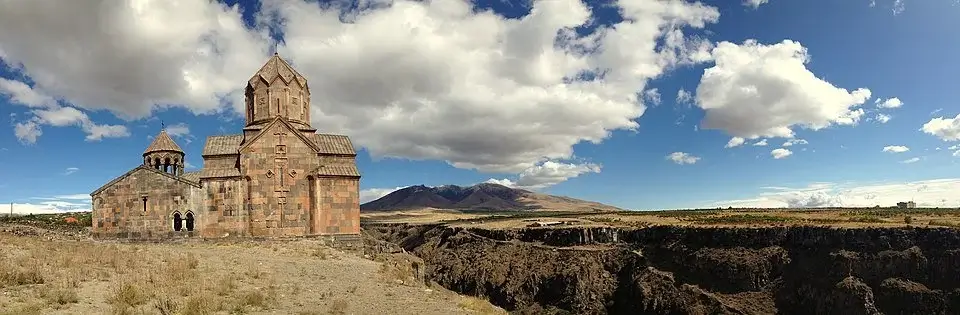
For comparison, Armenia’s actually verified tall vertical waterfalls are Jermuk (≈ 68 m, a thin curtain) and Trchkan (≈ 23 m, the tallest single sheer drop). Kasakh’s appeal isn’t height — it’s the combination of cascade, basalt cliffs and the silhouette of a 5th‑century monastery on the rim above.
Why Visit
Kasakh is unique because nature and medieval architecture sit in a single frame. Hovhannavank Monastery — its oldest structure, the Church of St. Gregory, dates to the 5th century — stands on the canyon rim directly opposite the falls. The sound of church bells mixes with the roar of water. From the monastery viewpoints you get a panorama of Mount Aragats, Mount Ara, and on clear days the silhouette of Mount Ararat in the distance.
The geological story is unusual too. An ancient eruption of Aragats flooded the area with lava that buried several river valleys. The Kasakh is the only river that managed to cut a new channel through the cooled volcanic rock — which is what gives you the basalt walls under your feet today, hundreds of thousands of years old.
When to Visit
- April – June: peak flow from Mount Aragats snowmelt — the most dramatic conditions
- Summer: flow decreases, but canyon views stay beautiful and access is easiest
- Autumn: depends on rain; gold foliage along the canyon edge
- Winter: ice patches on the trail — go carefully or skip the descent and stay at the monastery viewpoint
How to Get to Kasakh Waterfall from Yerevan
By car
Yerevan → Ashtarak → signs to Hovhannavank (Ohanavan) and Saghmosavank. The easiest setup is to park at Hovhannavank and walk down to the river along the trail — you’ll hear the water before you see it. The road is paved all the way to the monastery; from there it’s a dirt path.
By minibus + taxi
Marshrutkas run regularly from Yerevan bus stations to Ashtarak, then a 10–15 minute taxi to Ohanavan or Saghmosavank. For the return, either take a taxi back or arrange for your driver to wait.
With a private driver
If you want comfort, control over timing, and a single fixed price, a car with driver in Yerevan is the simplest option for this half‑day route: Yerevan → Kasakh Waterfall → Hovhannavank → Saghmosavank → optional lunch in Ashtarak → back to Yerevan.
The Trail to the Falls
- From the Hovhannavank parking: 5–10 minute descent along a rocky path
- Surface: dirt and loose stones, short steep sections, no handrails
- Difficulty: easy in dry weather, slippery after rain
- What to wear: sneakers will do in summer; trekking shoes are better
The path drops along the canyon rim toward the river. Stay on the trail; cliff edges are unmarked.
Half‑Day Itinerary from Yerevan
- Yerevan → Hovhannavank (visit the monastery, canyon viewpoints)
- Descent to the Kasakh Waterfall (photos, rest by the basin)
- Drive to Saghmosavank (13th c.) — additional viewpoints across the same canyon
- Lunch in Ashtarak → back to Yerevan
The whole loop fits comfortably into 4–5 hours from city centre to city centre.
Safety, Etiquette and What to Bring
- Spray makes the rocks at the base slippery — keep distance from the edge
- Watch for short scree sections; trekking shoes with grip help
- Snakes are possible in summer — stay on the trail, don’t push into brush
- Pack out everything you bring; the canyon is a fragile ecosystem
- Useful: 0.5–1 L water per person, light snack, rain shell, hat, basic first aid, phone/camera cover
- Binoculars are worth it: the opposite canyon wall has cave openings that were used as refuges in the Middle Ages
What to Combine With
- Hovhannavank Monastery — directly above the falls, founded 5th c., main church 13th c.
- Saghmosavank Monastery — 5 km away, on the same canyon rim
- Kasagh Gorge — basalt walls, caves and climbing routes
- Amberd Fortress and Lake Kari — for a longer Aragatsotn day
- Ashtarak — historic town with bakeries, restaurants and 7th c. churches
FAQ
If you’re cataloguing Armenia’s waterfalls, the rest of the family is worth a look: Trchkan Waterfall (tallest vertical drop), Jermuk Waterfall (the famous “Mermaid’s Hair”), Shaki Waterfall, Herher Waterfall in Vayots Dzor, and Gegharot Waterfall high up on Mount Aragats. For the full list, browse our things to do in Armenia hub.


