
Armenian Traditions and Customs
Armenian traditions are a distinctive blend of ancient customs, Christian heritage, strong family ties, and everyday social values. They shape many aspects of life in Armenia — from hospitality and respect for elders to weddings, the birth of a child, religious holidays, memorial customs, music, dance, and everyday etiquette.
Some traditions have roots that predate Christianity, while others developed alongside the Armenian Apostolic Church and have been passed down through generations. Many are still part of modern life, although they may be observed differently from one family or region to another.
This guide covers the Armenian traditions and customs travelers are most likely to encounter — both for cultural interest and for practical use when visiting Armenia or being invited into an Armenian home.
Armenian Traditions at a Glance
If we rank Armenian traditions by what visitors are most likely to notice, the list would look something like this:
- Hospitality — perhaps the most visible and famous Armenian tradition.
- Respect for elders — an important social value in family life and everyday interactions.
- Strong family ties — extended relatives often remain closely connected across generations.
- Traditional holidays — including Vardavar, Trndez, Tsaghkazard, Surb Sarkis, and the Feast of the Holy Cross.
- Wedding customs — matchmaking, engagement traditions, symbolic rituals, lavash, and the breaking of a plate.
- Funeral and memorial traditions — an important and deeply rooted part of Armenian culture.
- Folk dance and music — especially Kochari, Berd, Yarkhushta, and the distinctive sound of the duduk.
- Everyday beliefs and superstitions — customs connected with bread, the evil eye, gifts, evenings, and the home.
Many of these traditions have changed over time, but they have not disappeared. They remain part of everyday Armenian culture, although the way they are observed can vary considerably between families, generations, and regions.
Armenian Hospitality: A Tradition at the Heart of the Culture
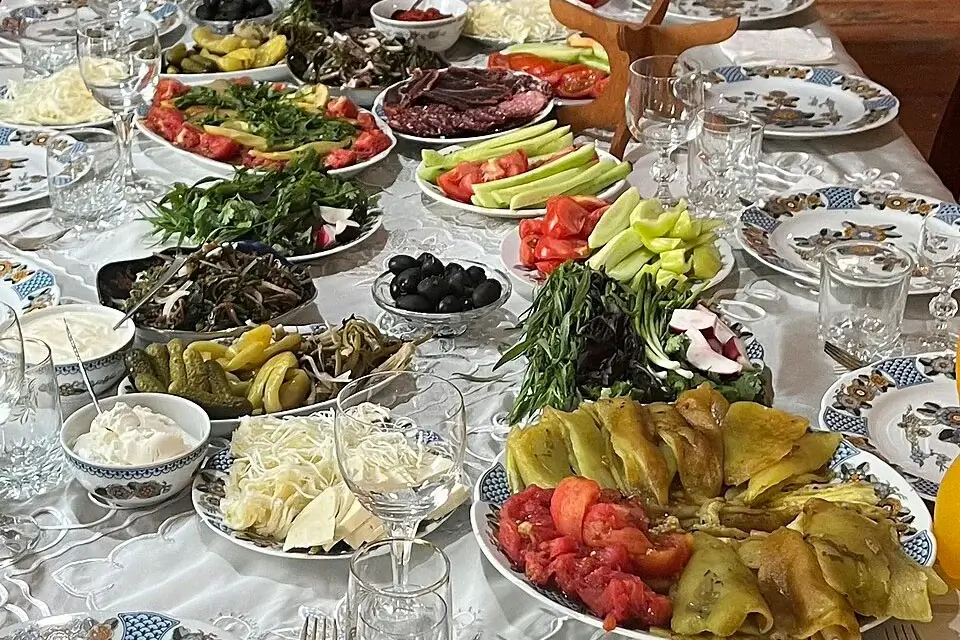
Hospitality is one of the most recognizable Armenian traditions. Guests are traditionally treated with warmth and generosity, whether they are close friends, relatives, or people visiting the home for the first time.
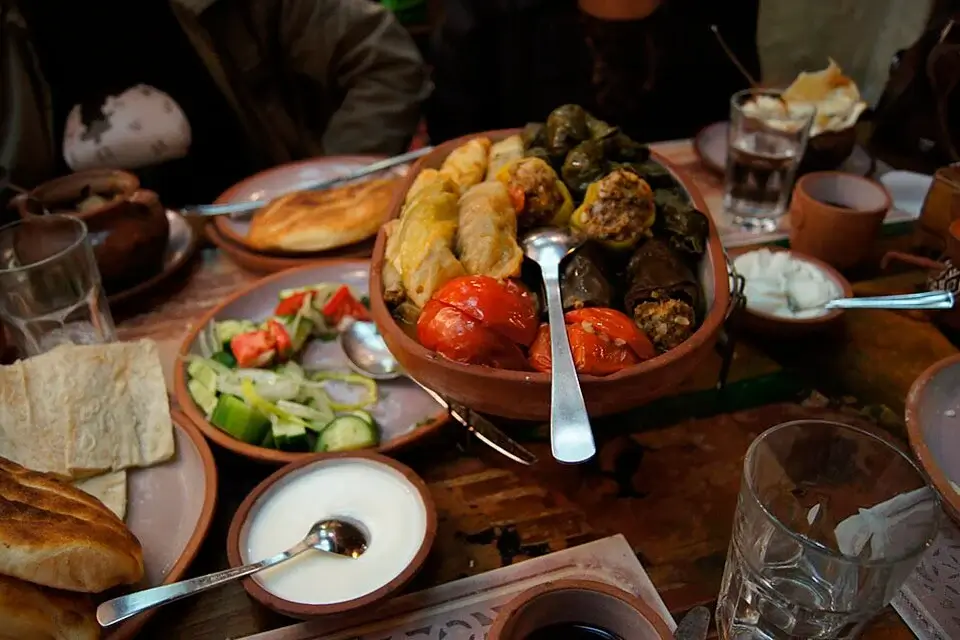
An Armenian table is rarely modest when guests arrive. Hosts may offer bread, cheese, fresh herbs, fruit, sweets, coffee, homemade preserves, wine, or brandy, and a full meal can appear even when the visit was not planned in advance. Offering food is not simply about eating — it is a way of showing respect and making a guest feel welcome.
It is common for hosts to encourage guests to eat more, try another dish, or stay a little longer. Visitors do not need to accept everything, but politely trying some of the food is usually appreciated.
If you are invited to an Armenian home, bringing a small gift such as flowers, sweets, wine, or something for the children is a thoughtful gesture, although it is not a strict requirement.
Respect for Elders and Family Values
Respect for older family members is an important part of Armenian culture. Parents and grandparents often hold a central place in family life, and their opinions may carry considerable weight in important decisions.
Family relationships in Armenia often extend well beyond the immediate household. Grandparents, aunts, uncles, cousins, godparents, and other relatives may remain closely involved in one another’s lives, especially during weddings, holidays, family celebrations, and difficult periods.
Younger people are traditionally expected to show courtesy toward elders, listen when they speak, and offer practical help when needed. In many families, giving an older person a seat, greeting them first, or serving them at the table is considered a natural sign of respect.
Modern Armenian families vary greatly in how strictly they follow these customs, especially between generations and between urban and rural communities. Even so, strong family ties and respect for elders remain highly visible features of Armenian social life.
Armenian Wedding Traditions
Armenian weddings traditionally combine family involvement, symbolic rituals, music, food, and celebration. Modern weddings can look very different from older village customs, but several traditional elements are still widely recognized.
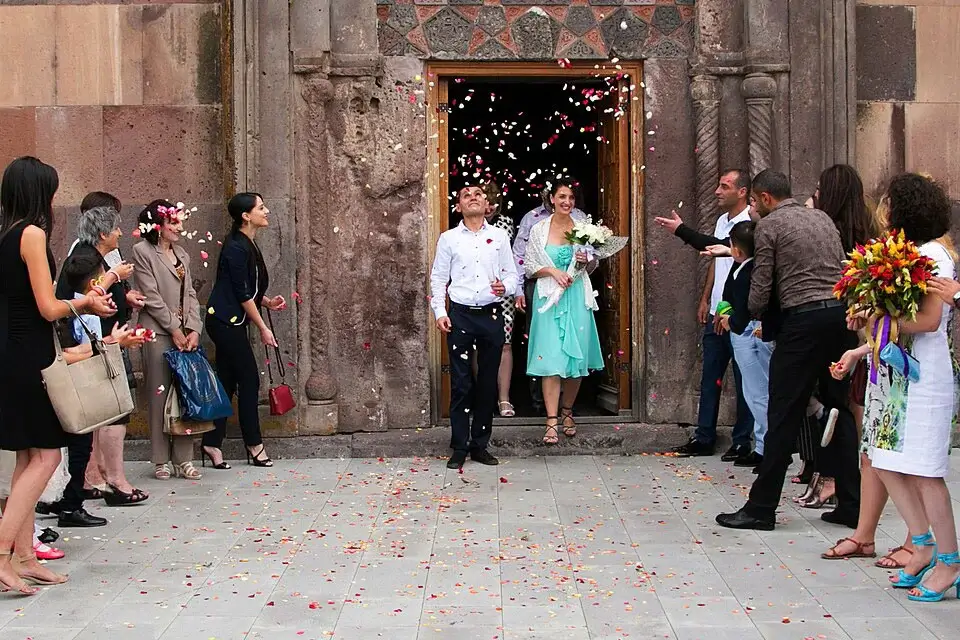
Historically, marriage often began with matchmaking and formal meetings between the two families. Today, couples usually choose one another themselves, but engagement ceremonies and family gatherings remain important in many households.
On the wedding day, relatives and friends may gather at the homes of both the bride and groom before the ceremony. Music, dancing, gifts, and blessings are often part of these preparations.
One of the best-known wedding customs is the use of lavash. In some families, the newlyweds are greeted with lavash placed over their shoulders as a symbol of prosperity, abundance, and family well-being.
Another traditional ritual is the breaking of a plate. Depending on the family and region, a plate may be broken near the entrance to the home as a symbolic act associated with good luck and the beginning of a new household.
The religious wedding ceremony, when chosen by the couple, takes place in an Armenian Apostolic church. The bride and groom receive a blessing, and crowns are traditionally placed on their heads during part of the service.
Many contemporary Armenian weddings combine these customs with modern elements such as hotel receptions, live music, professional photography, and large celebrations with extended family and friends.
Traditions Connected with the Birth of a Child
The birth of a child is an important family event in Armenian culture, and several customs may accompany the first months of a baby’s life.
One of the best-known traditions is connected with the child’s first tooth. Families may celebrate with a small gathering known as atamhatik, during which grains, sweets, or other symbolic foods are placed around the child. In some families, objects representing different professions or future interests are also offered for the child to choose from.
Baptism is another important tradition for many Armenian families. It usually takes place in an Armenian Apostolic church, where the child receives a Christian name and a godparent takes on a special spiritual role.
Family members and close friends often bring gifts for the newborn and the parents. Grandparents may be especially involved during the first weeks and months, reflecting the strong role of extended family in Armenian life.
As with many other customs, practices vary between families, and modern celebrations may be much simpler than traditional ones.
Funeral and Memorial Traditions in Armenia
Funeral and memorial customs remain an important part of Armenian family and community life. They combine Christian religious practices with long-established social traditions centered on remembrance, family support, and respect for the deceased.
A funeral may include prayers in an Armenian Apostolic church, followed by burial and a memorial meal attended by relatives, friends, neighbors, and colleagues. During this period, it is customary for people to visit the family, express condolences, and offer practical support.
Commemorative gatherings may also be held on specific days after the funeral and on later anniversaries. The exact practices can vary between families, regions, and religious traditions.
Visitors do not need to know every custom in advance. Quiet, respectful behavior, modest clothing, and a simple expression of sympathy are generally appropriate when attending a funeral or memorial gathering in Armenia.
Traditional Armenian Holidays and Celebrations
Armenia has several traditional holidays in which Christian celebrations are closely intertwined with much older folk customs.

Vardavar (Վարդավառ) is one of the most colorful and enjoyable holidays in Armenia. It is celebrated 14 weeks after Easter and is famous for the tradition of people splashing water on one another in streets, parks, and public squares. Today, Vardavar is associated with the Christian Feast of the Transfiguration, although the water tradition has much older roots.
If you are in Yerevan or another Armenian city on Vardavar, expect to get wet. Wearing casual clothes and protecting your phone, camera, and other valuables is a good idea.
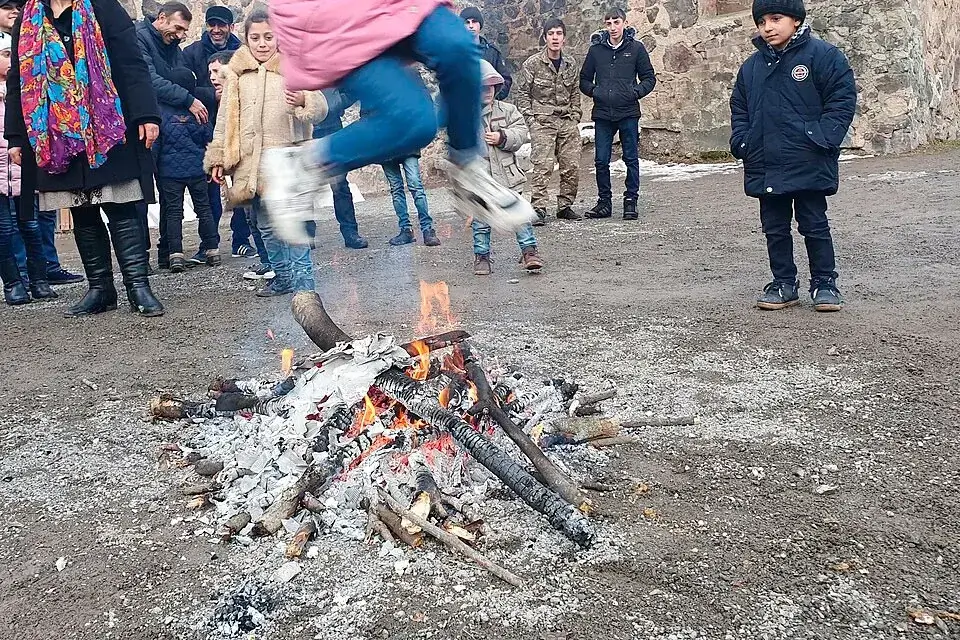
Trndez (Տրնդեզ) is celebrated in February and is especially associated with newlyweds and young couples. Bonfires are lit, and people traditionally jump over the flames as a symbol of purification, happiness, and prosperity. The celebration combines Christian meaning with ancient Armenian fire traditions.
Tsaghkazard (Ծաղկազարդ) is the Armenian celebration of Palm Sunday, observed one week before Easter. Churches bless branches, and families may take them home as part of the religious tradition.
Surb Sarkis (Սուրբ Սարգիս), the Feast of Saint Sarkis, is particularly popular among young people and couples. One well-known custom involves eating a very salty biscuit before going to sleep without drinking water. According to folk belief, the person who appears in a dream and offers water may be the dreamer’s future partner.
Surb Khach (Սուրբ Խաչ), the Feast of the Exaltation of the Holy Cross, is one of the major feasts of the Armenian Apostolic Church and is celebrated in September.
The Feast of the Assumption of the Holy Mother of God (Astvatsatsin) is another important church celebration. It is traditionally associated with the Blessing of the Grapes, when the first grapes of the season are brought to churches to be blessed.
Kochari and Other Armenian Folk Dances
Armenian folk dance is an important part of the country’s cultural heritage. Some dances are still performed at weddings, festivals, public celebrations, and cultural events.
Kochari (Քոչարի) is the best-known Armenian folk dance and one of the country’s cultural symbols. Dancers usually form a line or circle, holding hands or placing their hands on one another’s shoulders while moving together to a strong, rhythmic beat. Kochari is traditionally associated with strength, unity, and collective spirit. In 2017, the Armenian tradition of Kochari was inscribed on UNESCO’s Representative List of the Intangible Cultural Heritage of Humanity.
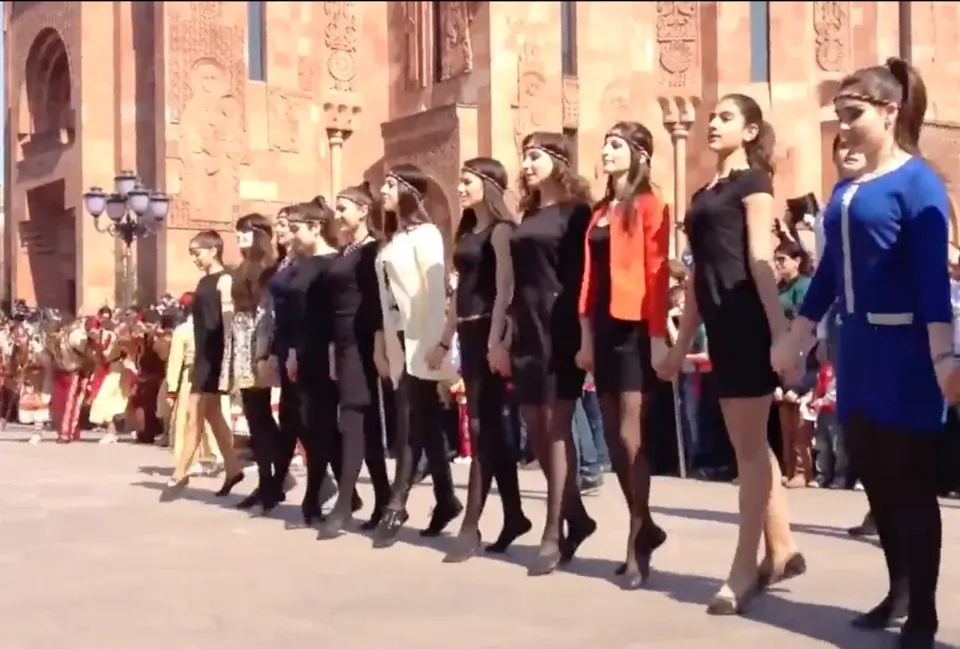
Berd (Բերդ) means “fortress.” It is a spectacular group dance in which male dancers may climb onto one another’s shoulders to form a human structure resembling a fortress. The performance requires strength, balance, and precise coordination.
Yarkhushta (Յարխուշտա) is an old martial dance traditionally associated with warriors. One of its most distinctive features is the rhythmic clapping of dancers’ palms against one another, creating the impression of a ritualized battle.
Shalakho is a lively dance often performed by men and women, with expressive movements and an element of playful courtship.
Uzundara is traditionally known as a graceful women’s dance, characterized by softer movements and, in some performances, the use of a handkerchief.
Music is just as important as dance in Armenian tradition. The duduk, a woodwind instrument traditionally made from apricot wood, is especially associated with Armenian musical culture. Its warm, melancholic sound is instantly recognizable and is often heard at concerts, ceremonies, films, and cultural events.
Unusual Armenian Traditions and Superstitions
Alongside religious and family customs, Armenian culture also includes many everyday beliefs and superstitions. Not every family follows them, but some are still widely recognized.
One common belief concerns the evil eye. To protect children, homes, or loved ones, people may use a blue eye charm, a red thread, or another symbolic amulet.
Bread is traditionally treated with great respect. In many families, throwing bread away carelessly is considered inappropriate, and older generations may avoid placing bread upside down on the table.
Another familiar custom is to pour water behind someone who is leaving on a journey. The idea is that the traveler’s path should be smooth and that they should return safely, just as water flows easily.
Some people also avoid certain actions in the evening, such as taking out the trash, lending money, or giving specific household items, because of traditional beliefs associated with luck and prosperity.
A red thread may be tied around a child’s wrist as a protective symbol, especially against the evil eye.
Khachkars, or Armenian cross-stones, also carry strong symbolic meaning. Although they are primarily religious and commemorative monuments, people may still view them as spiritually significant places connected with prayer, memory, and protection.
These customs are best understood as part of Armenia’s folk culture. Their importance varies from family to family, and younger generations may follow them only symbolically or not at all.
Etiquette for Travelers in Armenia
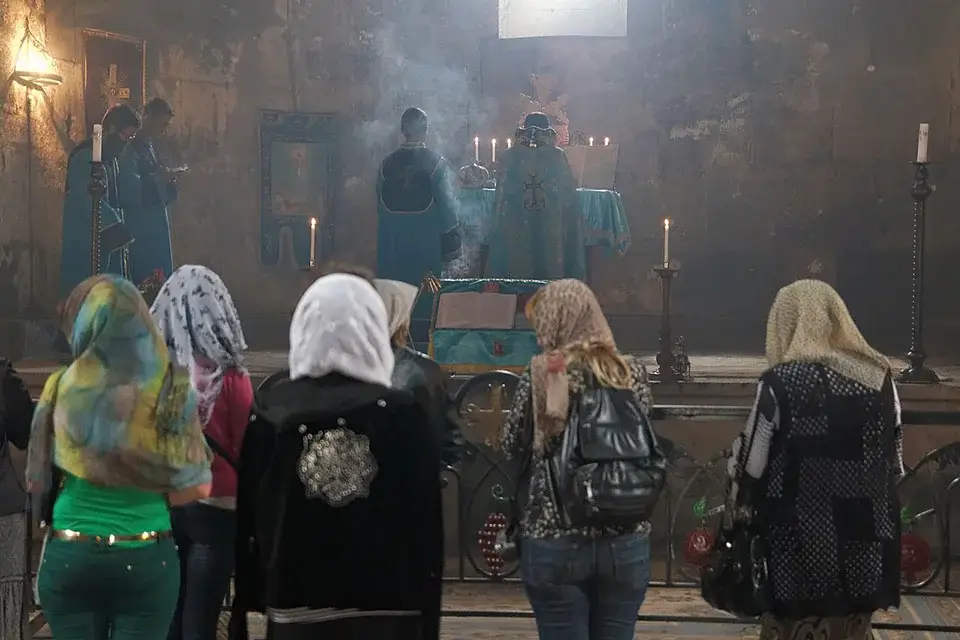
Armenians are generally welcoming toward visitors, and travelers are not expected to know every local custom. A few simple habits, however, can help you feel more comfortable in social situations.
If you are invited to an Armenian home, arriving with a small gift such as sweets, flowers, wine, or something for the children is a thoughtful gesture. Hosts may offer more food than you expect, so it is perfectly acceptable to decline politely after trying what you would like.
At the table, toasts can be an important part of a family meal or celebration. You do not have to make a long speech, but raising your glass and listening respectfully when someone else gives a toast is appreciated.
Respect for older people is important. Offering a seat, greeting elders politely, and avoiding overly casual behavior in formal family settings are simple ways to show courtesy.
When visiting an Armenian church or monastery, dress modestly, keep your voice low, and avoid disturbing services or people who are praying. Photography is often allowed, but local restrictions should always be respected.
If you are unsure how to behave in a particular situation, following the example of your hosts is usually the easiest approach. Armenians are generally understanding when foreign visitors are unfamiliar with local customs.
Frequently Asked Questions
SLS Armenian Tour
Discover Armenian Culture Beyond the Guidebook
Explore Armenia’s history, traditions and everyday culture on a private trip from Yerevan. Choose a ready-made route or contact us to plan an itinerary around the places you would most like to experience.
- Private itinerary
- Pickup from your Yerevan hotel
- Price confirmed in advance


