
Hankavan
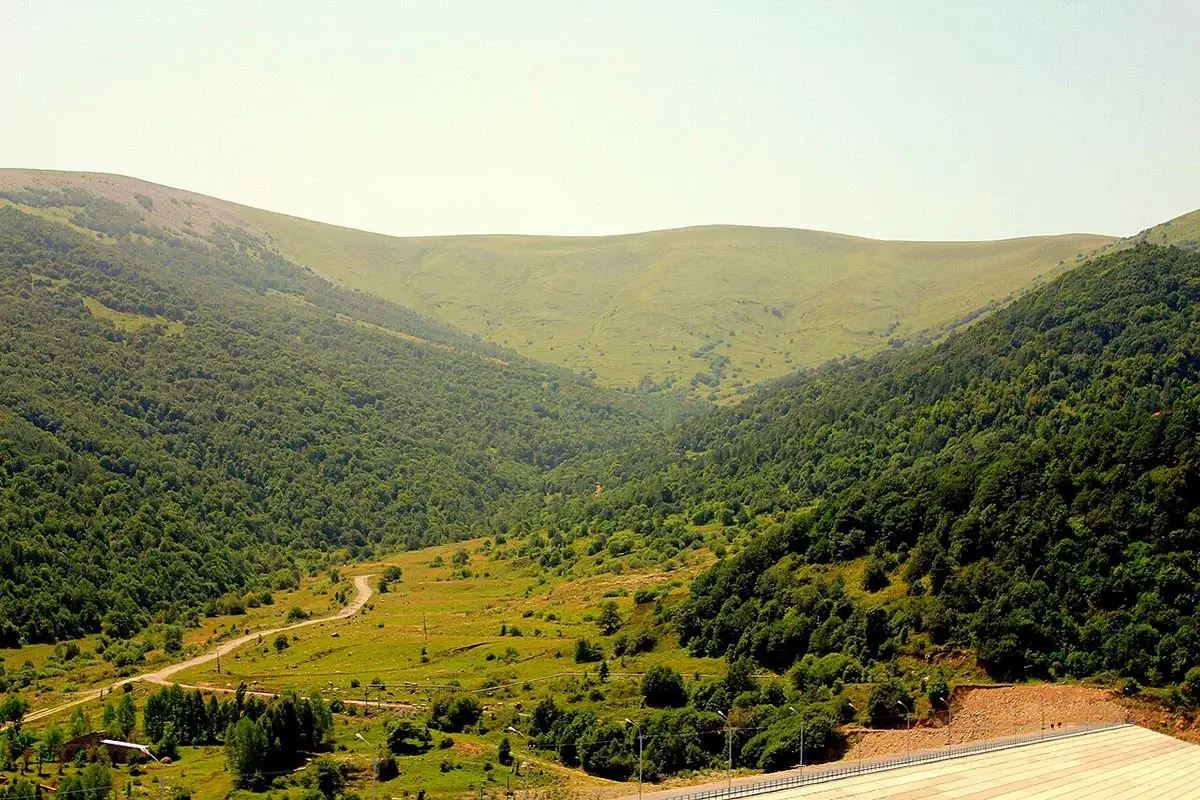
Hankavan (Armenian: Հանքավան — “mine village”) is a balneological and mountain-climatic resort in the Kotayk Province of Armenia, in the Marmarik River valley at 1,900 m below the Pambak Range, roughly 85 km and 1–1.5 hours north of Yerevan. Hankavan is built around thermal mineral springs measuring 39–43 °C — waters most often compared to Russia’s Yessentuki for their bicarbonate-chloride-sodium chemistry, and considered by Armenian balneologists the most therapeutically valuable in the country. The village’s own “Hankavan” brand of bottled mineral water is one of Armenia’s best-known, and the small thermal bath complex in the centre of the village is open 24 hours a day, seven days a week, year-round — a distinction shared with none of Armenia’s other spa towns.
Hankavan is also one of the country’s most unusual settlements. In 1827, seven Greek families from the Ottoman Empire — miners from the Gümüşhane region — settled here to work the surrounding hills, and Novo-Mikhailovka (as the village was renamed in the Russian Empire) grew to 250 Greek families at its peak. Most emigrated to Greece in the early 1990s; ~50 Greek families remain, and the small Greek church and graveyard at the village entrance date from the 1820s. This is why Hankavan, uniquely among Armenian resorts, comes with a layer of Pontic Greek heritage — and why the drive up here feels different from the drive to any other Armenian spa town. Add ski access (Tsaghkadzor is 30 km east, ~30 minutes) and Hankavan becomes the country’s most efficient winter-weekend base: skiing by day, hot mineral water under snow at night.
Geography and climate
Hankavan sits in the upper Marmarik River valley, a right-bank tributary of the Hrazdan, in a broad wooded valley with the Pambak Range rising to the north and the Tsakhkunyats massif — the same massif that holds Tsaghkadzor and Myler — rising to the south and east. The elevation of 1,900 m puts Hankavan comfortably into the alpine climate zone: even in July and August, when Yerevan is baking at +38 °C, Hankavan hovers at +18 to +22 °C. Winter is sheltered and snowy — cold enough for reliable snow cover from December through March, but rarely windy, and the valley walls block the harsher weather that hits higher peaks. January is the driest month; May the wettest.
The valley is unusually dense with alpine flowers and honey plants. Marmarik gorge below Hankavan is a seasonal migration destination for beekeepers — the wildflower slopes support a busy summer of hive placement, and one of the neighbouring villages is called Meghradzor (“honey gorge”). The wild forest cover is dense: pines above, mixed hardwood below, and the resort is characteristically fragrant with resin and herbs.
The thermal springs
Hankavan’s identity as a resort rests entirely on its carbonated thermal mineral waters — waters that Armenian balneologists have long rated as the country’s most therapeutically valuable.
The wells. Over the last century, 28–30 wells have been drilled around Hankavan, some reaching 420 m in depth. Three main production wells (numbered 4, 14, and 17) currently supply the resort and the bottling plant, with a combined daily flow of more than 2 million litres — enough to run a full-scale sanatorium and a national bottled brand from the same aquifer.
The water. Carbonated, bicarbonate-chloride-sodium, with a total mineralisation of 8.7 g/l. The distinguishing marker is the high iron content — 15–25 mg/l — supported by silicic acid (67 mg/l), iodine, bromine, and boron. The composition profile is most often compared to Russia’s Yessentuki springs — the same broad chemistry, similar therapeutic reputation. The water emerges naturally carbonated straight from the artesian source.
Temperature: 39–43 °C (peaks touching 42.6 °C at some wells). Warm enough for a full-body bath at source, without the need for reheating.
Documented indications at the Soviet-era sanatoriums and today’s spa facilities include disorders of the gastrointestinal tract (gastritis, chronic hepatitis, biliary and pancreatic conditions), nervous system, musculoskeletal system (arthritis, chronic joint inflammation), skin conditions (dermatitis, eczema, psoriasis), and respiratory conditions (rhinitis, sinusitis, bronchitis, asthma). The water carries suspended healing clay; local users describe skin as visibly softer after the first bath.
Two spring groups. The main Hankavan springs are in the village centre; a secondary group of Marmarik springs sits about 500 m downstream. Only the village springs are developed for bathing.
The 12-hour rule. Local balneological tradition insists guests do not shower for 12 hours after bathing — the mineral elements need to remain on the skin to complete their effect. It is a rule locals follow strictly; visitors are advised to plan the day around it.
The thermal bath complex — open 24/7 year-round
In the centre of Hankavan sits the village’s thermal bath complex — a simple, functional building of 3–5 private rooms, each with its own plunge pool for up to five people. You rent a private room; the door closes; you have the pool to yourself and your group.
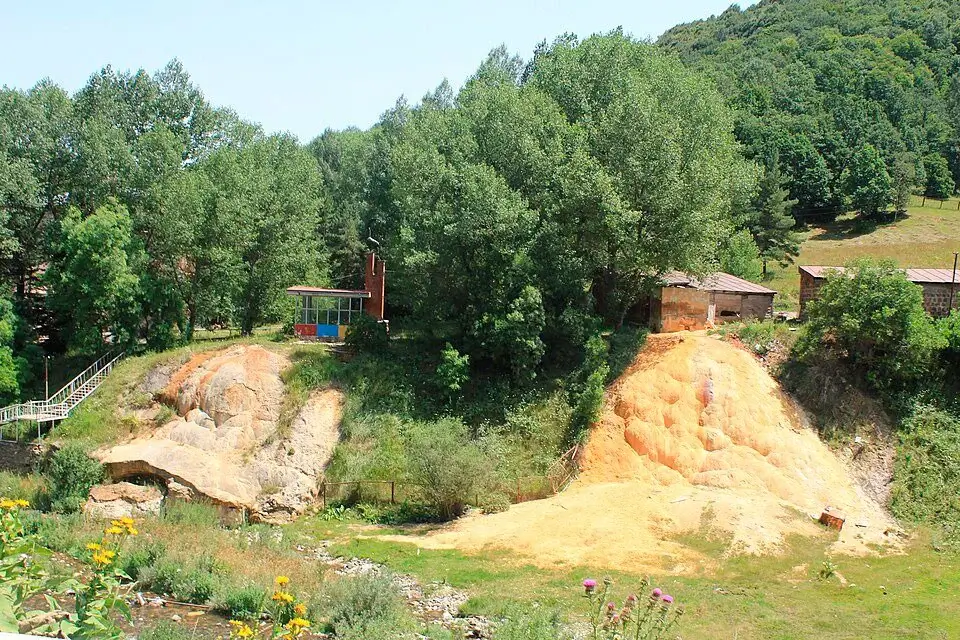
Pricing: roughly 5,000 AMD (~US$12) per hour, or 2,500 AMD (~US$6) for 30 minutes. Group of five splits the cost — the effective per-person rate is a fraction of a hotel spa.
Hours: open 24 hours a day, seven days a week, year-round. This is Hankavan’s headline distinction. Armenia has thermal-water hotels; Armenia has spa sanatoriums; but Hankavan is the only place where you can walk in at 3 a.m. in January and get a bath. The staff sleep on premises during the quiet hours.
Winter experience. In cold months, the small changing room is unheated — visitors get dressed to a slight chill, which is part of the standard experience. In exchange: hot water at +42 °C while snow settles on the roof outside and mountain silence surrounds the building. Skiers coming down from Tsaghkadzor at the end of a day are the year’s most enthusiastic regulars.
Booking. The complex operates on walk-in basis, but weekends fill up. Reserve ahead by phone through Nairi SPA Resorts (if staying there) or ask your driver to call on the day. Weekdays are almost always open.
The Greek heritage of Hankavan
Hankavan is one of the very few Armenian villages with a surviving Greek community — and it is worth pausing on.
In 1827, during the final phase of the Russo-Persian War, seven Greek mining families from the Gümüşhane region of Pontic Anatolia settled in the Marmarik Valley and began working in the surrounding hills. The village grew over the next century to about 250 Greek families, was renamed Novo-Mikhailovka during the Russian Empire and Soviet periods, and reverted to Hankavan on Armenia’s independence.
At the entrance to the village, the small Greek Orthodox church built by the original settlers still stands, alongside a graveyard with headstones dating to the 1820s. Most of the community emigrated to Greece in the early 1990s — encouraged by Greek repatriation programmes — and today roughly 50 Greek families remain in Hankavan, some tracing their ancestry directly to the seven original arrivals.
For an EN visitor, the practical implication is small — you will hear Greek names, see the church, and notice the imprint of Pontic Greek culture on the village’s older architecture — but for context, Hankavan is a real cross-cultural artefact: an Armenian mountain spa town with a Pontic Greek layer, a Russian-Empire building tradition, and a Soviet balneological infrastructure sitting on top of the whole thing.
Where to stay — Nairi SPA Resorts and alternatives
Nairi SPA Resorts
The main hotel of Hankavan — opened in 2016 among pine forest, with the Marmarik River running through the property under a picturesque wooden bridge. The distinguishing feature: one of Hankavan’s three main mineral-water wells is on the resort grounds, so guests can drink the source water and take mineral baths without leaving the complex. Facilities: indoor heated pool, hydromassage, sauna, restaurant serving buffet meals, fitness centre, table tennis, children’s playground, Wi-Fi throughout. Rooms in the main building plus separate cottages.
Guesthouses in Hankavan
Several small family-run guesthouses in the village offer simpler stays and often direct access to the thermal baths (some hosts arrange bath bookings for guests). Prices well below hotel rates.
Neighbouring options (15–30 km)
- Aghveran (~15 km) — Best Resort Aghveran, Park Resort Aghveran (four-star spa hotels)
- Tsaghkadzor (~30 km) — the full spectrum from three-star to five-star (Marriott, Golden Palace, Elegant Hotel), especially useful for extended ski trips
Bookings. Winter weekends and July–August fill up 2–3 weeks in advance. Weekdays open at short notice.
Combining Hankavan with Tsaghkadzor
Hankavan and Tsaghkadzor are 30 km apart — roughly a 30-minute drive over the ridge, and one of the most efficient winter-weekend combinations in the Caucasus.
Ski morning, bath evening. The standard Armenian pattern: half day skiing at Tsaghkadzor (15 pistes, ~30 km of runs, gondola to 2,819 m on Mount Teghenis), lunch in Tsaghkadzor town, then drive to Hankavan for a late-afternoon thermal bath and dinner. Muscles finish the day soaked in mineral water; skiers wake up ready for another day.
Two-day loop. Overnight at Nairi SPA Resorts; morning bath at the source; drive to Tsaghkadzor for a day on the mountain; back to Yerevan by evening.
Both destinations are covered by day tours from Yerevan — the driver waits at each stop and handles the transfer between them.
What to see near Hankavan
Everything below is within 1 hour by car.
Aghveran resort (~15 km) — sister balneological resort in the neighbouring Dalar valley, with the Bjni Fortress (10th-century Pahlavuni stronghold) at its edge. Aghveran and Hankavan complement each other: Aghveran is forested, Hankavan is open valley.
Arzakan hot springs (~15 km) — the smaller mineral springs of Arzakan, in the same broader complex as the Aghveran mineral waters.
Tsaghkadzor and Kecharis Monastery (~30 km) — Armenia’s flagship ski resort and, five minutes from the lifts, the 11th-century Kecharis Monastery founded by Grigor Magistros Pahlavuni in 1033.
Bjni Fortress (~25 km) — the 10th-century Pahlavuni stronghold above the Hrazdan gorge. Also the source of “Bjni” mineral water, Hankavan’s stablemate on Armenian shop shelves.
Lake Sevan (~60 km / ~50 min) — the largest lake in the Caucasus. Common turnaround point on the way back to Yerevan.
Garni and Geghard (~60 km) — the 1st-century pagan Garni Temple and the UNESCO-listed Geghard Monastery. Kotayk’s headline heritage pair.
Best time to visit Hankavan
Hankavan is a year-round destination, and the resort’s identity actually strengthens in winter.
December–March — the flagship season. Snow across the valley, ski access to Tsaghkadzor, and the signature experience of soaking in +42 °C mineral water at –5 °C outside. Skiers, spa guests, and anyone with sore joints all book at once. Reserve ahead.
April–May — quieter shoulder, wildflowers arriving, cool for outdoor activity, ideal for a longer therapeutic stay without crowds.
June–September — hiking season. Cool climate refuge from Yerevan’s summer, honey festivals in Marmarik gorge, mountain trails in full bloom.
October–November — golden foliage, second shoulder, mild days and cold nights.
There is no bad season for Hankavan — only different ones.
How to get from Yerevan to Hankavan
Hankavan sits 85 km north of Yerevan — a 1–1.5-hour drive through Hrazdan town and Arzakan, on paved road throughout. In winter the road is regularly cleared but the final kilometres can be slick; a driver with snow tyres or chains is the safe option.
By private car or transfer: the standard option. Fixed price, direct pickup from your Yerevan hotel or Zvartnots Airport.
By car with driver in Yerevan: the flexible option if you plan to combine Hankavan with Tsaghkadzor, Kecharis Monastery, Aghveran, or Bjni Fortress in the same day.
By minibus rental: for groups of 6–19, the most economical option.
By public transport: marshrutka bus route 272 runs from Yerevan Central Bus Station (Tigran Mets Avenue) to Hankavan; the trip takes 1–1.5 hours and costs a few dollars. From the village bus stop, the thermal baths are a ~25-minute walk along the H-28 road, or a 500–1,000 AMD taxi. Realistic for solo travellers on a budget; less convenient with luggage.
Taxi from Yerevan. Around US$25–30 one way for a private taxi (GG Taxi, standard rates).
Frequently Asked Questions
Hankavan is one entry in Armenia’s broader network of spa, ski, and mountain retreats. Browse the full list at resorts in Armenia, which also covers Aghveran, Arzni, Myler Mountain Resort, Yenokavan, Lastiver, Jermuk, Tsaghkadzor, and Dilijan. To combine Hankavan with sightseeing across the country, see day tours from Yerevan or the full list of things to do in Armenia.