
When Is the Best Time to Visit Armenia?
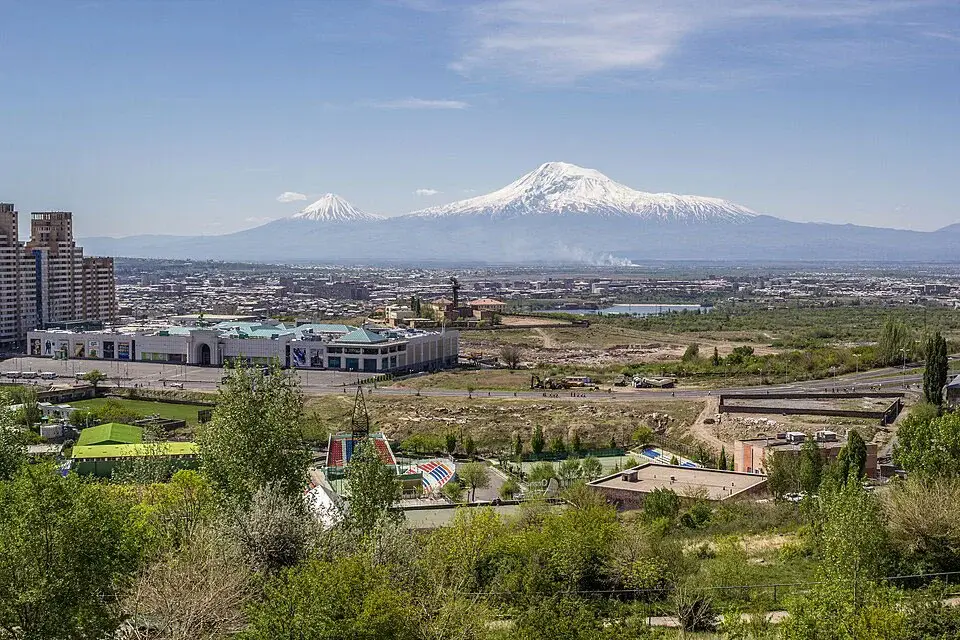
The best time to visit Armenia depends on what you want from your trip. For most travellers, May, September and October are the ideal months: the weather is warm but not excessively hot, the main routes and attractions are open, and the landscapes are especially beautiful.
The best season will be different if you are coming to ski, swim at Lake Sevan or experience Armenia’s wine and harvest festivals. This guide explains which months suit each type of trip, when prices are usually lower, when the main sights are less crowded and which seasonal events are worth planning around.
For detailed temperatures by month and regional weather differences, see our guide to Armenia’s climate. This article focuses on choosing the right season for your travel plans.
In Brief: The Best Time to Visit Armenia
If you want the short answer:
- Best time overall: May, September and October — warm, comfortable and suitable for most routes.
- Best for sightseeing and day trips: May–June and September–October.
- Best for Lake Sevan and swimming: July and August.
- Best for skiing: January and February, mainly in Tsaghkadzor.
- Best for wine and food: September and October, during the harvest season.
- Best for lower prices and fewer visitors: late autumn and winter, excluding New Year holidays and busy ski-resort weekends.
Armenia is a year-round destination. You can visit in any month — the important thing is to match the season to the kind of trip you want.
High and Low Season in Armenia
The main travel season in Armenia runs from May to September and often continues into early October. During this period:
- The weather is generally comfortable, and the main roads, routes and attractions are open.
- Visitor numbers are at their highest, especially around public holidays and during the summer months.
- Accommodation prices are higher, and popular restaurants may require advance reservations.
- Markets are full of fresh fruit and seasonal produce.
The quieter season runs from November to March, apart from the New Year holidays and the busiest ski dates. During this period:
- There are fewer visitors at the main attractions.
- Accommodation prices are often lower.
- The weather is cooler, and some high-mountain roads may close because of snow.
September and October offer the best balance: the summer heat has eased, the main routes remain open, the crowds are smaller and the harvest season is under way. Many local guides consider early autumn the best time of the entire year to travel around Armenia.
Best Time for Sightseeing and Day Trips
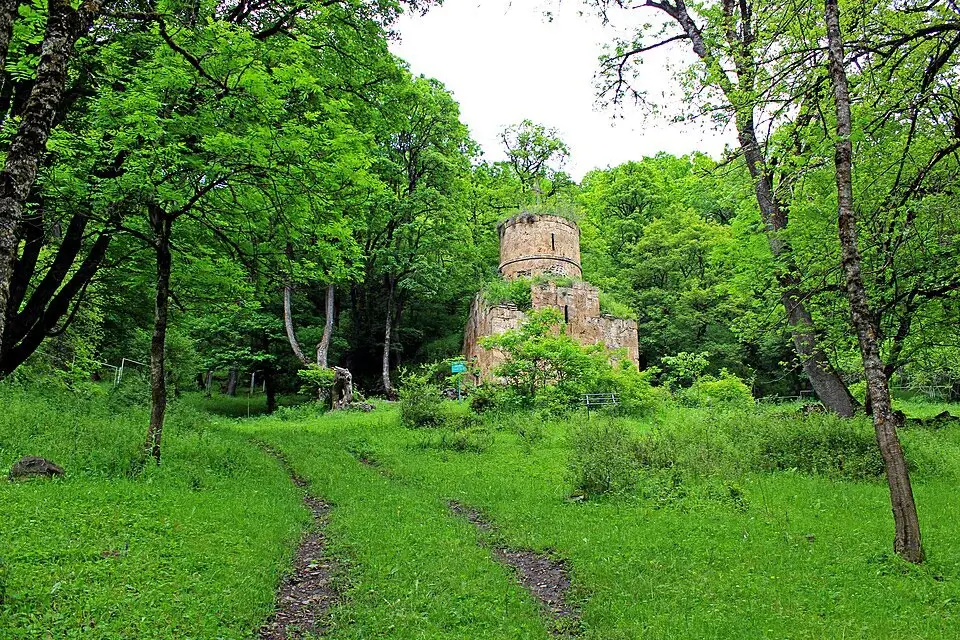
For a classic sightseeing trip — monasteries, fortresses, canyons, Garni and Geghard, Tatev, Khor Virap and Noravank — the best months are May, June, September and October.
Daytime temperatures are often around +20…+28 °C (68…82 °F), the heat is not exhausting, most roads are open, and the countryside is green in spring or rich in golden colours in autumn. July and August also work for sightseeing, but visits to open-air monasteries and fortresses are more comfortable in the morning or late afternoon, away from the midday heat.
Spring brings flowering orchards and fresh green valleys, while autumn offers softer light, clear views and the fruit harvest. For photography, May and October are especially rewarding.
When to Visit Lake Sevan
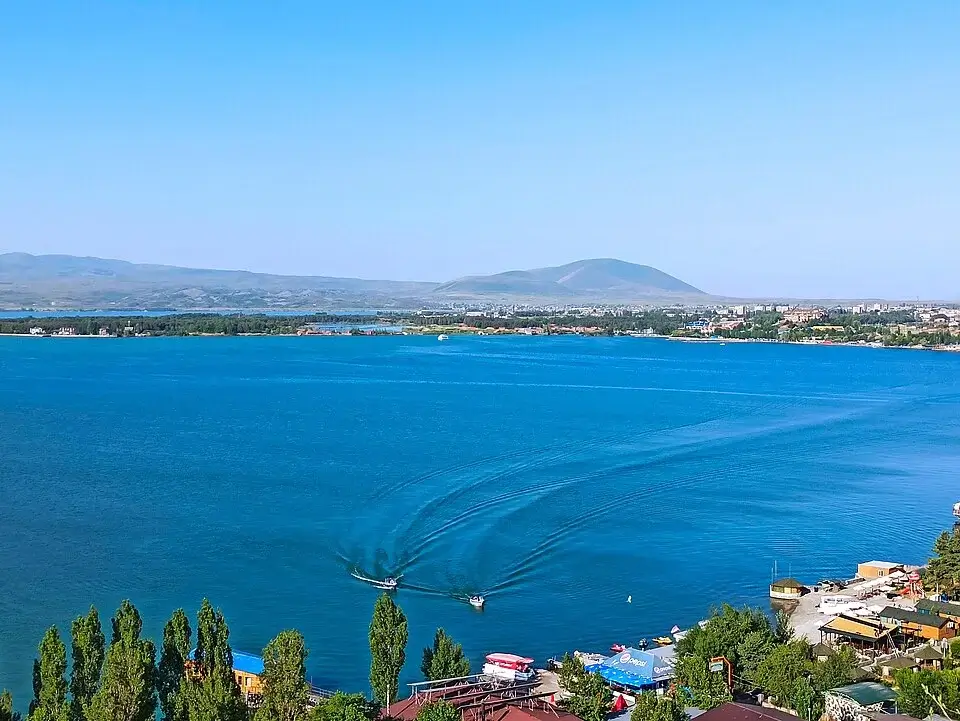
Lake Sevan is Armenia’s main summer escape, but its swimming season is short. The lake lies at about 1,900 metres (6,234 ft) above sea level, so the water remains cool even during hot weather.
- July and August: the best months for swimming, when the water reaches its warmest temperatures.
- June and September: beautiful for walks, views and photography, but often too cool for comfortable swimming.
- Winter: dramatic, snowy, windy and much colder than Yerevan.
If beach time is your main goal, plan your visit for July or August. If you simply want to see the lake and visit Sevanavank Monastery, any warm-season month can work.
When to Go Skiing in Armenia
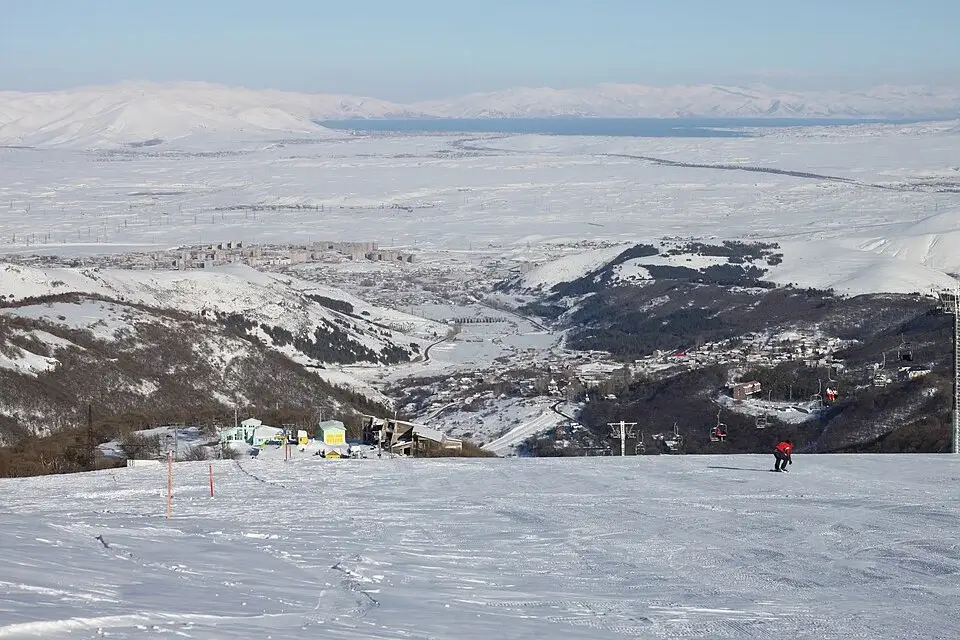
Tsaghkadzor is Armenia’s best-known ski resort. The ski season usually runs from December to March, with the most reliable snow in January and February.
- January and February: the best chance of stable snow and a fully operating ski season.
- December: the beginning of the season, together with a festive New Year atmosphere.
- March: skiing is often still possible, although conditions depend more heavily on the weather.
Tsaghkadzor is about an hour’s drive from Yerevan. Winter is cold and snowy at the resort, and a ski trip in Armenia can offer better value than many larger European destinations.
Best Time for Wine, Fruit and Food
For wine and food travel, the best period is September and October, when Armenia enters its main harvest season. At this time:
- Grapes, pomegranates, figs and persimmons reach the markets.
- Wineries are busy with the grape harvest.
- Wine, harvest and regional food festivals take place across the country.
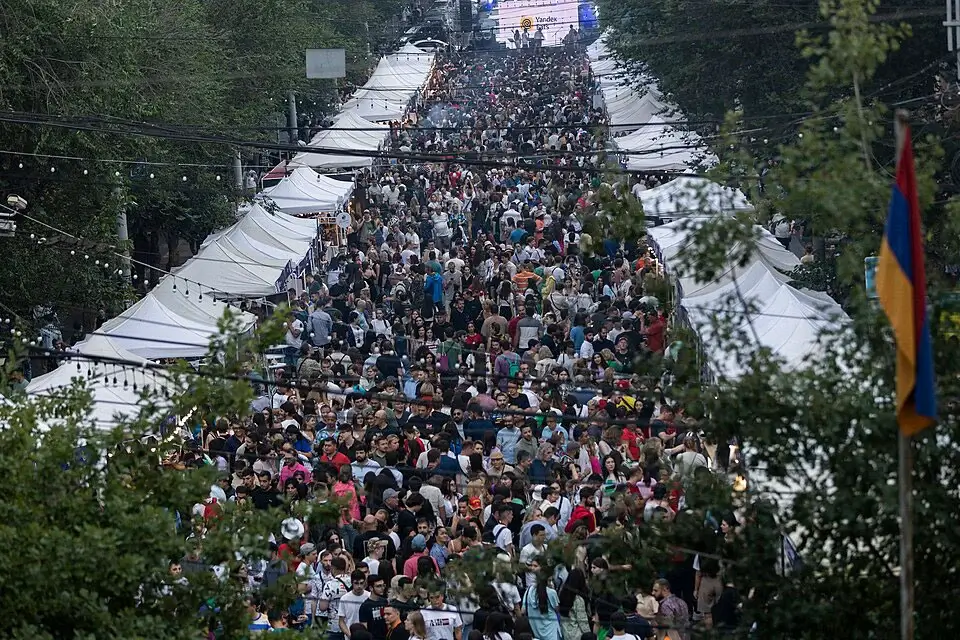
Yerevan Wine Days is usually held in late spring or early summer, when the streets around Saryan turn into a large open-air tasting route. Dates can change from year to year, so check the current festival calendar before booking your trip.
Wine travel also combines naturally with a distillery tasting in Yerevan. Our guide to Armenian brandy explains the main producers, what to buy and how to arrange a visit.
When to Visit Armenia for Lower Prices and Fewer Crowds
If you want to spend less and avoid the busiest travel periods, choose late autumn — especially November — or winter, excluding the New Year holidays and the busiest ski weekends.
- Accommodation and flights are often cheaper.
- Major attractions are quiet, and queues are rare.
- Yerevan feels relaxed, with museums, galleries and cosy cafés open throughout the season.
The disadvantages are cooler weather, shorter daylight hours and possible snow closures on high-altitude routes. For exploring Yerevan, visiting museums and seeing nearby attractions, however, winter can be both enjoyable and noticeably better value.
Festivals and Events in Armenia by Season
Armenia has festivals and celebrations throughout the year. Some of the most popular include:
- Vardavar, usually in July: a joyful water festival when people across the country splash one another in the streets.
- Golden Apricot, July: Yerevan’s international film festival.
- Navasard, August: a celebration inspired by an ancient Armenian festival, with traditional games and performances.
- Yerevan Wine Days, late spring or early summer: wine tastings and food on the streets around Saryan.
- Wine and food festivals, autumn: regional celebrations of the harvest season.
- Dolma, barbecue and regional food festivals: held at different times during the warmer months.
- New Year and Armenian Christmas, from late December to 6 January: festive lights, a large tree on Republic Square and a lively atmosphere in central Yerevan.
If you want to attend a specific festival, confirm the dates before travelling. They can change from year to year, especially events linked to the church calendar, such as Vardavar.
When Is It Better Not to Visit Armenia?
There is no strictly “bad” time to visit Armenia, but some periods require more careful planning:
- July and August: not ideal if you struggle with heat. Yerevan can reach +35…+40 °C (95…104 °F). Spend more time at Lake Sevan or in the mountains and avoid long city walks at midday.
- April: one of the wetter and more changeable months, with showers and occasional longer rainy periods — although the flowering orchards are a major attraction.
- Deep winter: less suitable if you want to travel across the entire country. Snow may close roads to remote monasteries and high-mountain attractions.
- Busy holiday dates: accommodation and transport prices can rise, so it is better to book in advance.
Each of these periods still has its advantages. The key is to choose the right region and itinerary for the season.
How to Plan Your Trip
A few practical steps will make it easier to choose the right dates and plan your route:
- Start with your main goal: sightseeing, Lake Sevan, skiing, hiking, wine or food.
- Use our Armenia climate guide to compare temperatures by month and region.
- Book accommodation in advance for travel between May and September and around major holidays.
- Remember that many monasteries, viewpoints and mountain attractions are difficult to reach by public transport. Our transport guide explains the available options.
In every season, Armenia is easier to explore with a car and driver or on a private guided tour. A local driver knows which roads are open, can adapt the route to the weather and can take you towards cooler mountain destinations in summer or choose accessible routes after winter snow.
Frequently Asked Questions
SLS Armenian Tour
Plan Your Armenia Trip Around the Season
Tell us your travel dates, interests and group size. We will suggest a suitable seasonal route, choose the right vehicle and confirm the final price in advance.


