Armenian Brandy
Armenian brandy is one of the country’s best-known products and one of the most popular gifts to take home. It is distilled from grapes grown in Armenia, matured in oak casks and produced in styles ranging from young, affordable three-year blends to complex brandies aged for twenty years or more.
Choosing a bottle can be confusing: shops stock several producers, different age statements and gift editions at very different prices. This guide explains which Armenian brandy to buy, what the stars and ages mean, where to find genuine bottles, how much they currently cost and how to take them home safely.
Alcohol is intended only for adults of legal drinking age. Please drink responsibly.
Why Armenian Brandy Is Famous
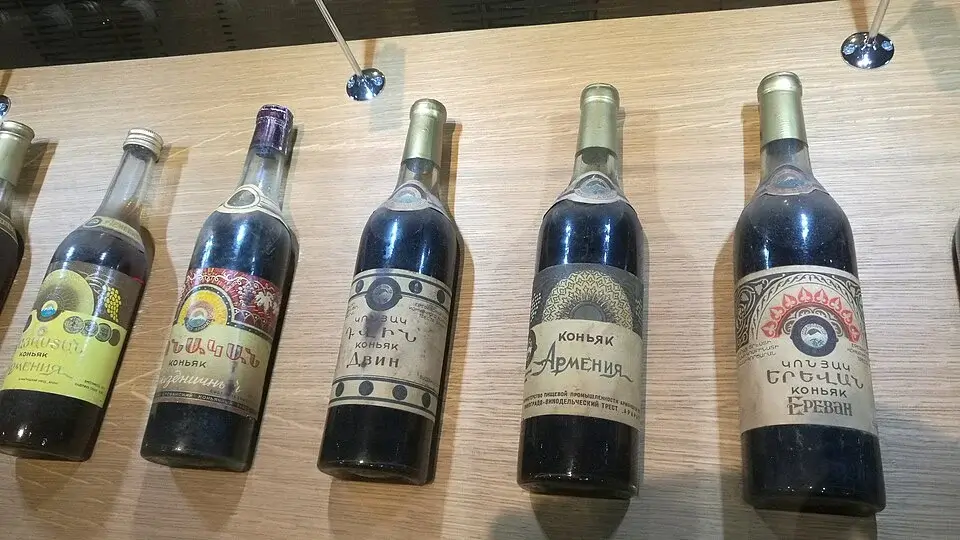
Commercial brandy production in Yerevan began in 1887, when merchant Nerses Tairyan and his brother Vasily established a distillery using French equipment and Charente-type stills. The business later became part of Shustov & Sons and helped Armenian brandy gain recognition across the Russian Empire and, later, the Soviet Union.
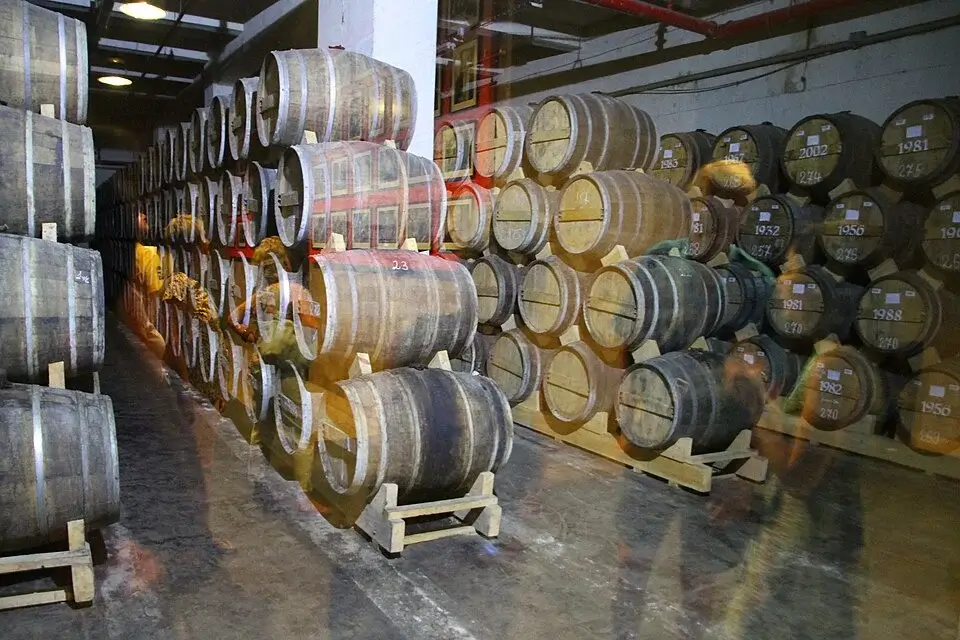
The character of Armenian brandy comes from local grapes, a dry continental climate, mountain spring water and ageing in oak. ARARAT states that its brandies are matured in casks made from Caucasian oak, which contributes spice, dried-fruit and vanilla notes to the final blend.
A famous story claims that Winston Churchill became particularly fond of ARARAT Dvin after tasting it during the Second World War. The story has been repeated for decades, but firm archival evidence is limited. It is best understood as a popular brand legend rather than a fully documented historical fact.
Armenian Brandy or Cognac: What Is the Difference?
The word Cognac is a protected geographical indication. Legally, it can be used only for spirits produced in the designated Cognac region of France and made according to its official production rules.
For this reason, bottles sold internationally are normally labelled Armenian brandy. In Armenia and several post-Soviet countries, people still commonly use the local word konyak because it became the traditional name for this style of drink.
The production methods share several features with French cognac, including wine distillation and long ageing in oak, but the grapes, terroir and blending traditions are Armenian. For an international traveller, “Armenian brandy” is the accurate and most useful term to look for on a label.
The Main Producers: ARARAT and NOY
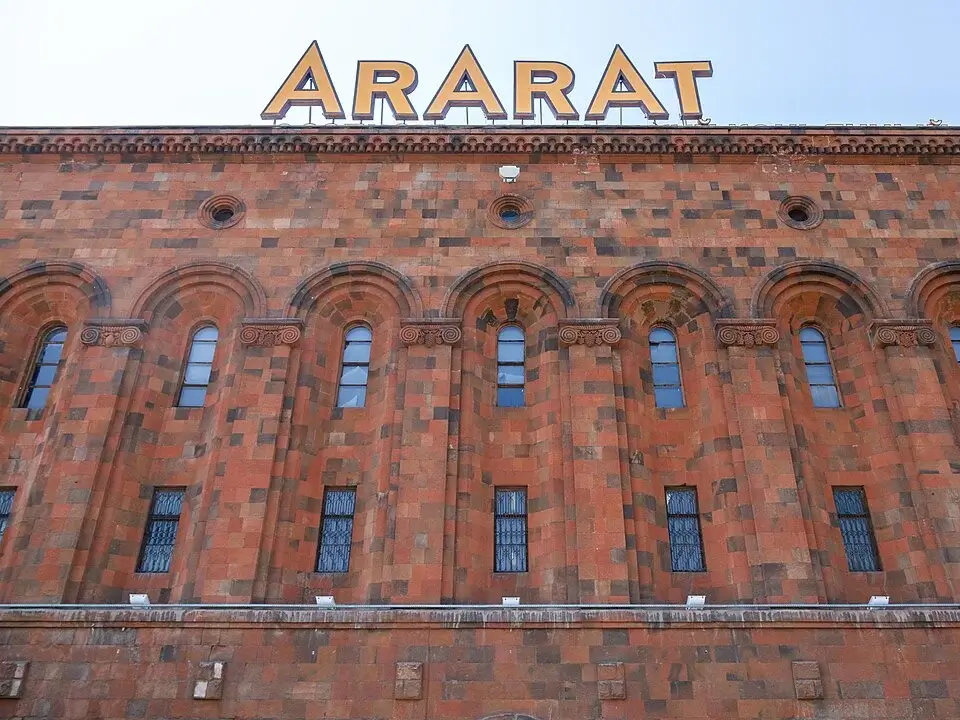
Two historic producers dominate the visitor experience in Yerevan. Their distilleries stand opposite one another near Victory Bridge, and both offer guided tours and tastings.
ARARAT is produced by the Yerevan Brandy Company, whose history begins in 1887. The company became part of Pernod Ricard in 1998. Its current core range includes 3 Stars, 5 Stars, Ani, Akhtamar, Dvin, Vaspurakan and Nairi. The ARARAT Museum is the best-known brandy visitor centre in Armenia.
NOY is produced at the Yerevan Ararat Brandy-Wine-Vodka Factory, housed in the historic buildings of the former Yerevan fortress. Its museum, cellars and tasting tours provide an alternative view of Armenia’s brandy tradition.
Other Armenian producers include Proshyan Brandy Factory, Ijevan Wine-Brandy Factory and several smaller distilleries. They can offer good value, but ARARAT and NOY are the easiest starting points for a first-time visitor because their ranges are widely available and their official tours are easy to arrange.
What the Stars and Age Statements Mean
On classic entry-level Armenian brandies, the stars normally correspond to the number of years of ageing. Named blends carry their age more prominently on the bottle.
- 3 Stars — aged for three years; young, direct and usually the least expensive option.
- 5 Stars — aged for five years; smoother and fuller, and a reliable affordable gift.
- Ani — aged for seven years; richer and more aromatic than the star-labelled range.
- Akhtamar — aged for ten years; a silky, rounded blend and one of ARARAT’s most popular gift bottles.
- Dvin — a ten-year collection brandy with additional cask ageing and a higher strength of 50% ABV.
- Vaspurakan — aged for fifteen years; deeper, spicier and positioned above Akhtamar.
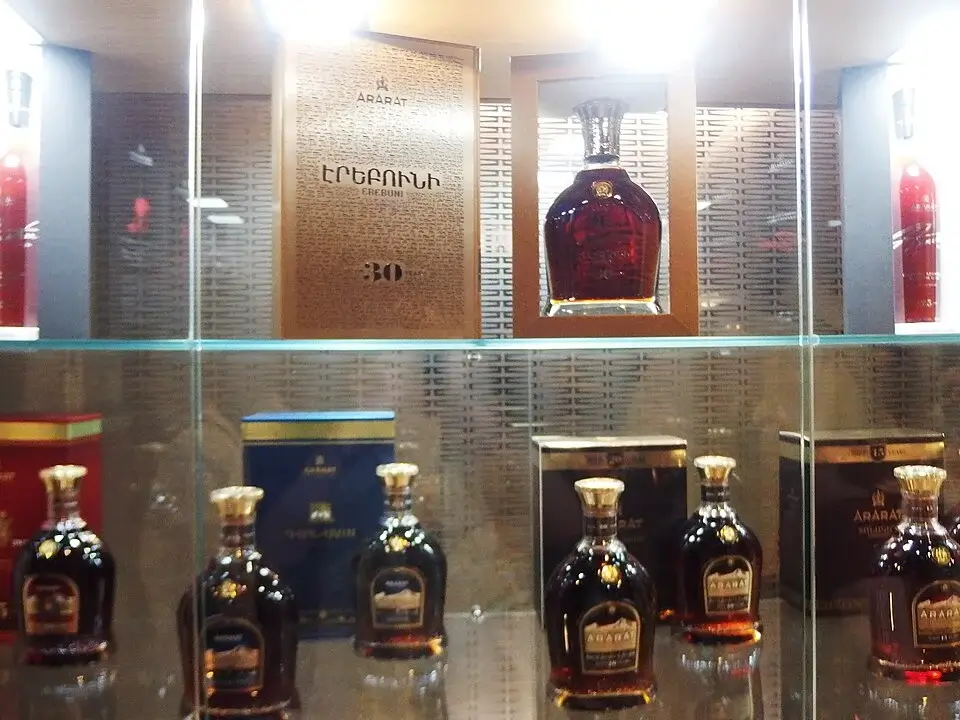
- Nairi — aged for twenty years; the premium expression in ARARAT’s regular core range.
Age alone does not guarantee that one bottle will suit everyone. Younger brandies can be brighter and more direct, while older blends are usually softer, more layered and more expensive. Bottle size also matters when comparing prices: the same expression may be sold in 0.25, 0.5, 0.7 or 0.75-litre formats.
Which Armenian Brandy Should You Choose?
- For an affordable gift: ARARAT 5 Stars or a comparable five-year NOY.
- For a step up in quality: ARARAT Ani 7.
- For a classic presentation bottle: ARARAT Akhtamar 10.
- For a stronger, drier style: ARARAT Dvin 10 at 50% ABV.
- For a premium gift: ARARAT Vaspurakan 15 or Nairi 20.
- For trying something less familiar: choose a tasting set or a bottle from NOY, Proshyan or Ijevan after sampling it at a reputable shop or distillery.
If you do not know the recipient’s preferences, a seven- to ten-year bottle is usually the safest balance between presentation, complexity and price.
How Much Does Armenian Brandy Cost?
Prices vary by bottle size, packaging and retailer. The following ranges reflect typical Yerevan supermarket listings in August 2026 and should be treated as a guide rather than a fixed price list.
| Bottle | Typical size | Approximate price |
|---|---|---|
| ARARAT 3 Stars | 0.5 L | 5,500–6,000 AMD |
| ARARAT 5 Stars | 0.5 L | 7,000–7,500 AMD |
| ARARAT Ani 7 | 0.5 L | 10,000–11,000 AMD |
| ARARAT Akhtamar 10 | 0.5 L | 15,000–16,000 AMD |
| ARARAT Akhtamar 10 | 0.7 L | 20,000–21,000 AMD |
| ARARAT Vaspurakan 15 | 0.5 L | 26,000–28,000 AMD |
| ARARAT Nairi 20 | 0.5 L | 41,000–42,000 AMD |
| ARARAT Nairi 20 | 0.7 L | 55,000–56,000 AMD |
Gift boxes, glasses and limited editions cost more than a standard bottle. Distillery shops are trustworthy but are not always the cheapest option; large supermarkets sometimes offer better prices or promotions.
Where to Buy Armenian Brandy
The safest places to buy Armenian brandy are official brand shops, distillery shops, airport duty-free and established supermarket chains such as SAS, Yerevan City, Carrefour and Parma.
- Compare bottles of the same volume: a 0.5-litre bottle can look similar to a 0.7-litre bottle on the shelf.
- Check that the cap, seal and packaging are intact.
- Look for a clean, professionally printed label without spelling mistakes or uneven application.
- Check the stated producer, age and alcohol percentage.
- Keep the receipt, especially for an expensive bottle.
- Avoid unsealed bottles and spirits offered by private street sellers.
Counterfeit brandy is not a common problem in reputable Yerevan shops. Buying from an established retailer is more reliable than trying to judge authenticity from colour, bubbles or other popular home tests.
Taking Armenian Brandy Home by Plane
Two different sets of rules apply: airline safety rules determine how alcohol can be carried, while the customs rules of your destination determine how much you may import without tax or declaration.
- Armenian brandy is normally 40–50% ABV. Under standard IATA dangerous-goods rules, alcoholic drinks above 24% and up to 70% ABV must remain in retail packaging, each container must hold no more than 5 litres, and the total is limited to 5 litres per person.
- Customs allowances are often lower than the aviation limit. Check the rules of your destination and any transit country before travelling.
- Bottles larger than 100 ml normally belong in checked baggage unless purchased after security in an approved duty-free shop.
- Duty-free bottles should remain sealed in their security bag, particularly when the journey includes a connecting airport.
- Wrap checked bottles securely, place each one in a sealed plastic bag and pack them between soft clothing.
- Your airline may apply stricter baggage rules than the general IATA limit.
For example, travellers entering the European Union from a non-EU country generally have a duty-free allowance of one litre of spirits over 22% ABV. Other destinations use different limits, so there is no single customs allowance that applies to every visitor leaving Armenia.
Brandy Distillery Tours in Yerevan
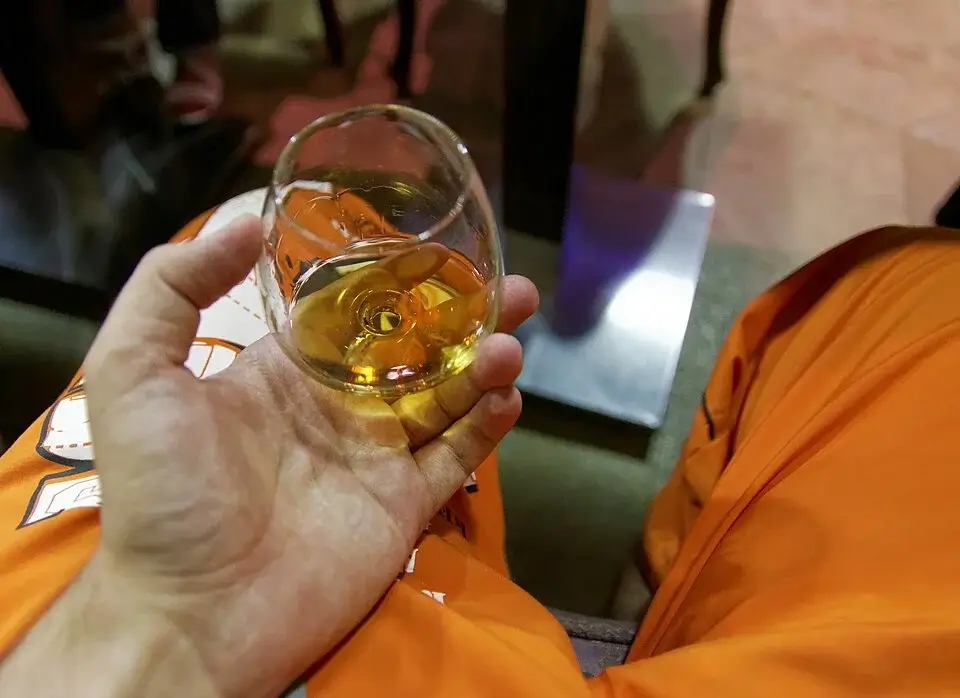
A distillery tour is the easiest way to understand the difference between ages and blends before buying a bottle. Both ARARAT and NOY offer museum visits with guided tastings.
At the ARARAT Museum, the standard programme includes the ageing workshop and a tasting of ARARAT 3 Stars and Ani 7. More expensive programmes may include Akhtamar 10, Vaspurakan 15, Nairi 20, Dvin or flavoured expressions. As of August 2026, official ARARAT tour packages are listed from approximately 4,500 to 12,000 AMD per adult, depending on the tasting.
- ARARAT Museum: 2 Admiral Isakov Avenue, Yerevan.
- NOY Factory and Museum: 9 Admiral Isakov Avenue, opposite ARARAT.
- Reserve in advance, especially at weekends and during the main tourist season.
- Check the available tour language and tasting package before booking.
- Visitors must meet the legal drinking-age requirement for tastings.
The two distilleries are close to central Yerevan and can be included in a private city itinerary. Our private day tours from Yerevan or car-with-driver service can take you to the booked tasting, wait during the visit and return you to your hotel. This is particularly convenient because nobody in your group needs to drive after the tasting.
What Else to Bring Home from Armenia
Brandy is only one of Armenia’s popular food and craft gifts. Other options include:
- Areni wine made from Armenia’s best-known red grape variety.
- Fruit spirits made from mulberry, apricot, pear or cornelian cherry.
- Dried fruit, preserves and sweet sujukh made with grape must and walnuts.
- Herbs and spice mixtures for meat, soups and Armenian dishes.
- A duduk made from apricot wood.
- Ceramics, textiles and pomegranate-themed crafts.
For food gifts, visit GUM Market in Yerevan. For handmade crafts, jewellery, woodwork and ceramics, explore Yerevan Vernissage Market.