Gndevank Monastery
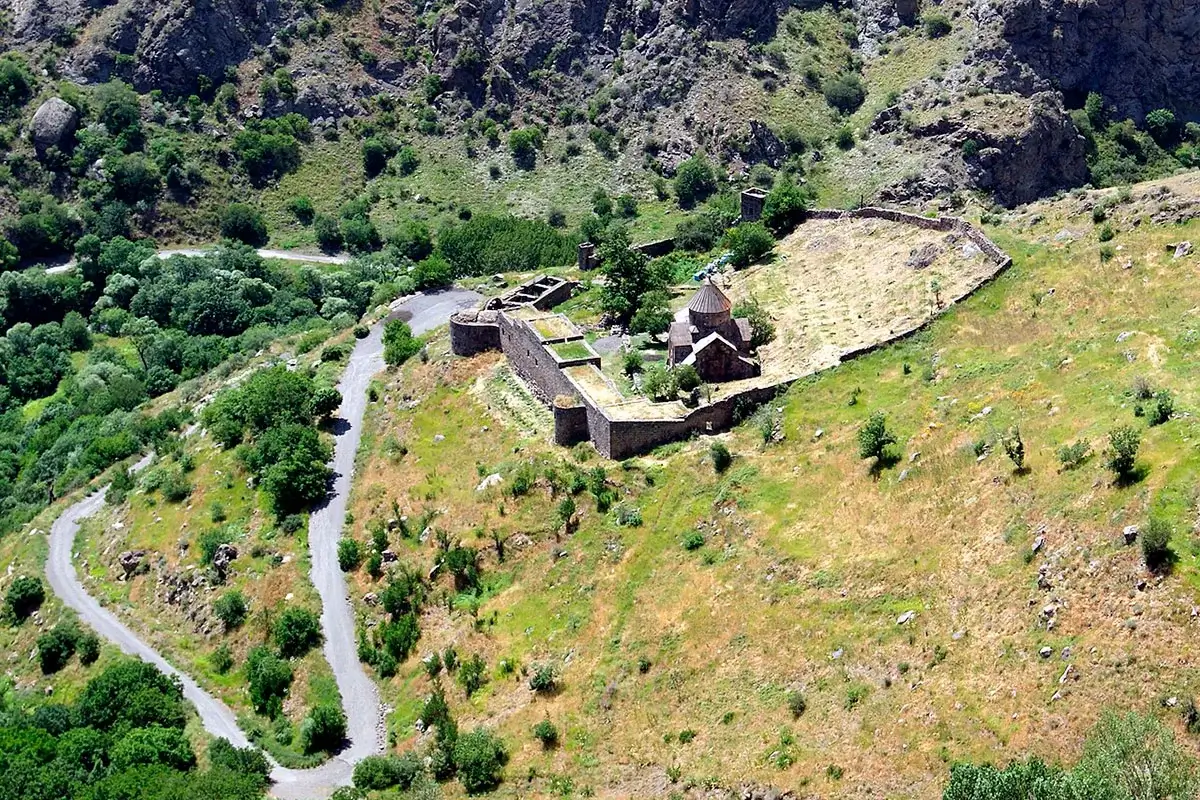
Gndevank Monastery is a medieval Armenian monastery dating from the 10th century, set in the scenic Arpa River gorge near Jermuk. Surrounded by the steep landscapes of Vayots Dzor, the stone complex combines ancient architecture with a quiet setting away from Armenia’s busiest tourist routes.
Gndevank is an easy addition to a trip around Jermuk. Visitors can see the Surb Stepanos Church from 936, the medieval gavit, khachkars and other monastery structures, while the journey itself passes through the beautiful Arpa valley close to the village of Gndevaz.
Quick Facts
- Built / Founded: 10th century
- Location: Gndevaz village, Vayots Dzor Province
- Entrance fee: Free
- Time needed: 45–60 minutes
- Best time to visit: spring to autumn
Gndevank in the Arpa River Gorge
Gndevank stands on the left bank of the Arpa River, about one kilometre west of Gndevaz village. The monastery lies below the main road in the gorge, where the landscape quickly changes from open mountain roads to steep slopes, vegetation and the river valley.
The setting is one of the main reasons to visit. The stone walls of the monastery blend naturally into the surrounding mountains, while spring and summer bring more greenery to the gorge. Even a short visit offers a very different view of Vayots Dzor from the open landscapes around Areni and Noravank.
History of Gndevank Monastery
Gndevank was founded in the 10th century by Princess Sophia of Syunik. The main church of the monastery, dedicated to Saint Stepanos, was completed in 936 and became the centre of the new monastic complex.
A well-known medieval inscription associated with Princess Sophia compares Vayots Dzor to a ring and the monastery to the precious stone placed in that ring. The image reflects both the importance of Gndevank at the time and the beauty of its location in the Arpa gorge.
The monastery continued to develop over the following centuries. A gavit was added to the western side of the church in 999, while later periods brought additional monastic buildings, repairs and defensive structures. The complex visible today therefore includes elements from several stages of its history.
Surb Stepanos Church and the Architecture of Gndevank
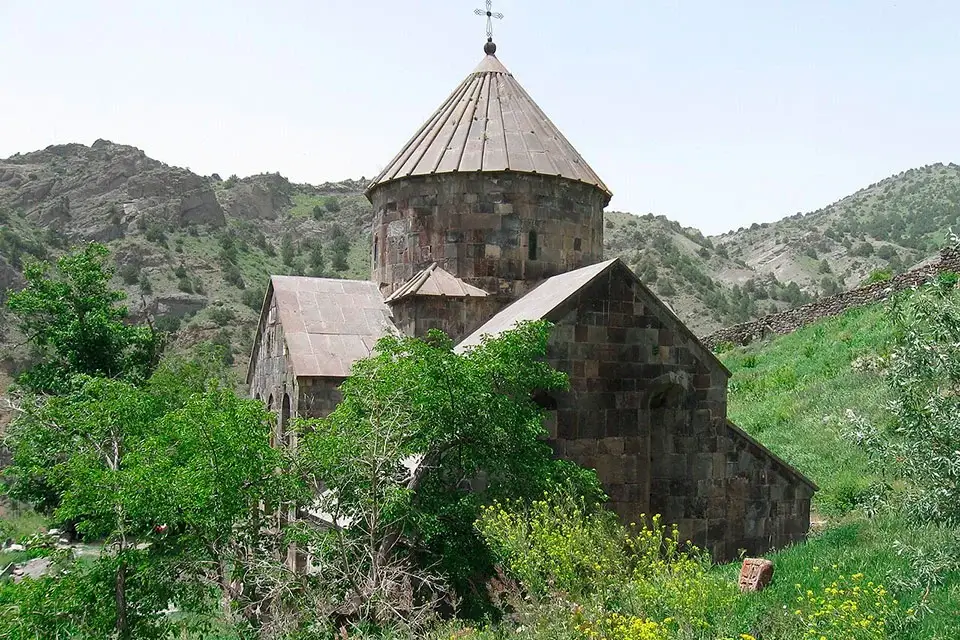
The main building of Gndevank is Surb Stepanos Church. Built from carefully cut basalt, it is a compact cross-domed church typical of medieval Armenian architecture. Its restrained proportions and dark stone give it a particularly strong presence against the surrounding mountain landscape.
Inside, traces of the church’s historic decoration have survived. The dome area is especially interesting for the relief symbols of the four Evangelists, while fragments of old wall paintings provide a glimpse of the church’s original interior decoration.
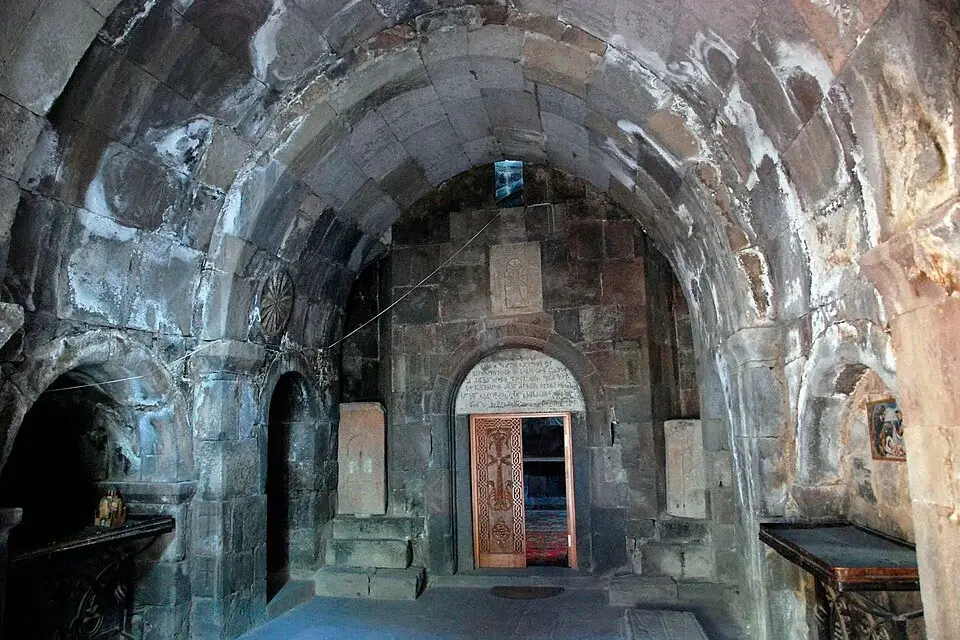
A vaulted gavit adjoins the church from the west. Around it are other parts of the monastery complex, including the old cemetery, khachkars, residential and service buildings and sections of later defensive walls.
What to See at Gndevank Monastery
Begin with Surb Stepanos Church, then walk through the gavit and around the monastery courtyard. The complex is relatively compact, so it is easy to explore without rushing and to pay attention to the masonry, carved details and old stone elements.
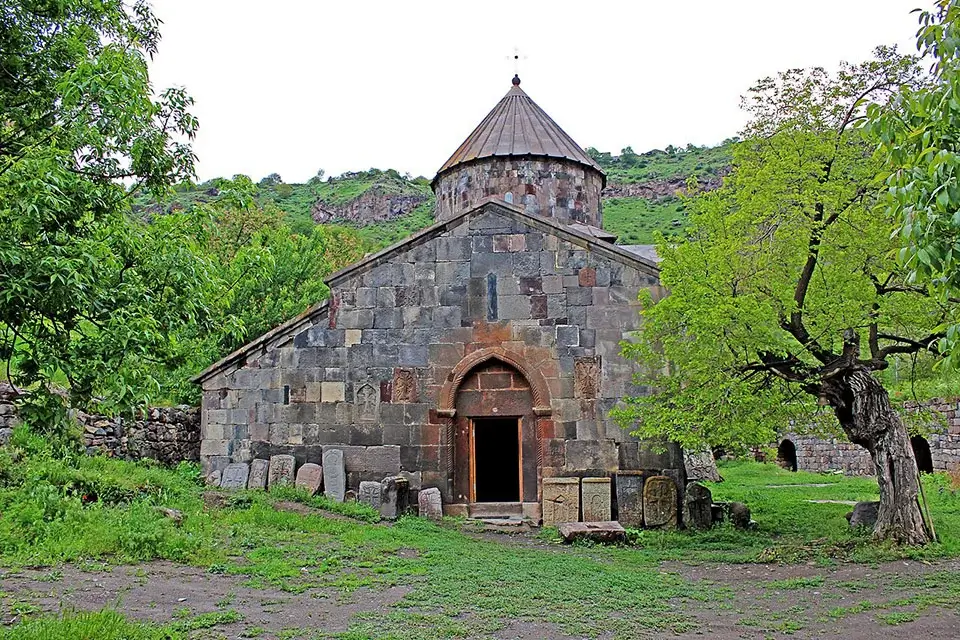
Several medieval khachkars and gravestones remain around the monastery. Together with the stone walls and surviving buildings, they help show how Gndevank developed as a religious community over many centuries.
Do not focus only on the buildings. Views from the monastery and the road leading to it extend across the Arpa gorge and surrounding slopes, making Gndevank interesting both as a historic monument and as a scenic stop in Vayots Dzor.
Best Time to Visit Gndevank
Spring, summer and early autumn are the most convenient seasons for visiting Gndevank. During this period, access is generally easier and the surrounding gorge is well suited to short walks and photography.
Spring brings fresh greenery to the valley, summer is usually cooler in this highland area than in Yerevan, and autumn adds warmer colours to the mountain landscape. These seasons also make it easier to combine Gndevank with other sights around Jermuk.
A winter visit is also possible, but conditions on local mountain roads can change quickly because of snow and ice. If travelling during the colder months, it is best to check road conditions before setting out.
Gndevank in a Jermuk Itinerary
Gndevank can easily be included in a day exploring the area around Jermuk. After visiting the monastery, return to the resort town and continue to Jermuk Waterfall and the Mineral Water Gallery for a mix of medieval history, mountain scenery and the spa town’s best-known attractions.
Another worthwhile stop on the same route is Kechut Reservoir. Located close to Jermuk in the Arpa valley, it adds wide mountain views and the reservoir’s unusual spillway to the itinerary.
How to Get to Gndevank Monastery
Gndevank is located near Gndevaz village on the road toward Jermuk. Local access roads lead from the main route down into the Arpa River gorge toward the monastery, so the final section should be driven without rushing, especially after rain or during colder weather.
If you are staying in Jermuk, Gndevank is convenient as a short trip outside the resort. The distance is small enough to combine the monastery with the Mineral Water Gallery, Jermuk Waterfall and other nearby attractions within the same day.
From Yerevan, the most convenient option is to travel by car through Vayots Dzor toward Jermuk. If the resort is your main destination, you can book a Yerevan to Jermuk transfer in advance and arrange a visit to Gndevank and other nearby sights separately.