Armenian People
Armenians are an ancient people whose historical homeland is the Armenian Highlands. Their cultural identity has been shaped by the Armenian language, the Christian faith, a unique alphabet and strong traditions of family and community. Today, Armenians live both in the Republic of Armenia and in large diaspora communities around the world. This article introduces the history, customs, cuisine, art and architecture of the Armenian people.
A Brief History of the Armenian People
The history of the Armenian people stretches back into antiquity, when Armenian kingdoms developed across the Armenian Highlands. Over the centuries, Armenians experienced periods of independent statehood and cultural prosperity alongside invasions, foreign rule, displacement and the Armenian Genocide of 1915.
Armenia’s position between major civilizations brought the Armenian people into close contact with the Persian, Roman and Byzantine worlds, among others. These encounters influenced the country’s culture while Armenians continued to preserve their own language, faith and identity.
A defining moment came at the beginning of the fourth century—traditionally dated to 301—when Armenia became the first state to adopt Christianity as its official religion. The Armenian Apostolic Church is one of the world’s oldest Christian institutions and remains central to Armenian cultural identity.
Family Traditions and Customs
Family holds a central place in Armenian society. Close relationships between generations, respect for older relatives, mutual support and regular family gatherings remain important values for many Armenians.
Traditional Armenian weddings were large celebrations that could continue for several days. Modern weddings usually take place over a single day, but they still often include symbolic rituals, music, dancing, toasts and a generous shared feast attended by extended family and friends.
New Year is celebrated on the night of 31 December with family gatherings and a festive table. Armenian Christmas follows on 6 January and is traditionally marked by church services and family meals.
Armenian Cuisine and Hospitality
Armenian cuisine reflects the country’s geography and long history. It combines meat, vegetables, grains, legumes, fermented dairy products and generous amounts of fresh herbs. Traditional cooking methods include baking in a clay tonir, grilling over charcoal and slowly simmering soups and stews.
Some of the best-known Armenian dishes are tolma, khorovats, khash and lavash. The table also commonly includes matsun, chanakh or Lori cheese, fresh herbs, dried fruit and gata for dessert. Meals are usually served generously, reflecting the importance of hospitality in Armenian culture.
Armenian Art and Architecture
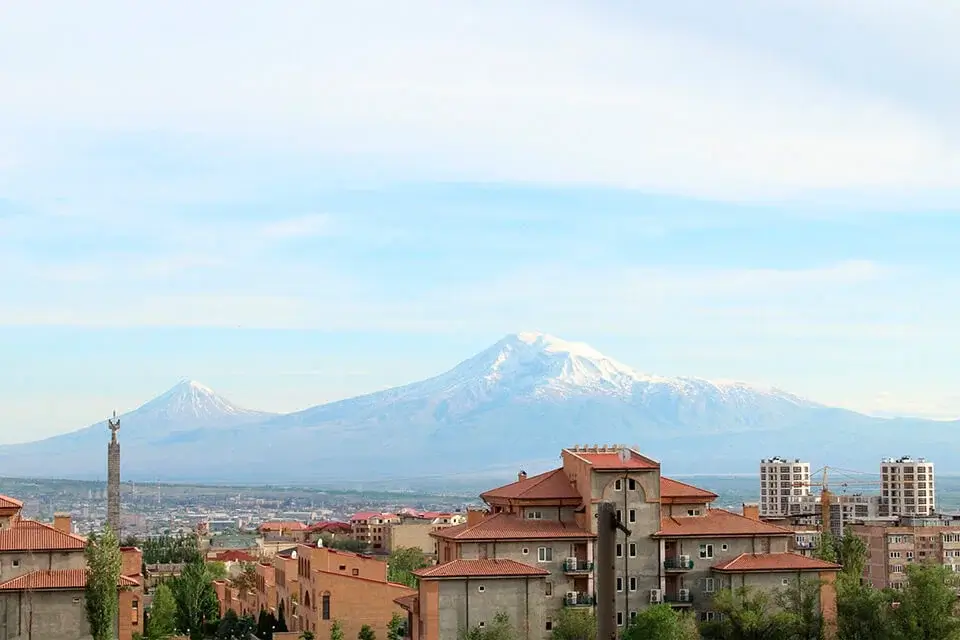
Armenian architecture ranges from the pre-Christian Garni Temple, built in the classical Greco-Roman tradition, to early Christian churches and medieval monasteries. Etchmiadzin Cathedral and Geghard Monastery are among the country’s most important religious monuments, known for their stone construction, domes, carved reliefs and close relationship with the surrounding landscape.
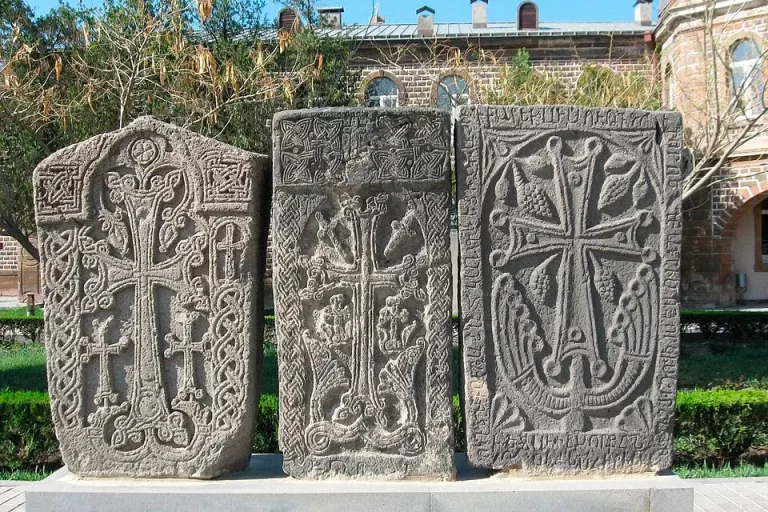
Armenian visual culture also includes illuminated manuscripts, frescoes, painting, woodwork, metalwork and intricate stone carving. Khachkars—carved memorial stones centered on the image of a cross—are one of Armenia’s most distinctive forms of artistic expression.
Armenian artists have drawn inspiration from religious themes, historical memory, national traditions and the landscapes of the Armenian Highlands. These influences remain visible in both classical works and contemporary Armenian art.
Music, Dance and Literature
Traditional Armenian music is known for its expressive melodies and distinctive instruments. The best-known is the duduk, a double-reed woodwind traditionally made from apricot wood, whose warm and melancholic sound has become closely associated with Armenian culture.
Dance is another important part of Armenian cultural life. Regional folk dances are performed at weddings, festivals and public celebrations, often accompanied by traditional music and involving groups of dancers moving together.
Armenian literature has a long tradition extending from medieval religious texts and poetry to modern fiction. Poet Hovhannes Shiraz and Armenian-American writer William Saroyan are among the best-known literary figures associated with Armenian culture.
The Armenian People Today
Armenian identity has been shaped by a long history, a distinct language and alphabet, the Christian faith, strong family traditions and a rich creative heritage. Despite centuries of migration and displacement, Armenian communities around the world have maintained close cultural and emotional ties to their ancestral homeland.
Understanding Armenia means looking beyond its monuments and historical dates. Its culture is also experienced through family gatherings, generous hospitality, traditional food, music, dance and everyday encounters with the people who continue to preserve and develop this heritage.