
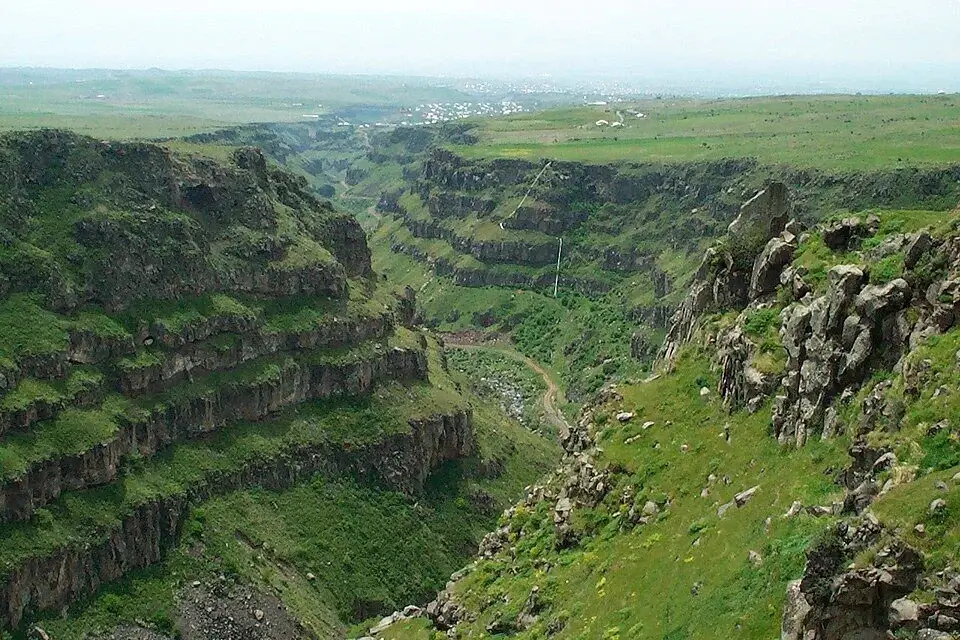
Kasakh Gorge and Surroundings
Kasakh Gorge and its surroundings make an easy and varied trip from Yerevan. The deep canyon of the Kasakh River cuts through the volcanic landscape of Aragatsotn Province, while the medieval monasteries of Hovhannavank and Saghmosavank stand directly above its steep walls.
Around the gorge you can also visit Kasakh Waterfall, explore Mount Ara or stop at the cave monastery of Tsaghkevank. Most of the main sights are within about an hour’s drive from Yerevan, making the area suitable for either a half-day excursion or a full-day route.
Quick Facts
- Location: Ohanavan & Saghmosavan villages (rim access), Aragatsotn Province (extends into Armavir)
- Also known as: Kasakh Canyon, Kasakhi Gorge, Kasagh Gorge
- From Yerevan: About 35 km / 45–50 minutes by car
- Time needed: 1–2 hours for viewpoints, 3–4 hours for the hike
- Best time to visit: April–May for the waterfall, spring–autumn for canyon views
- Status: Natural Monument
What to See in Kasakh Gorge and Around
Kasakh Gorge and its nearby area combine medieval monasteries, canyon viewpoints, a seasonal waterfall and hiking routes around Mount Ara. The guides below cover the main places to visit in this area.


How Kasakh Gorge Was Formed
Kasakh Gorge was shaped by two major geological processes.
Millions of years ago, volcanic activity covered the area with thick layers of lava and volcanic rock, including basalt, tuff and andesite. Over time, the Kasakh River cut through these layers and gradually formed the deep canyon visible today.
The steep walls and natural terraces of the gorge are especially impressive around Hovhannavank and Saghmosavank, where several viewpoints look directly over the Kasakh River valley.
Kasakh Waterfall: What to Know
Kasakh Waterfall is one of the best-known sights in the gorge, but it is important to understand that the flow is not entirely natural.
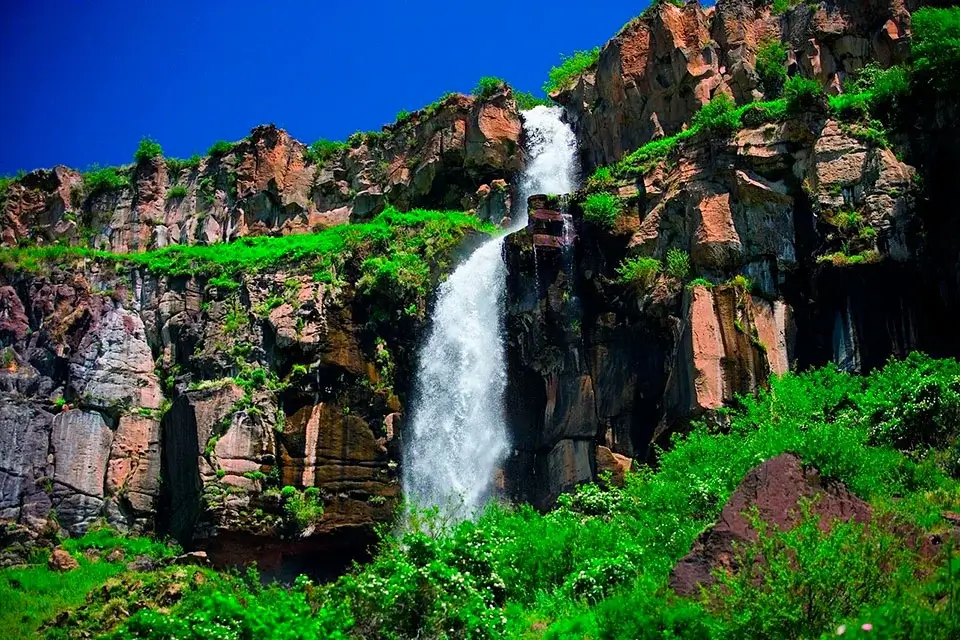
The waterfall is around 20 metres high and is located near Hovhannavan, opposite the area of Karbi and Hovhannavank. Water reaches the slope from the Arzni–Shamiram irrigation system. After changes to the local water infrastructure, the waterfall no longer flows continuously.
Today, the strongest flow is usually seen in spring, especially around April and early May, when excess meltwater may be released. During the rest of the year, the waterfall can be very weak or completely dry.
Even without the waterfall, the views into Kasakh Gorge make the area worth visiting.
Monasteries Above Kasakh Gorge
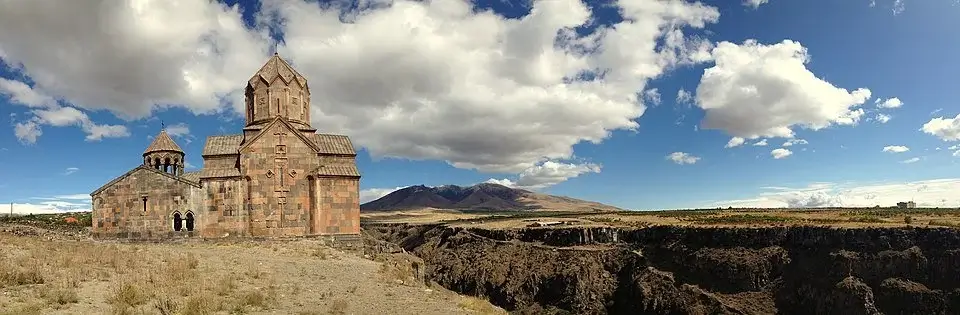
Two important medieval monasteries stand directly above the gorge: Hovhannavank and Saghmosavank. Both offer excellent viewpoints over the Kasakh River valley and are easy to combine on the same trip.
Hovhannavank is located near the village of Hovhannavan, while Saghmosavank lies several kilometres farther north. For their history, architecture and visitor information, see the separate guides to Hovhannavank Monastery and Saghmosavank Monastery.
Caves and Archaeology
Several caves and archaeological sites have been identified inside Kasakh Gorge and its side valleys. Some were used as shelters and settlements during the medieval period.
According to local historical traditions, caves in the gorge were also used during periods of invasion and instability. Many of these places remain difficult to access, and descending into the gorge without a clear route or local knowledge is not recommended.
How to Get There and When to Visit
Kasakh Gorge is about 35 km from Yerevan and can usually be reached by car in around 50 minutes.
A practical route is to drive first to Hovhannavank, where there are good views into the gorge, and then continue toward Saghmosavank, located several kilometres farther north.
Public transport is less convenient. Buses and minibuses from Yerevan can take you toward Ashtarak, but reaching Hovhannavank and Saghmosavank from there normally requires a taxi.
Best time to visit:
- April–May — the only window with a flowing waterfall, green canyon floor, and clear views of Ararat.
- June–September — no waterfall, but the longest sight lines and the most reliable weather; watch for snakes on the trail.
- October — autumn colours, very few other visitors.
- Winter (November–March) — the road to Saghmosavank can close after snowfall, and the canyon descent becomes risky.
Frequently Asked Questions
Trip to Kasakh Gorge from Yerevan
Kasakh Gorge is easy to combine with Saghmosavank and Hovhannavank on a short trip from Yerevan. See the route, duration and price for our Saghmosavank tour from Yerevan.


