
Tatevi Mets Anapat
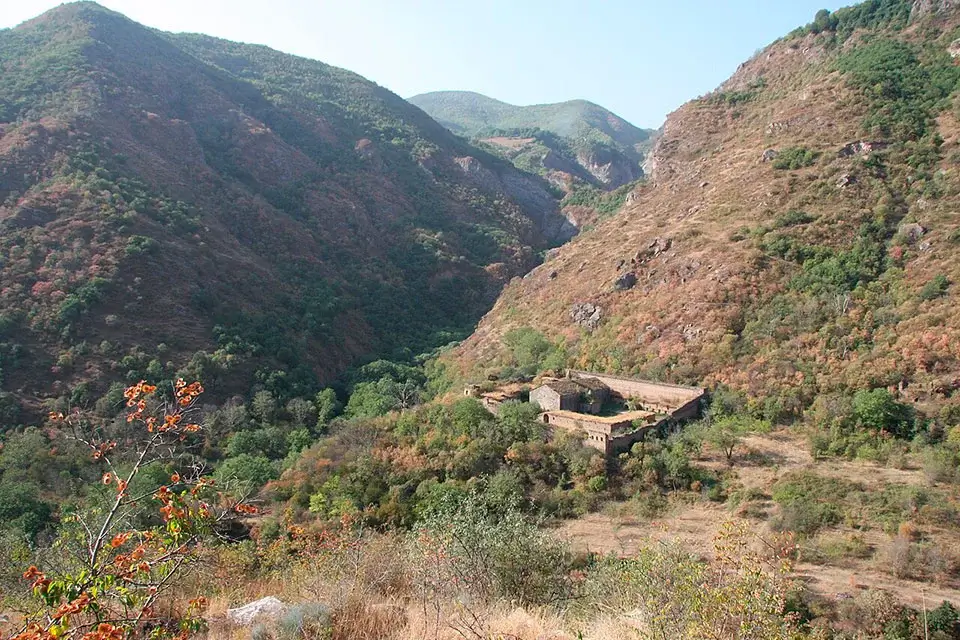
Tatevi Mets Anapat, also known as the Great Hermitage of Tatev, is a 17th-century monastery complex hidden deep in the Vorotan Gorge near Tatev. Unlike the famous Tatev Monastery high above the canyon, Mets Anapat stands far below among wooded slopes and is almost concealed by the surrounding landscape.
The attraction is not one famous building but the atmosphere of the entire site: old monastery walls, a church, monks’ cells and the feeling of being completely removed from modern roads and tourist crowds. It is especially rewarding for travellers who want to combine Tatev with a hike through the Vorotan Gorge.
Quick Facts
- Built / Founded: early 1660s
- Location: Tatev, Syunik Province
- Also known as: Great Hermitage of Tatev
- Time needed: 45–60 minutes
- Best time to visit: May–October
Where Is Tatevi Mets Anapat?
The Great Hermitage of Tatev is located in Syunik Province on the right bank of the Vorotan River, deep in the gorge below Tatev Monastery. The complex stands close to the river where the steep mountain slopes descend into the valley, making it almost invisible from above.
This setting creates a strong contrast with Tatev Monastery. Tatev occupies a dramatic plateau high above the gorge, while Mets Anapat is hidden below among trees, cliffs and the river valley.
What Does “Mets Anapat” Mean?
The word “anapat” does not mean a desert in the usual geographical sense. In the Armenian monastic tradition, it referred to a secluded religious community where monks lived away from towns and villages.
“Mets Anapat” can therefore be understood as the “Great Hermitage.” This is why English sources commonly use the name Great Hermitage of Tatev alongside the Armenian name Tatevi Mets Anapat.
History of Tatevi Mets Anapat
The new monastery was founded after the powerful earthquake of 1658 destroyed an earlier hermitage known as Harants Anapat in the Vorotan Gorge. The monastic community left the damaged site and established a new complex in a more suitable location.
Construction of Mets Anapat began in the early 1660s. Surb Astvatsatsin Church was completed in 1663, while monastic cells, service buildings, a refectory and defensive walls developed around it.
The monastery later became an important religious and cultural centre in Syunik. Monks lived and worked here, manuscripts were copied, and the community maintained a substantial household that allowed it to function in the isolated gorge.
What to See at Tatevi Mets Anapat
The main building is Surb Astvatsatsin Church, built in 1663 from carefully cut basalt. It is a three-nave basilica with restrained architecture suited to the monastic character of the complex.
Around the church are surviving sections of the monastery walls, towers, monks’ cells and service buildings. The scale of the complex shows that Mets Anapat was not a small retreat but a large and organized monastic community.
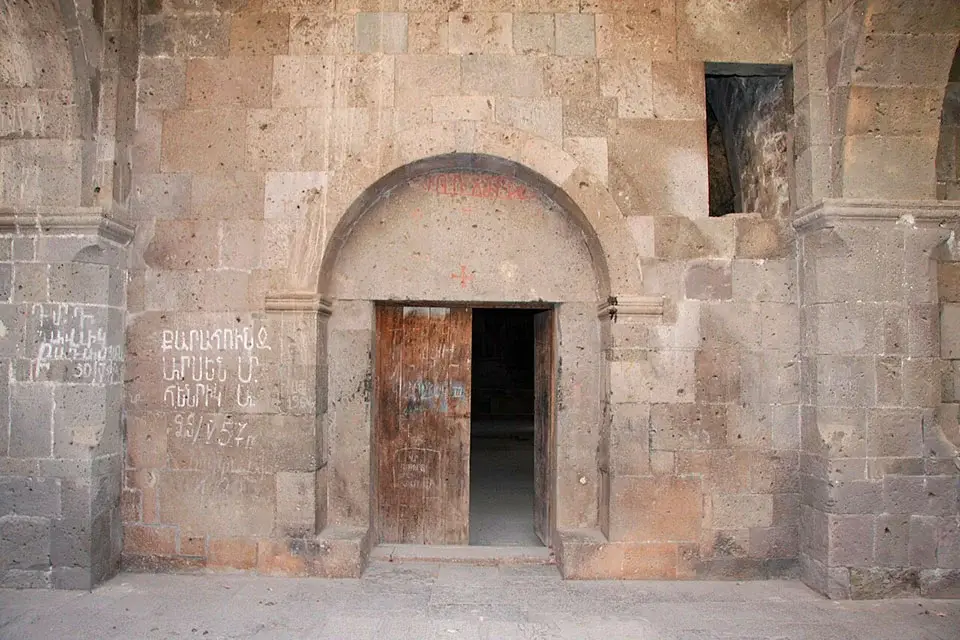
The layout itself is worth noticing. The monastery has a relatively ordered plan and is separated from the surrounding gorge by walls, creating the feeling of a self-contained world hidden in the mountains.
The landscape is equally important. The Vorotan River, wooded slopes and steep canyon walls make the walk to the monastery part of the experience rather than simply a way of reaching a historic building.
How to Get to Tatevi Mets Anapat
Mets Anapat is not a roadside attraction. The monastery lies deep in the Vorotan Gorge, so the most rewarding and practical way to visit is as part of a hiking route.
Trails lead toward the monastery from the Tatev and Old Halidzor area. The route crosses mountain slopes, wooded sections and terrain close to the river, so comfortable footwear, drinking water and enough time are essential.
Parts of the trail are steep and uneven. If you are not used to mountain hiking, check the route and weather conditions in advance or consider going with a local guide.
Best Time to Visit Tatevi Mets Anapat
The most convenient period for hiking is from late spring to mid-autumn. During these months the trails are generally easier to follow, while the forests and slopes of the Vorotan Gorge are especially attractive.
In summer, start early to avoid the strongest heat on exposed sections. After prolonged rain, trails can become slippery, while snow and ice make the descent considerably more difficult in winter.
Tatevi Mets Anapat, Tatev and Devil’s Bridge
The most natural connection is with Tatev Monastery. The two complexes belong to the same historic and natural landscape but could hardly look more different: Tatev rises high above the gorge, while Mets Anapat is hidden deep below near the Vorotan River.
A longer route through the gorge can also include Devil’s Bridge, the natural travertine formation on the Vorotan River. This combination is ideal for travellers who want to see more than the main Tatev landmarks and explore part of the gorge on foot.
For a short sightseeing trip to Tatev, Mets Anapat may require too much additional time. It is better planned as part of a dedicated hiking route rather than added to an already full one-day driving itinerary.