
What to Bring Back from Armenia
Wondering what to bring back from Armenia? The country offers an unusually wide choice of gifts, from famous Armenian brandy and Areni wine to sweets, cheeses, dried meats, pomegranate souvenirs, duduks, handmade carpets and obsidian jewellery.
This guide covers the best Armenian souvenirs for yourself, family and friends, where to buy them in Yerevan and which products are better avoided.
In Brief: The Best Souvenirs from Armenia
If you want a quick list, these are the gifts travellers most often bring back from Armenia:
- Armenian brandy — the country’s best-known souvenir.
- Areni wine and traditional mulberry spirit.
- Sweets — sweet sujukh, gata, pakhlava and dried fruit.
- Dried meats — basturma and spicy sujukh sausage.
- Armenian cheeses — chanakh, Lori and chechil.
- Pomegranate souvenirs — one of Armenia’s most recognisable symbols.
- A duduk — the traditional Armenian instrument made from apricot wood.
- Handmade carpets and other traditional crafts.
- Jewellery with garnet or obsidian.
- Spices, dried mountain herbs and herbal tea.
Below, we look at each category in more detail and explain where these souvenirs are best purchased.
Armenian Brandy, Wine and Mulberry Spirit
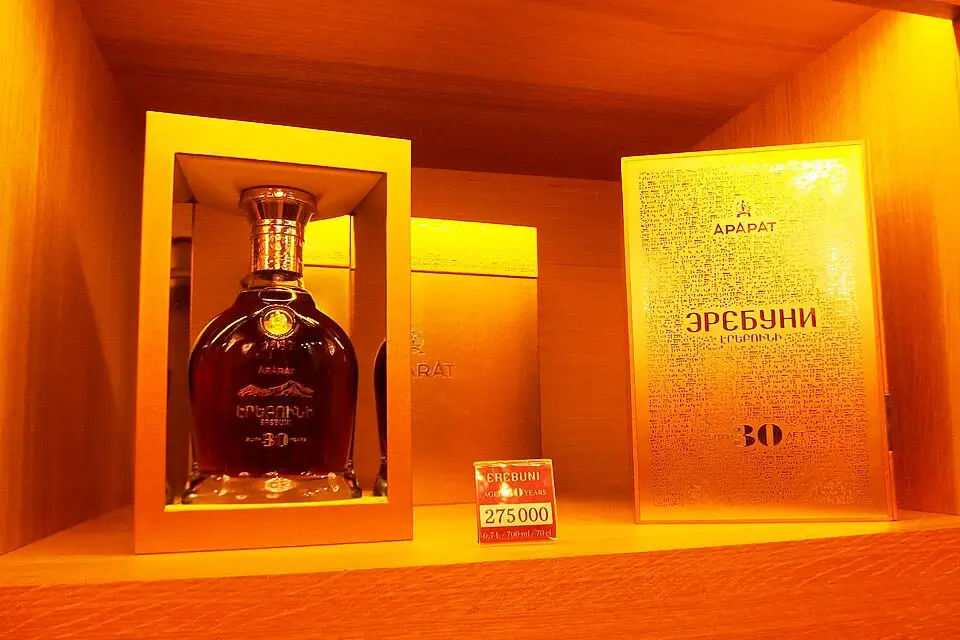
Armenian brandy is the country’s best-known product and one of its most popular gifts. ARARAT and NOY offer everything from affordable three- and five-year expressions to older premium bottles such as Akhtamar and Vaspurakan.
Armenia has one of the world’s oldest winemaking traditions. Archaeologists discovered a winery approximately 6,100 years old in the Areni-1 cave. Modern wines made from the indigenous Areni grape are an excellent gift for anyone interested in wine.
Traditional mulberry spirit is a strong and distinctive Armenian drink, sometimes reaching 60% alcohol by volume. It is particularly associated with homemade hospitality and regional food traditions.
Our separate guide to Armenian brandy explains which bottle to choose, what the stars and age statements mean, how much alcohol you can take home and how to avoid counterfeit products.
Armenian Sweets: Sweet Sujukh, Gata and Dried Fruit
Armenian sweets travel well and make easy gifts for family, friends or colleagues:
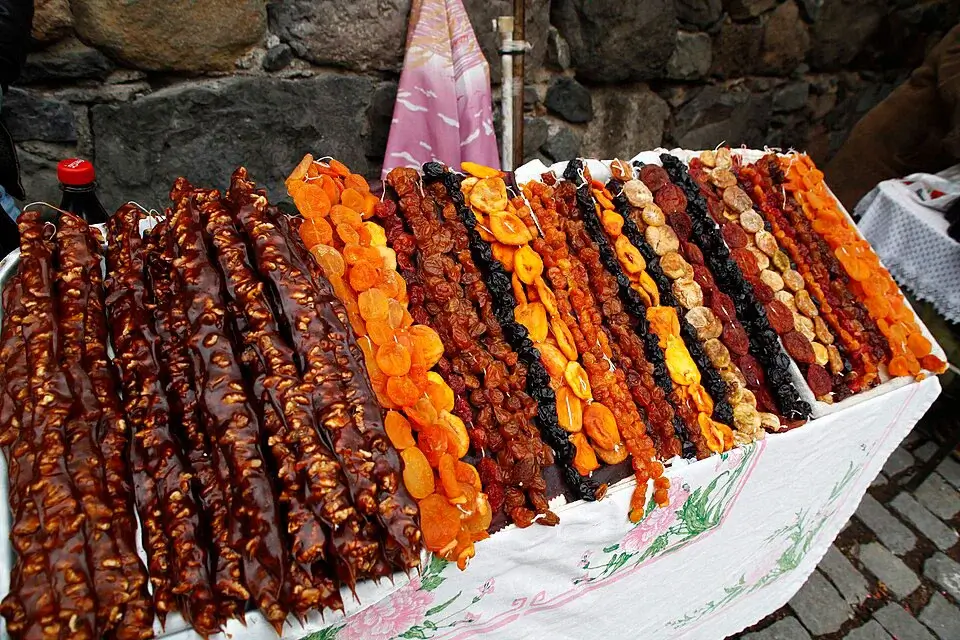
- Sweet sujukh, also called sharots: walnuts threaded onto a string and coated in thickened grape juice. It is sliced into rounds and is one of Armenia’s most distinctive sweet souvenirs.
- Gata: a layered sweet pastry with a rich filling. The large gata traditionally associated with Geghard is especially well known.
- Pakhlava: layers of pastry, nuts and honey or syrup.
- Alani: dried peaches or apricots filled with a mixture of walnuts, sugar and spices.
- Dried fruit: Armenian apricots, prunes and dried figs. Fruit from the Ararat Valley is naturally sweet and is often dried without added sugar.
- Nuts: walnuts, hazelnuts and almonds, as well as nut brittle and other traditional sweets.
Dried fruit and sweet sujukh keep well and are unlikely to spoil during the journey, making them some of the most practical edible gifts to take home.
Meat Delicacies: Basturma and Sujukh
Basturma is air-dried beef coated in a strongly flavoured spice paste whose main ingredient is chaman, or fenugreek. Served in very thin slices, it is a classic Armenian delicacy and a popular cold appetiser.
Sujukh, also written as sujuk, is a spicy dried sausage seasoned with garlic and other spices. It should not be confused with sweet sujukh, the walnut and grape-juice confection.
Both products travel best in vacuum packaging, which you can request at a market or buy ready-packed in a supermarket. Before taking meat products home, check the import rules of your destination country, as restrictions vary.
Armenian Cheeses
Armenia has a strong cheesemaking tradition. These are some of the varieties most often bought for tasting or as gifts:
- Chanakh: a salty white cheese matured in brine.
- Lori: a firm, semi-hard cheese with a mild salty flavour.
- Chechil: a string cheese that is often braided or smoked.
- Zhazhik: a fresh soft cheese mixed with herbs.
Choose cheese in sealed vacuum packaging and keep it chilled until departure. For a long journey, firmer and more mature varieties are usually a better choice because they keep longer.
Spices, Mountain Herbs and Armenian Coffee
Small, light and inexpensive, spices and dried herbs make excellent additional gifts:
- Chaman: ground fenugreek, the main spice used in the coating for basturma.
- Spice mixtures for khorovats, the Armenian style of barbecue.
- Dried mountain herbs, including thyme, oregano and aveluk, or Armenian sorrel.
- Mountain herbal tea made from locally gathered plants.
- Armenian coffee, finely ground for preparation in a jezve.
Markets sell many of these products by weight, so you can buy small amounts of several different herbs, teas and spice mixtures.
The Pomegranate: Armenia’s Symbol in Souvenirs
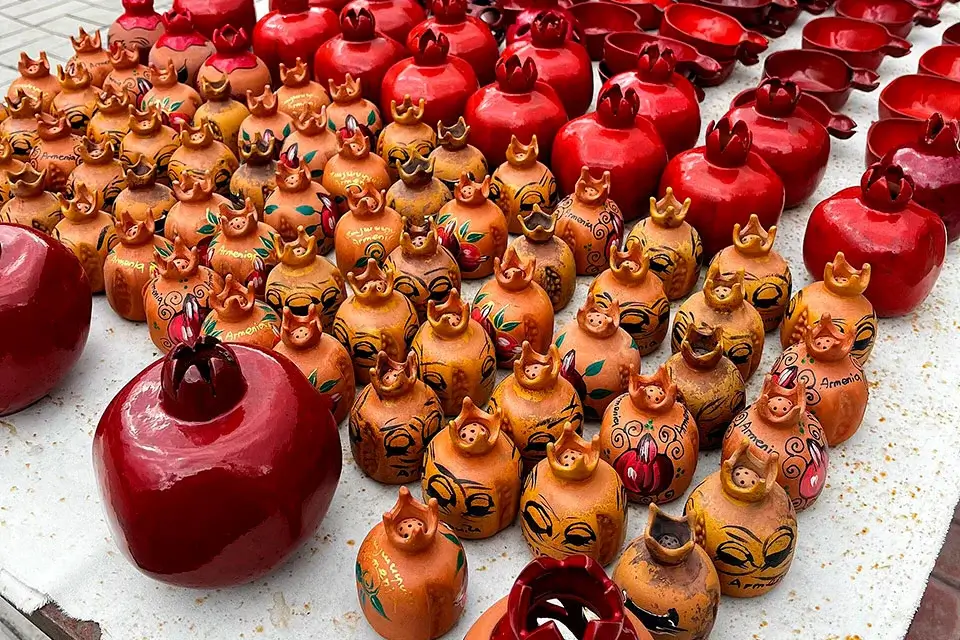
The pomegranate is one of Armenia’s most recognisable symbols, and its image appears everywhere: ceramic and wooden figurines, magnets, tableware, textiles, jewellery and decorative objects. A pomegranate-themed gift is immediately recognisable as Armenian.
You can also bring home fresh pomegranates, which are at their best from October to December, or a bottle of pomegranate wine. The wine is an unusual gift, although its sweet fruit-forward style will not appeal to every traditional wine drinker.
The Duduk and Armenian Musical Instruments
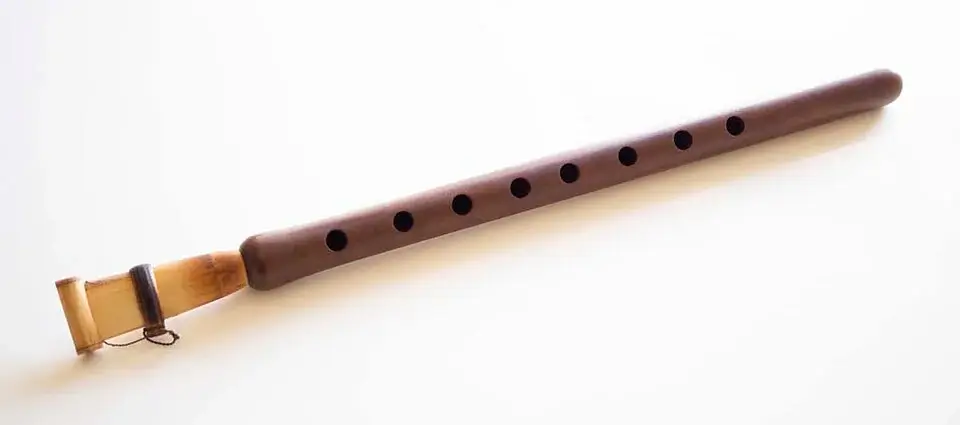
The duduk is a traditional Armenian wind instrument made from apricot wood and is often described as the voice of the Armenian soul. The music of the Armenian duduk is recognised by UNESCO as part of the world’s intangible cultural heritage. A genuine handmade instrument makes a meaningful gift for a musician or anyone interested in Armenian culture.
Buy a duduk from an instrument maker or a specialist seller, including trusted stalls at Yerevan Vernissage. Cheap souvenir shops often sell decorative imitations that may look convincing but cannot be played properly.
Armenian Carpets and Handmade Crafts
Armenian carpet weaving is an ancient craft, and a genuine handmade carpet is a work of art that can last for generations. These pieces are expensive, but they make exceptional gifts. Yerevan Vernissage offers both newly made and older carpets in a wide range of sizes and designs.
- Hand-carved wooden boxes, icons and decorative objects.
- Handmade ceramics and painted tableware.
- Jewellery and decorative pieces made from obsidian.
- Textiles featuring traditional Armenian patterns.
Avoid cheap synthetic carpets sold as traditional handmade pieces. They are not genuine examples of the craft and tend to lose their appearance quickly.
Jewellery, Garnet and Obsidian
Armenia has a long tradition of jewellery making. Popular gifts include:
- Rings, pendants and earrings set with garnet.
- Handmade silver jewellery featuring traditional Armenian motifs.
- Jewellery, figurines and decorative objects made from obsidian, a volcanic glass found in Armenia. Armenian obsidian can be black, snowflake-patterned or naturally iridescent.
Buy valuable jewellery from an established shop that provides a receipt and information about the materials used, rather than from an unverified street stall.
Where to Buy Souvenirs in Yerevan
The main places to shop for Armenian gifts and souvenirs are:
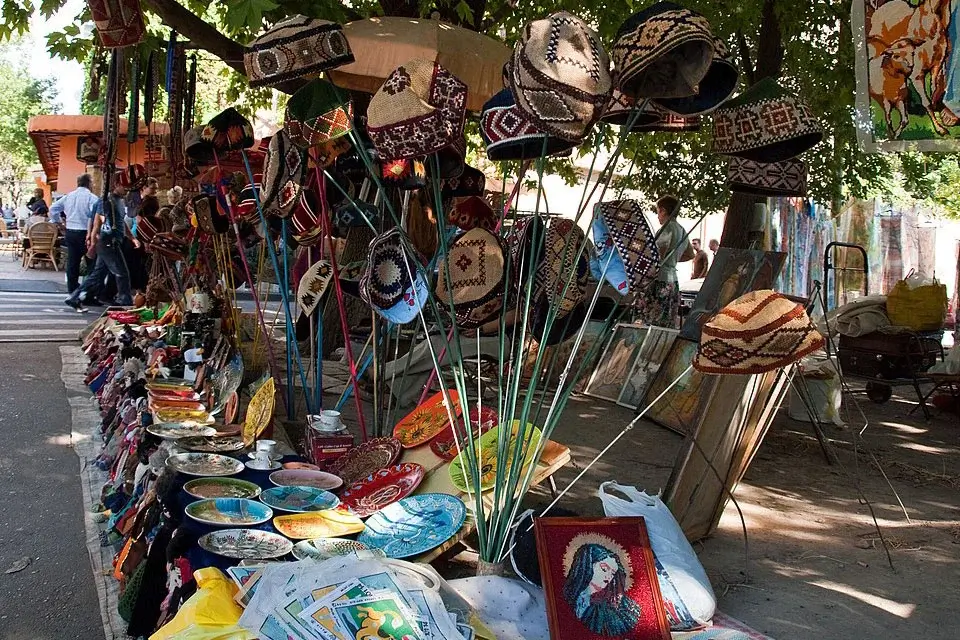
- Yerevan Vernissage: a large open-air market in the city centre, especially lively at weekends. It sells carpets, paintings, duduks, woodcarving, jewellery, obsidian, ceramics and antiques. Polite bargaining is normal.
- GUM Market: the best place for dried fruit, spices, cheeses, sweets and other food gifts. Many sellers allow you to taste products before buying.
- Supermarkets such as SAS and Yerevan City: reliable places to buy Armenian brandy, wine and packaged delicacies at fixed prices.
- Souvenir shops in central Yerevan: convenient for pomegranate-themed gifts, magnets, ceramics and textiles.
Light bargaining is acceptable at markets, while shops and supermarkets usually have fixed prices. Our guide to currency in Armenia explains which money to bring, where to exchange it and when you may need cash.
What Not to Buy in Armenia
To avoid disappointment or problems when travelling home, it is better not to buy:
- Unlabelled brandy or wine sold privately in plastic bottles, as there is a high risk of counterfeit or poor-quality alcohol.
- Cheap synthetic carpets presented as traditional handmade pieces.
- Mass-produced imported souvenirs that have no real connection to Armenia.
- Antiques without proper documents, as they may cause problems at customs.
- Decorative imitation duduks from cheap souvenir stalls, as they often cannot be played.
Buy food and packaged delicacies from supermarkets or GUM Market, handmade crafts from trusted sellers at Vernissage or directly from artisans, and alcohol from supermarkets, official brand shops or licensed retailers.
Frequently Asked Questions
SLS Armenian Tour
Explore Yerevan and Shop at Your Own Pace
Book a private trip or a car with a professional driver. Your route can include Yerevan Vernissage, GUM Market, official brandy shops and other stops that interest you. We confirm the vehicle, itinerary and final price in advance.