

Devil’s Bridge (Satani Kamurj)
Devil’s Bridge, known in Armenian as Satani Kamurj, is an unusual natural bridge in the Vorotan Gorge near Tatev. It formed naturally from mineral deposits, and today the road through the gorge passes directly over the top of the formation.
Much of the attraction is hidden below road level. The Vorotan River flows beneath the travertine mass, while mineral springs emerge from the surrounding rocks and have created colourful deposits, small pools and unusual formations. Devil’s Bridge is easy to combine with a visit to Tatev Monastery.
Quick Facts
- Location: Tatev, Syunik Province
- Also known as: Satani Kamurj
- Time needed: 30–45 minutes
- Best time to visit: May–October
Where Is Devil’s Bridge?
Devil’s Bridge is located in Syunik Province in the deep Vorotan Gorge, close to Tatev village. It lies on the road through the gorge between the Goris area and Tatev, so visiting it does not require a major detour from the main route.
The bridge sits far below Tatev Monastery, close to the river at the bottom of the gorge. As the road descends, the surrounding slopes become steeper until the route reaches the narrow rocky section around Satani Kamurj.
How Did Satani Kamurj Form?
Despite its name, Devil’s Bridge was not built by people. It is a natural formation created by mineral-rich springs that gradually deposited layers of travertine over a very long period of time.
As the deposits grew, they formed a solid mass above the Vorotan River. The river continued flowing underneath, creating what now looks like a short natural stone tunnel beneath the road.
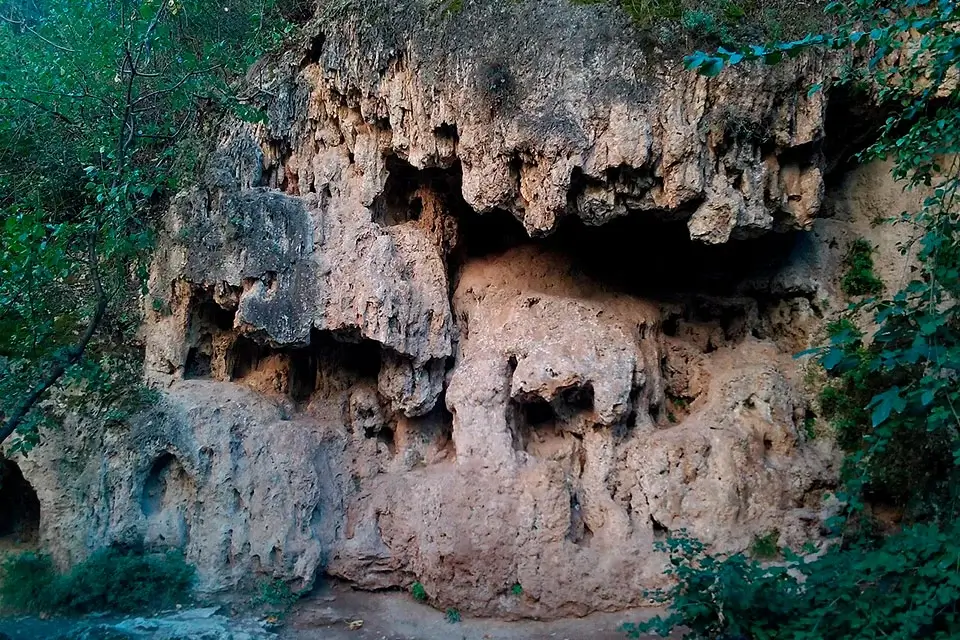
Mineral water still emerges from cracks in the surrounding rocks. These springs continue to leave deposits around the bridge, creating coloured surfaces, mineral formations and small natural pools.
Why Is It Called Devil’s Bridge?
Several local stories are connected with the unusual name. One of the best known comes from the appearance of the river itself: traditionally, people noticed that more water seemed to emerge from beneath the bridge than entered it.
The explanation is much less mysterious. Mineral springs join the Vorotan beneath the natural bridge, increasing the amount of water downstream. Before this was understood, the phenomenon seemed strange enough to inspire supernatural explanations.
The Armenian name Satani Kamurj literally means “Devil’s Bridge.” Today the name is part of the character of the place, while the formation itself can be explained by natural geological processes.
What to See at Devil’s Bridge
Start by looking at the Vorotan Gorge and river from the safe accessible areas beside the road. The steep cliffs make it clear how deeply the river has cut through the surrounding mountains and how naturally the bridge blends into the rocky landscape.
Below the road are grottoes, mineral deposits and rock surfaces coloured by mineral-rich water. Springs emerge around and beneath the bridge, continuing the natural process that originally created the travertine formation.
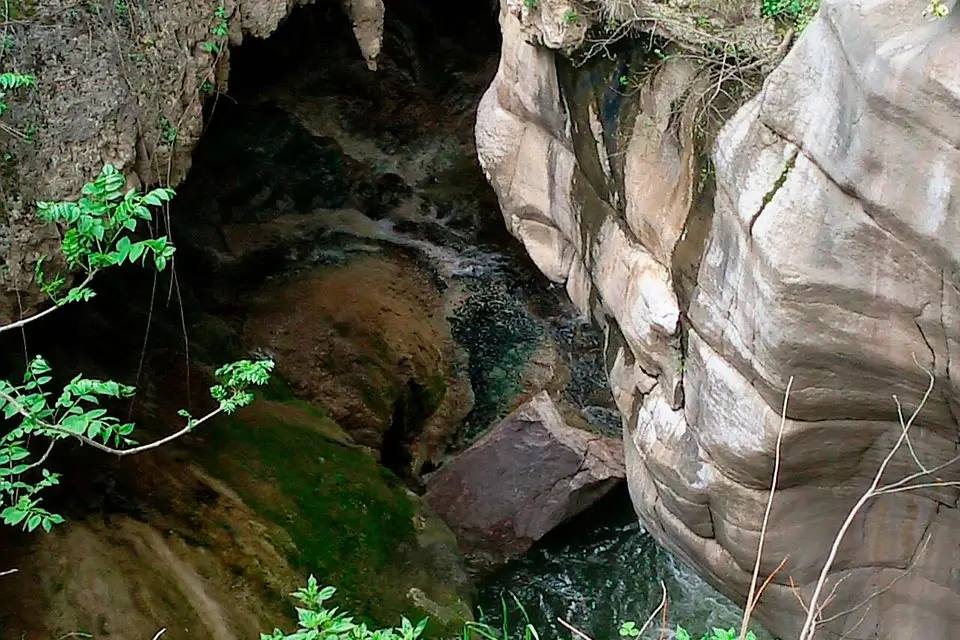
The road itself is another unusual detail. Vehicles effectively cross the top of the natural formation while the Vorotan River flows directly underneath.
For a normal sightseeing visit, there is no need to descend beneath the bridge. The gorge, natural formation and surrounding mineral features can already be appreciated from the accessible areas above.
Mineral Springs at Devil’s Bridge
Several mineral springs emerge from the rocks around Satani Kamurj. Their water leaves pale and colourful deposits on the stone and has created small natural pools in parts of the gorge.
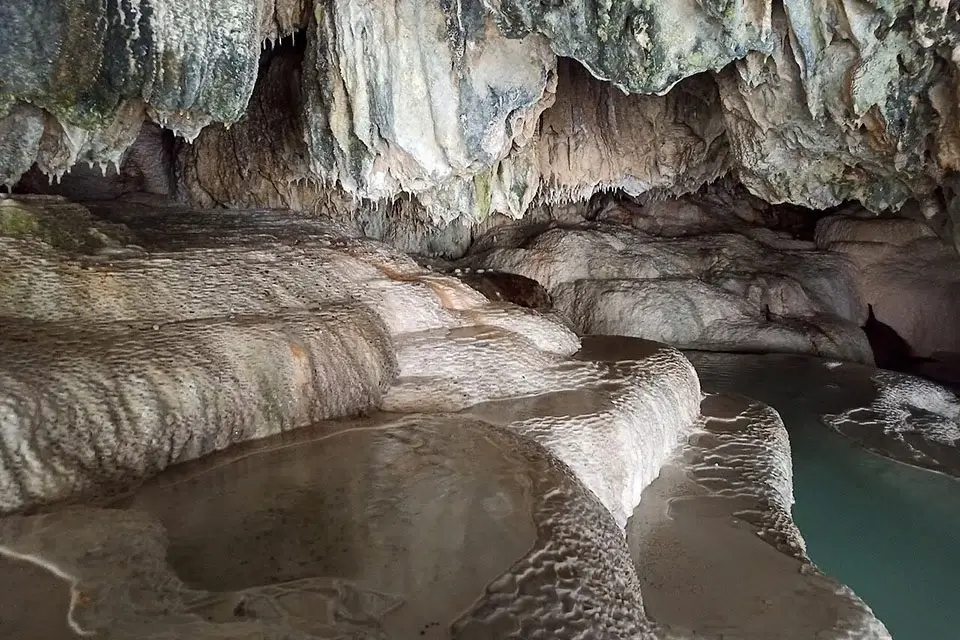
These springs played a central role in the formation of Devil’s Bridge. They continue to flow today, which means the travertine landscape is still part of an active natural process rather than a completely static rock formation.
Can You Go Beneath Devil’s Bridge?
Descending to the grottoes beneath Devil’s Bridge is much more difficult than a normal sightseeing stop. The terrain is steep and wet, river levels can change, and some sections require proper equipment and experience.
Do not attempt to climb beneath the bridge or move through the river independently. Anyone planning canyoning or a closer exploration of the lower gorge should go with an experienced local guide who knows the route and current conditions.
For most visitors, this is unnecessary. You can see the natural bridge, gorge and mineral springs without taking an adventurous route below the road.
Best Time to Visit Devil’s Bridge
The most convenient period for a normal visit is from late spring to mid-autumn. During these months, Devil’s Bridge is easy to combine with Tatev and other attractions in southern Syunik.
Summer is generally warm in the gorge, although midday sun can be strong. The Vorotan usually carries more water in spring, while autumn offers comfortable temperatures and attractive mountain scenery.
The road remains in place during winter, but snow, ice and changing mountain weather can make stopping and walking around the gorge less convenient.
How to Get to Devil’s Bridge
Devil’s Bridge lies on the road through the Vorotan Gorge between the Goris area and Tatev village. The natural formation itself forms part of the road, so its upper section can be reached by a normal passenger car.
If you are driving to Tatev Monastery through the gorge, Devil’s Bridge is an easy stop along the way. A 4×4 is not required for a normal visit to the upper part of the site.
From Yerevan, the journey is long, so Devil’s Bridge is usually included in a wider Tatev and Goris itinerary rather than visited as a separate destination.
Devil’s Bridge in a Tatev Itinerary
Devil’s Bridge is best combined with Tatev Monastery. The two places lie within the same dramatic landscape but offer completely different experiences: the medieval monastery stands high above the Vorotan Gorge, while the natural bridge is hidden deep beside the river below.
If you are travelling for one or two days, Goris is a convenient base for exploring the area. From there, you can also continue to Khndzoresk and other attractions in southern Syunik.


