
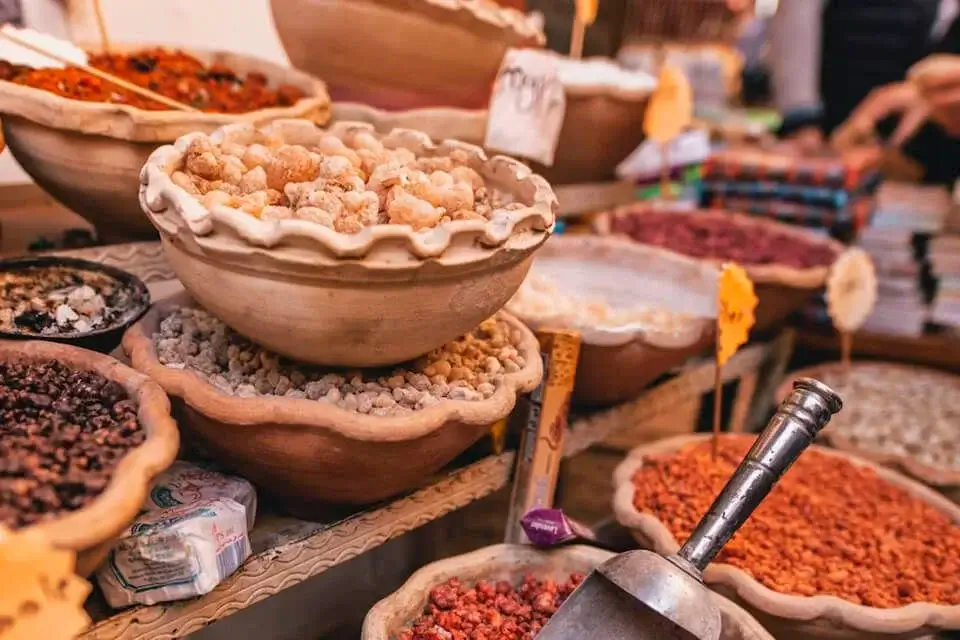
GUM Market in Yerevan
GUM Market in Yerevan is one of the city’s best-known food markets. Locals and visitors come here for dried fruit, nuts, spices, Armenian cheeses, sweets, seasonal fruit and other regional products. Unlike a modern shopping centre, it is a working covered market where you can observe everyday life in Yerevan and discover some of Armenia’s food traditions.
- 📍 35 Movses Khorenatsi Street, Yerevan
- 🛒 Covered market for local food products
- 🕒 Open daily; best visited between 10:00 and 16:00
- 🎫 Free admission
- 🚇 A short walk from Zoravar Andranik metro station
What Is GUM Market?
GUM is primarily a food market used by both local residents and visitors. Its stalls sell fresh and seasonal produce, dried fruit, spices, cheeses, pickled vegetables, sweets and cured meat products.
The name comes from the nearby State Department Store, known by the Russian abbreviation GUM. During the Soviet period, the market itself was commonly referred to as a collective-farm market. Over time, the name GUM Market became the more familiar name used by residents and visitors.
Today, it is one of Yerevan’s most recognisable food markets. It offers an opportunity not only to shop but also to see the ingredients commonly used in traditional Armenian cooking.
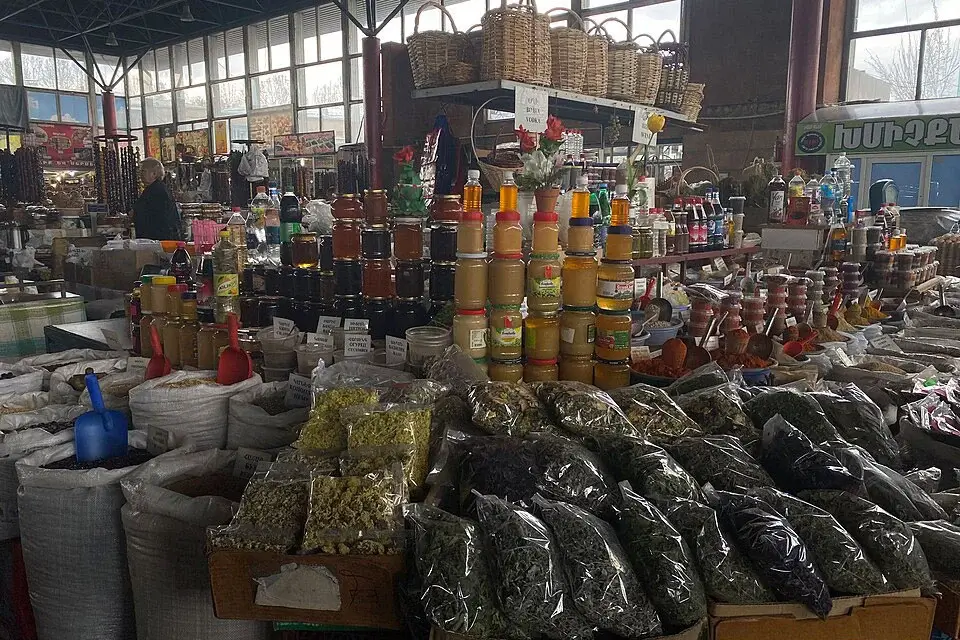
What Can You Buy at GUM Market?
Food is the market’s main speciality. The selection changes with the seasons, but several types of products are available throughout most of the year.
- Dried fruit and nuts — dried apricots, prunes, figs, peaches, apples, walnuts, almonds and hazelnuts.
- Armenian sweets — sweet sujukh made with walnuts and thickened fruit juice, alani, fruit leather, preserves and other traditional treats.
- Cheese and dairy products — brined and aged Armenian cheeses together with other locally produced dairy products.
- Fresh fruit and vegetables — seasonal apricots, peaches, grapes, pomegranates, persimmons, herbs and vegetables.
- Cured meat products — basturma, meat sujuk and other traditional Armenian products.
- Pickles and preserves — pickled vegetables, herbs, homemade sauces and preserved seasonal produce.
- Spices and dried herbs — chaman, red and black pepper, seasoning mixtures, dried greens and Armenian mountain tea.
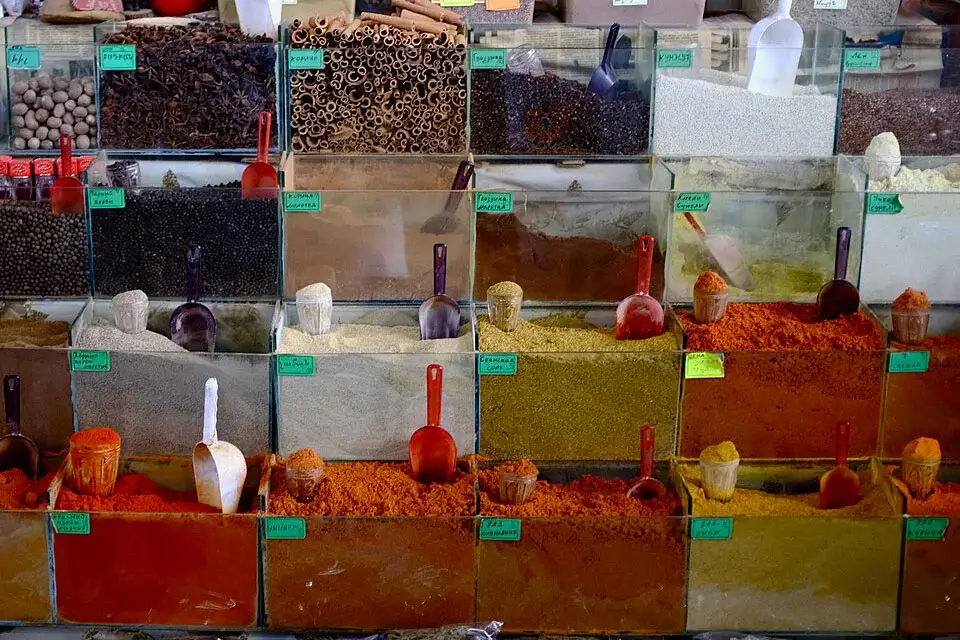
The selection of fresh fruit, nuts and dried fruit is particularly wide during the autumn harvest season.
Tastings and Choosing Products
Sellers may offer samples of dried fruit, nuts, sweets or cheese before you buy. Sampling can be helpful because products that look similar may differ in sweetness, ingredients, texture and preparation.
Compare several stalls before making a larger purchase. Ask about the ingredients, storage conditions and shelf life, especially if you plan to take the products home as gifts. Sellers can often prepare practical packaging for transportation if you explain that you will be travelling.
Naturally dried fruit can be darker than heavily processed products, so a bright colour does not always indicate better quality. If this matters to you, ask whether sugar, colouring or sulphites have been added.
Prices, Payment and Bargaining
Prices depend on the season, quality and origin of the products. Fresh fruit is often less expensive during the local harvest, while the prices of nuts, spices and dried fruit usually vary less throughout the year.
Some prices are displayed per kilogram, so confirm the price and quantity before purchasing. When buying several packages from one seller, you can politely ask whether a small discount is available. However, bargaining is not required, and some stalls use fixed prices.
It is advisable to carry Armenian drams in cash. Not every seller accepts bank cards, so ask about the payment method before the products are weighed or packaged.
Opening Hours and the Best Time to Visit
GUM Market operates daily, but individual departments and sellers may keep different hours. Some stalls open earlier, while others close during the late afternoon.
The most reliable time to visit is between 10:00 and 16:00. During these hours, most stalls are normally open and there is still a good selection of products. The market is generally livelier in the morning, while some sellers may begin packing their goods later in the day.
If you are visiting for a particular product or department, it is sensible to confirm the current schedule shortly before your visit.
How to Get to GUM Market in Yerevan
GUM Market is located at 35 Movses Khorenatsi Street, Yerevan.
The nearest metro station is Zoravar Andranik, from which the market can be reached on foot in a few minutes. The walk from Republic Square usually takes approximately 15–20 minutes.
You can also reach the market by city bus or taxi. In a taxi application, enter “GUM Market” or “35 Movses Khorenatsi Street”.
GUM Market is included in the standard programme of our private Yerevan city tour, together with several of the capital’s main landmarks.
What to See Near GUM Market
Saint Gregory the Illuminator Cathedral, Armenia’s largest cathedral, is located near the market. From there, you can continue walking towards Republic Square and the central streets of Yerevan.
Yerevan Vernissage Market is approximately 10–15 minutes away on foot. The two markets have different specialities: GUM Market mainly sells food, while Vernissage is known for souvenirs, handmade crafts, paintings and antiques.
More attractions, walking routes and practical information can be found in our complete Yerevan travel guide.