Matenadaran
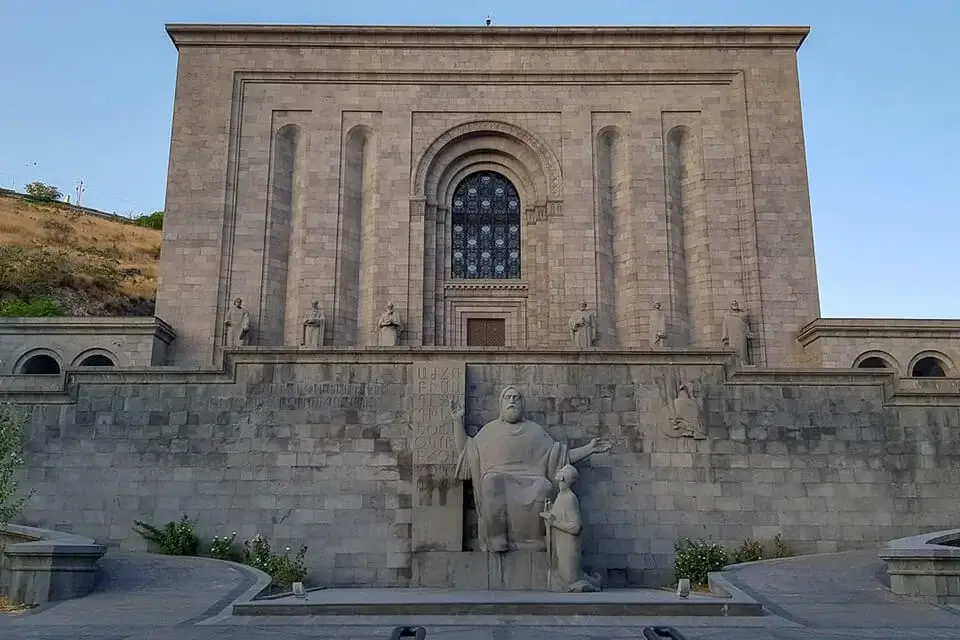
The Matenadaran in Yerevan is the Mesrop Mashtots Institute of Ancient Manuscripts — one of the world’s largest collections of medieval manuscripts and one of the most important museums in the Armenian capital. The Armenian word matenadaran means “repository of manuscripts”, and inside this tuff building on a hill above Mashtots Avenue lies centuries of Armenia’s written heritage.
Quick Facts
- Built / Founded: 1945–1957; opened 1959
- Architects: Mark Grigoryan
- Location: Yerevan
- Also known as: Matenadaran
- Entrance fee: Paid (museum tickets)
- GPS coordinates:
40.1919, 44.5209
History of the collection
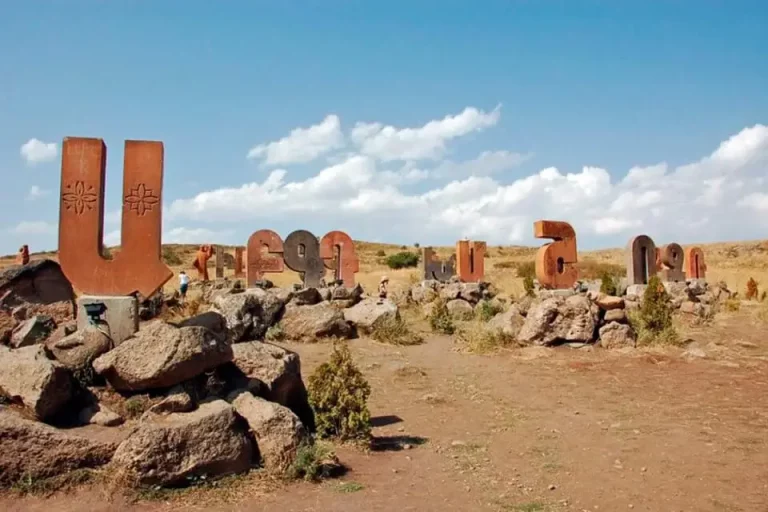
The roots of the collection go back to the 5th century and the figure of Mesrop Mashtots, the monk and scholar who created the Armenian alphabet around 405 AD. Already in that period a manuscript library began to grow at the cathedral of Etchmiadzin, which over the following centuries developed into the largest Armenian matenadaran. By the early 20th century the Etchmiadzin collection numbered several thousand handwritten codices.
In 1920 the Etchmiadzin collection was nationalised by the Soviet authorities, and in 1939 it was moved to Yerevan and placed inside the National Library of Armenia for safer keeping and easier access for scholars. In 1959 the institute moved into its purpose-built home at the top of Mashtots Avenue and became an independent research institution. In 1962 it received its official name — the Mesrop Mashtots Institute of Ancient Manuscripts — and in 1997 the collection was added to UNESCO’s Memory of the World Register.
The building and its architect
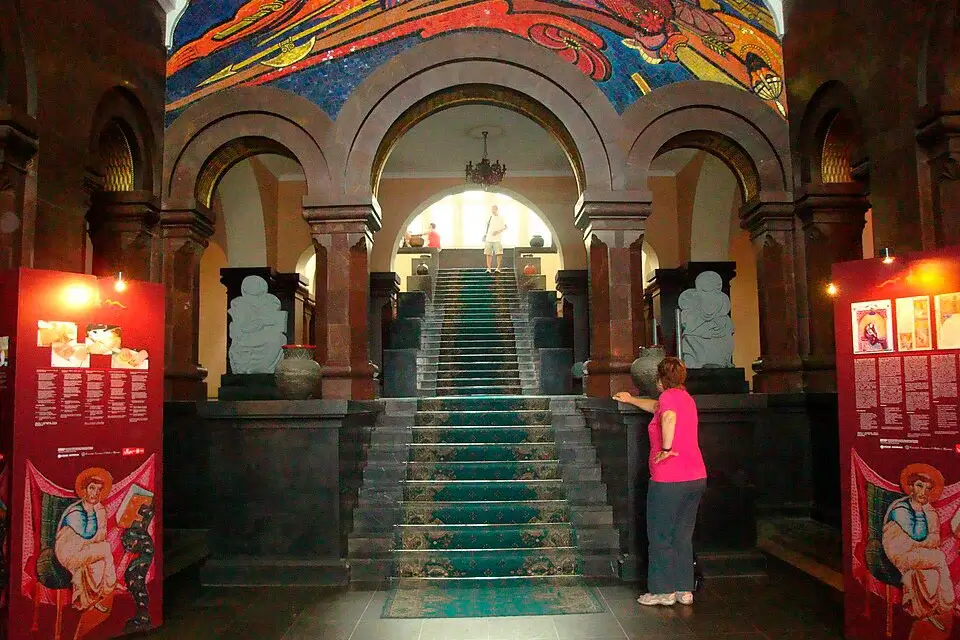
The building of the Matenadaran was designed by Armenian architect Mark Grigoryan and built between 1945 and 1957. Its facade draws on the language of medieval Armenian church architecture — strict proportions, narrow window slits, and a heavy stone mass — with details that consciously echo the buildings of Ani, the medieval capital of Armenia. Inside, the lower floor holds the manuscript repository and the restoration laboratories, while the upper floors house the exhibition halls and reading rooms.
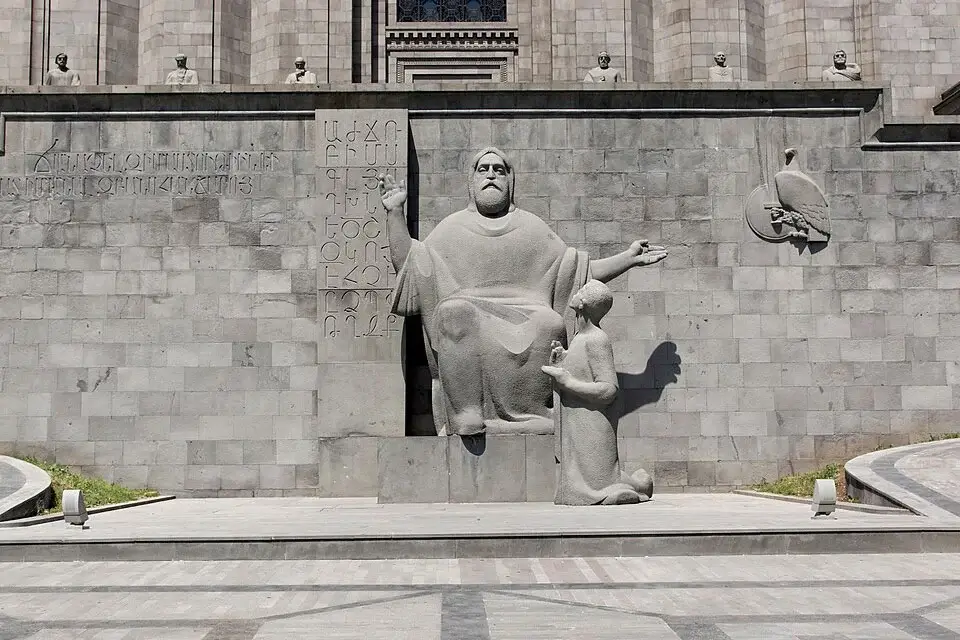
In front of the entrance stands a sculptural group of Mesrop Mashtots and his pupil Koryun, holding a stone tablet on which the letters of the Armenian alphabet are carved. A row of statues of other key figures in Armenian culture lines the forecourt. In 2011 a second, modern building designed by architect Arthur Meschian opened next door, housing the expanded library, restoration centre and academic departments.
What is inside the collection
The Matenadaran holds more than 17,000 manuscripts and over 100,000 archival documents — not only in Armenian. The collection also includes manuscripts in Greek, Syriac, Latin, Arabic, Persian, Ethiopian, Georgian, Hebrew and other languages, which makes it a snapshot of how Armenian culture interacted with the Greco-Roman, Middle Eastern and European worlds for over a thousand years. In a number of cases the Armenian translation is the only surviving copy — the original Greek or Syriac text has been lost.
The museum part of the institute is laid out across about fifteen exhibition halls. On display are illuminated Gospels, liturgical books, historical chronicles, medical and philosophical treatises, scientific works, medieval maps and atlases, miniatures from the Armenian schools of Cilicia, Vaspurakan and Crimea, and a separate exhibition of archival documents related to the Armenian Genocide of 1915.
The Mush Homiliary and other famous manuscripts
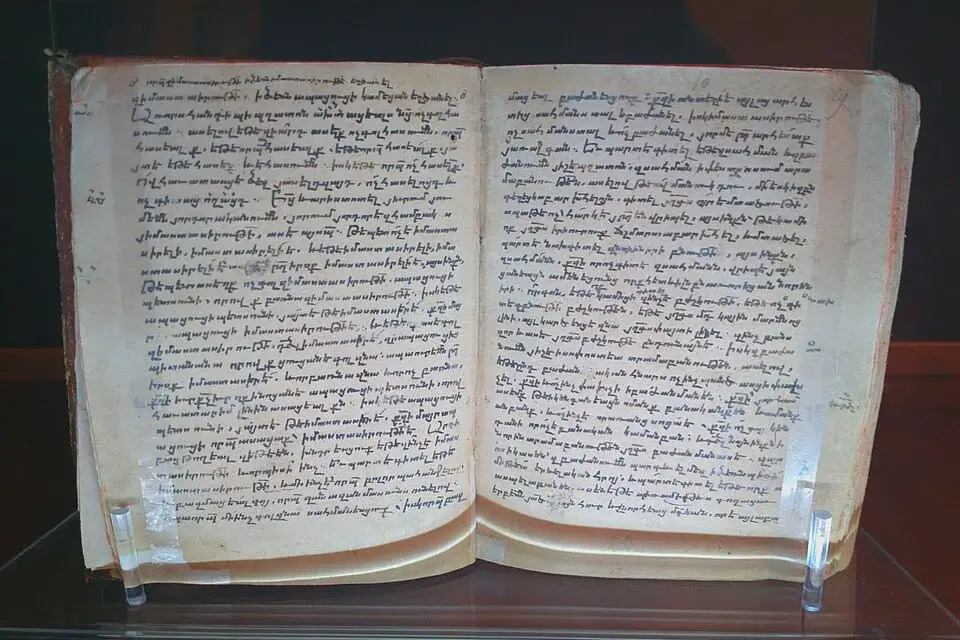
The single most famous object in the Matenadaran is the Mush Homiliary (Msho Charentir), the largest surviving Armenian manuscript. It was copied in 1200–1202 in the monastery of Saint Karapet near Mush by the scribe Vartan Karnetsi and the illustrator Stepanos, on parchment made from the skins of around 600 calves. Each page measures roughly 70 by 55 centimetres, and the surviving book weighs close to 28 kilograms. During the Armenian Genocide in 1915 it was rescued from the ruined monastery by two Armenian refugees who divided it in two so they could each carry one half — both halves eventually reached safety and were later reunited in Yerevan. Today the Homiliary is displayed in the museum alongside one of the smallest manuscripts in the collection, a 15th-century church calendar that fits into the palm of a hand.
Other highlights include the Etchmiadzin Gospel (989 AD), notable for its 6th-century carved ivory binding, the Lazaryan Gospels of 887 AD, and a wide range of illuminated Cilician Gospels of the 12th and 13th centuries.
How to get to the Matenadaran
The Matenadaran is in the centre of Yerevan, at the upper end of Mashtots Avenue — the address is 53 Mashtots Avenue. From Republic Square it is roughly a fifteen-minute walk uphill along the avenue, and from the Yerevan Cascade only a few minutes on foot through the city centre.
If you would prefer to see the Matenadaran in combination with other key sights of the capital at a slower pace, this is easy to arrange as part of an individual tour with a driver-guide.
What to see nearby
The Matenadaran is convenient to combine with several other central Yerevan sights in one short walk. A few minutes downhill on Mashtots Avenue you reach the Yerevan Opera Theatre and the pedestrian Northern Avenue; a little further south is Republic Square, and just east of the avenue stands the Yerevan Cascade. Putting all of them together makes a natural half-day walking route through the centre.
Practical information
The museum is ticketed and runs to a set schedule. A few things worth keeping in mind:
- Opening hours. Tuesday to Saturday, 10:00–17:50. Sunday, Monday and public holidays are closed days.
- Tickets. Adult admission is 2,000 AMD; visitors aged 6–18 pay 1,000 AMD; students of Armenian universities with ID pay 300 AMD. Children under 6 enter free.
- Guided tours. A tour in Armenian costs 5,000 AMD; in English, French, German, Russian, Italian or Spanish — 5,000 AMD for groups of up to 10 people, 7,000 AMD for larger groups. Booking in advance is recommended; without a reservation a guide may not be available.
- How long to plan. 1 to 1.5 hours is usually enough for the permanent exhibition; with a guide and a slower walk through every hall, allow about 2 hours.
- Photography. Photo permission inside the halls is usually charged separately — ask at the ticket desk.
For the latest hours, prices and special exhibitions it is best to check the institute’s own website before your visit.
Frequently asked questions
The Matenadaran in Yerevan is not only a museum but a working research centre, where ancient texts are still being read, transcribed and reconstructed. It is one of the most rewarding stops in the capital: in an hour or two you can trace, through these manuscripts, how one of the oldest book cultures in the world grew out of a single 5th-century alphabet.