

Jermuk Waterfall
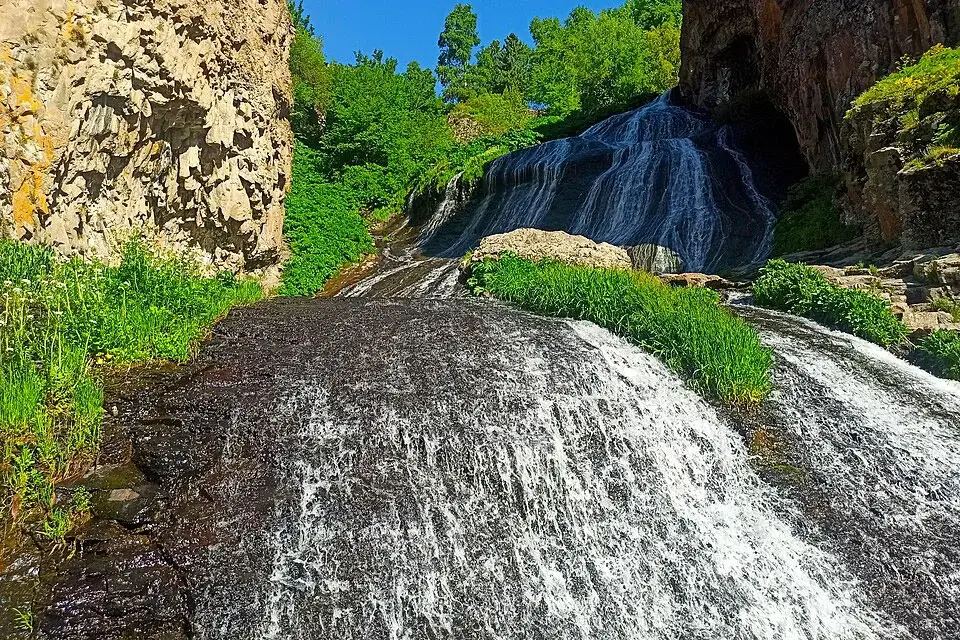
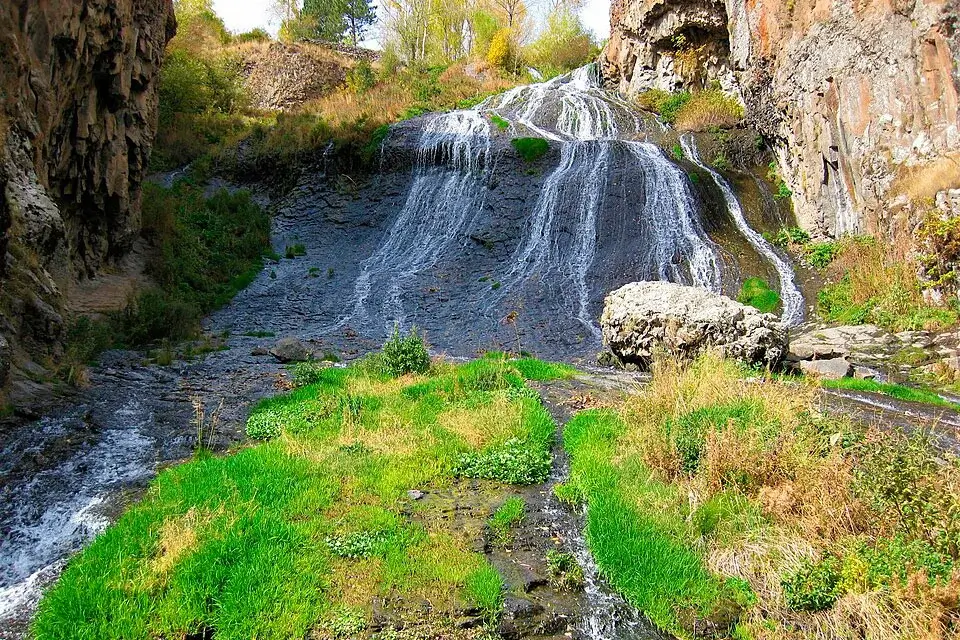
Jermuk Waterfall is one of the most striking natural sights in Armenia — a thin, flowing curtain of water that drops about 70 metres down three dome-shaped limestone steps into the Arpa River gorge. It sits within the resort town of Jermuk in Vayots Dzor Province, around 170 km southeast of Yerevan at an elevation of more than 2,000 metres. Locals call the falls “Mermaid’s Hair” for their delicate, flowing appearance — and the matching legend explains how they got the name. Even on the hottest summer day, the water is bracingly cold, fed by mountain springs from the same volcanic geology that produced Jermuk’s famous mineral waters.
Quick Facts
- Location: Jermuk, Vayots Dzor Province
- Also known as: Jermuk Waterfall, Mermaid's Hair, Mermaid Hair Waterfall, Jrvezh Jermuk, Ջերմուկ ջրվեժ
- From Yerevan: About 170 km / 3 hours
- Height: 68 m
- Entrance fee: Free
- Time needed: 1.5–2 hours at waterfall (often combined with the Drinking Gallery and Jermuk spa town as a half-day stop)
- Best time to visit: April–June (peak flow); September for autumn colors; cold but spectacular in winter
- Status: Natural hydrogeological monument
- GPS coordinates:
39.8367,45.6682
A 70-Metre Cascade Down Three Stone Steps
The waterfall forms where the small Jermuk River — a tributary of the Arpa — meets the edge of a steep gorge below the modern town. Three rounded limestone steps create three short drops in close succession, but the effect from below is of a single thin sheet of water unfurling almost 70 metres downward. The Armenian Geographic Society measures the total height at 68 metres; tourist sources often round it to 70 m.
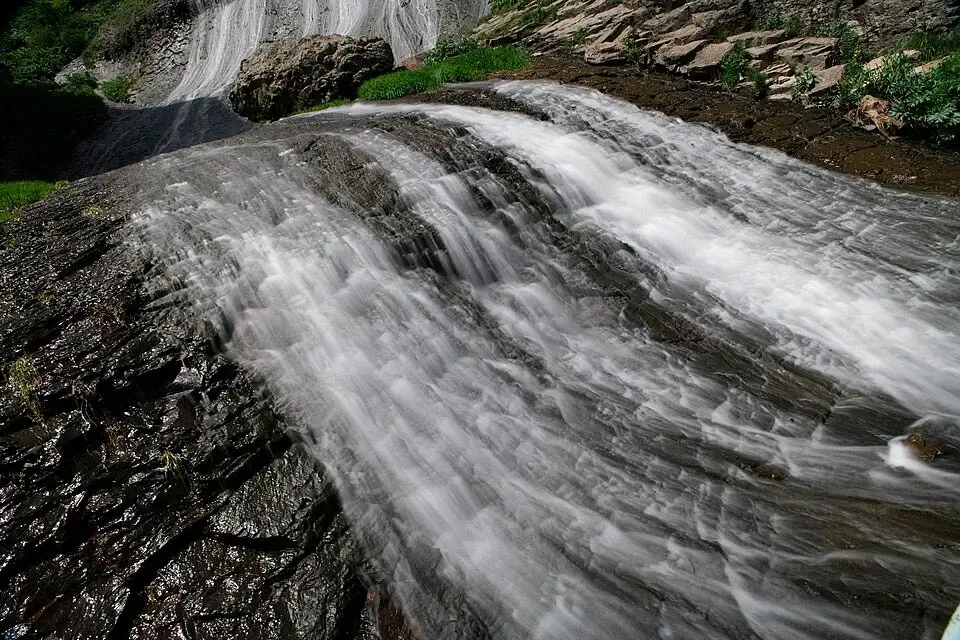
The flow is gentler than most “true” waterfalls of that height — a curtain rather than a torrent. One Armenian geographic source notes that this is technically why Mermaid’s Hair is not always classified among the country’s waterfalls in strict geological terms: were it counted, its 68-metre drop would make it Armenia’s tallest. As things stand, it’s officially recognised as a natural hydrogeological monument of the Republic of Armenia.
The most striking feature for visitors is the temperature. Jermuk Waterfall is fed by cold springs from a geologically active zone — the same network of underground aquifers that supplies the town’s famous mineral water. Even at the height of summer, when the surrounding rocks bake in the sun, the water itself stays close to freezing. Standing close to the base on a hot day is a small physical shock — and a relief.
The gorge around the falls is also home to a notable bird population, including Griffon Vulture, Blue Rock Thrush and White-throated Dipper. Birdwatchers visit specifically for this combination of cliffs, riverbank, and woodland habitat in a single short walk.
The Legend of the Mermaid’s Hair
According to the most widely told version, the waterfall is named for a young woman from a noble family that once lived on the cliffs above the gorge.
The young woman was famously beautiful, and suitors came from across the region asking for her hand. But she refused them all, because she had fallen in love with a shepherd’s son from the valley below. Every night after midnight, the story says, she would lower a long rope from her window into the gorge so her lover could climb up to meet her.
One day her father discovered the rope, understood what had been happening, and was furious. He cursed his daughter, swearing that if she ever met the shepherd’s son again, she would be turned into a mermaid and never leave the water.
The young woman didn’t listen. On the next night, the rope had been taken away — so she lowered her own long hair into the gorge instead. As the shepherd’s son began to climb, the curse came true. The girl was transformed into a mermaid, and her hair, falling forever into the abyss, became the cascading water that locals still call “Mermaid’s Hair” today.
When to Visit Jermuk Waterfall
Like all of Armenia’s waterfalls, Jermuk varies significantly through the year. The general guide:
- April to June — peak flow. Snowmelt and spring rain feed the upper springs. The cascade is at its widest and most photogenic. This is the best season for first-time visitors.
- July to August — moderate flow. Less powerful than spring, but still flowing well thanks to the spring-fed geology that keeps Jermuk’s water source more reliable than at Shaki. Combined with the town’s cool mountain air, this is also peak season for the Jermuk spa hotels.
- September to mid-October — moderate flow with autumn foliage. The forested gorge turns gold and red. Excellent for photography.
- November to March — cold, often frozen. The cliffs above the falls catch heavy snow, and parts of the cascade can freeze into ice formations. Spectacular but cold; access is best by car, and you’ll want grip on your shoes.
Worth noting: because Jermuk sits at over 2,000 m elevation, the air is significantly cooler than in Yerevan even in midsummer. Bring a layer even on a hot day in the capital.
How to Get to Jermuk Waterfall from Yerevan
Jermuk is about 170 km southeast of Yerevan, roughly a 3-hour drive along the M2 highway and then the spur road through Vayk and Gndevaz. The waterfall is on the southern edge of the town itself.
By private car with driver. The most flexible and comfortable option, especially because Jermuk is usually visited together with Noravank Monastery, Areni and other Vayots Dzor sites. We provide private cars and drivers in Yerevan for day trips and multi-day southern itineraries.
By marshrutka. Marshrutkas run from Yerevan’s Sasuntsi Davit station to Jermuk daily; the ride takes around 4 hours and costs roughly 2,500 AMD. From central Jermuk, the waterfall is a 20–25 minute walk through the town park and down a marked staircase.
As part of a southern Armenia tour. Jermuk fits naturally into a longer itinerary that also includes Khor Virap, Noravank, Areni, and — for travellers continuing further south — Sisian, Shaki Waterfall, Karahunj and Tatev Monastery.
Once you reach Jermuk, the walk down to the waterfall starts from the southern edge of town. The descent is via a wide stone staircase through woodland — easy going down, more demanding coming back up. Plan around 1.5–2 hours for the full visit.
Jermuk Beyond the Waterfall — the Spa Town and Mineral Springs
Jermuk is not just a stop for the waterfall. The town has been one of Armenia’s main wellness destinations since Soviet times, and is built around its mineral springs and high-altitude climate. Worth combining on the same visit:
- Jermuk Drinking Gallery (Pump Room) — a covered colonnade in the centre of town where five mineral waters of different temperatures flow from public fountains. Free to use; bring or buy a small cup. Each fountain has slightly different mineral content.
- Jermuk Health Trail — a marked walking path through the forest above town with several mineral water tasting points and views over the Arpa Gorge.
- Spa hotels — several large hotels offer hydrotherapy, mineral water bathing, and Soviet-style sanatorium treatments. Bookable directly.
- Jermuk Ropeway — a short cable car connecting two sides of the gorge with viewpoints over the town.
For travellers interested in a slower visit, an overnight in Jermuk combines well with a morning at the waterfall and Drinking Gallery before driving on to Noravank and the south the next day.
What Else to See Nearby
- Gndevank Monastery (about 10 km from Jermuk) — a 10th-century monastery in the Arpa Gorge, peaceful and rarely crowded. Worth a 30–45 minute stop.
- Noravank Monastery (about 70 km west) — the 13th-century Surb Astvatsatsin Church in the red cliffs of the Amaghu Valley.
- Areni village (about 75 km west) — Armenia’s oldest wine-making region and the prehistoric Areni-1 Cave, home to the world’s oldest known winery (c. 4100 BC).
- Sisian, Shaki Waterfall and Karahunj (about 90 km southeast) — for travellers continuing south toward Tatev.
A common 2-day southern Armenia itinerary: day 1 — Khor Virap, Noravank, Areni, overnight in Jermuk; day 2 — Jermuk Waterfall and Drinking Gallery in the morning, then continue to Sisian, Karahunj, Shaki Waterfall, and overnight in Goris before visiting Tatev on day 3.
Practical Tips for Visiting
- Opening hours: the waterfall is outdoors and accessible all day. No gate or ticket booth.
- Entrance fee: free.
- Time needed: 1.5–2 hours including the walk down from town and back. Add another 2–3 hours if you also visit the Drinking Gallery and Health Trail.
- Footwear: the stone staircase is uneven and can be slippery when wet. Sturdy walking shoes are best.
- Layers: Jermuk is at 2,000+ m elevation — even in July the morning and evening can be cool. Bring a light jacket.
- Mineral water: bring a small refillable container if you want to taste at the Drinking Gallery — most fountains don’t supply cups.
- Food: there are restaurants and cafés in central Jermuk. A small refreshment kiosk sometimes operates near the upper staircase.
- Mobile signal: generally good in Jermuk town; weaker in the gorge.
FAQ
See more places in our full guide to things to do in Armenia — including Noravank Monastery, Tatev, Shaki Waterfall, Khor Virap, Lake Sevan and other top destinations.


